

Key Takeaways
Uneven tyre wear due to steering is often a visible symptom of a geometry or component problem, not just an ageing tyre.
- Inner-edge, outer-edge, feathered, and scalloped wear each suggest different faults.
- Toe, camber, and caster determine how much tread meets the road.
- Worn tie rods, ball joints, racks, or suspension parts can change alignment while driving.
- Correct diagnosis should come before alignment or tyre replacement.
- Regular pressure checks, rotations, and prompt repairs help prevent repeat wear.
How steering problems cause uneven tyre wear
Steering and suspension systems are designed to keep each wheel at a controlled angle as the vehicle moves. When those angles change, the tread no longer meets the road evenly. A small error may quietly scrub rubber away over thousands of miles, while a loose component can create wear much faster.
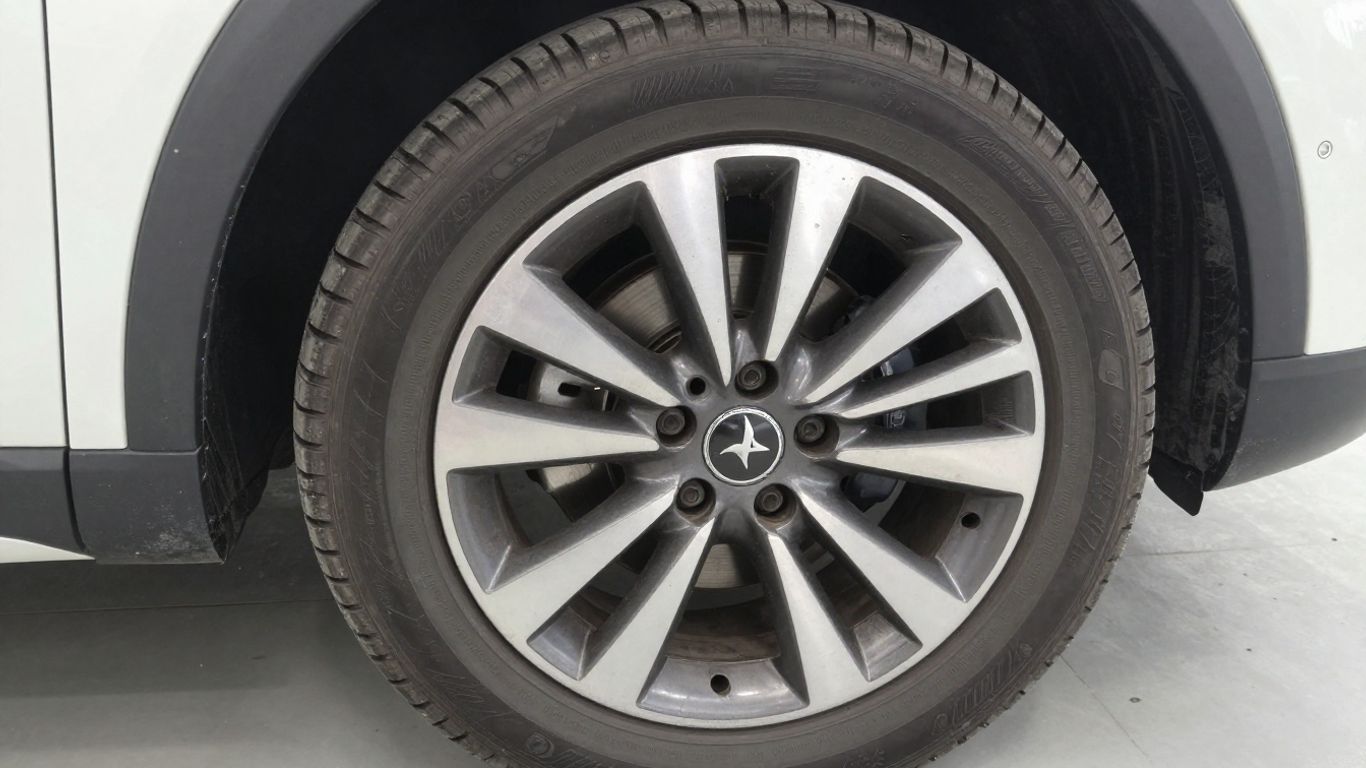
The connection between steering angles and tread contact
A tyre should roll forward with its tread spread evenly across the road surface. If the wheel points slightly inward or outward, it drags across the pavement instead of rolling cleanly. That sideways scrub can create a smooth worn strip on one edge or a fine saw-tooth texture across the tread.
The effect is especially noticeable during turns, when steering geometry already changes the wheel’s position. A fault that seems minor while parked may become more pronounced under cornering, braking, or acceleration.
Toe, camber, and caster explained
Toe describes whether the fronts of the tyres point toward or away from each other when viewed from above. Camber is the inward or outward tilt of the wheel when viewed from the front. Caster is the steering-axis angle viewed from the side, and it helps the vehicle track straight and return the steering wheel after a turn.
These settings work together rather than independently. The correct values vary by vehicle, so an alignment should be measured against the manufacturer’s specifications instead of a generic target.
How worn steering parts change wheel alignment
Tie rods, ball joints, steering racks, and related suspension joints must hold the wheel in a stable position. Wear can introduce play, allowing the wheel angle to shift as the tyre encounters bumps or the driver applies the brakes. In that situation, a static alignment may not tell the whole story until loose parts are repaired.
A useful rule is find the movement first. Adjusting alignment around a worn joint may produce a short-lived improvement, but the tyre can begin wearing again as soon as the joint moves under load.
Why front tyres usually show the damage first
Front tyres carry the steering input and often handle a large share of braking and cornering forces. They therefore respond quickly to incorrect toe, camber, or looseness in the steering linkage. On a front-wheel-drive vehicle, drive torque adds another demand.
That does not mean rear tyres are unaffected. Rear alignment, tyre pressure, suspension wear, and a bent wheel can all create irregular patterns, so inspecting only the front axle can miss the underlying cause.
Signs your steering is causing tyre wear
The tread pattern can reveal a problem before the steering feels obviously wrong. Look across the full width of each tyre, not just at the grooves that are easiest to see. Comparing left and right tyres is useful because a shared pattern may point to alignment, while one unusual tyre may have suffered separate damage.
A practical overview of common patterns appears in this uneven tyre wear guide, but the pattern is only a starting point. Safe diagnosis still requires checking pressures, components, and alignment measurements.
Inner-edge and outer-edge wear patterns
Wear concentrated on the inside shoulder can occur when camber or toe places too much load on that edge. Outer-shoulder wear may point toward the opposite geometry problem, although cornering habits, low pressure, or suspension faults can produce a similar appearance.
Do not judge tyre condition by centre tread depth alone. A tyre can look healthy from above while its inner shoulder is dangerously thin, especially when the steering is turned only slightly or the wheel design hides the edge.
Feathering, cupping, and scalloping across the tread
Feathering feels smooth in one direction and rough in the other when you run a hand lightly across the tread, with the vehicle safely parked. It commonly accompanies toe misalignment. Cupping or scalloping creates repeating dips around the circumference and may be associated with imbalance, poor damping, or looseness in the suspension.
These patterns can overlap. A tyre specialist may need to measure tread depth at several points and inspect the wheel assembly rather than assigning one cause from appearance alone.
Steering wheel symptoms while driving
A steering wheel that sits off-centre on a straight road, a vehicle that drifts, or a need for constant correction can accompany alignment trouble. Clunks, excess play, or a vague response may suggest a worn steering or suspension component instead.
A vibration at a particular speed is not automatically a steering fault. It may come from balance, wheel damage, tyre construction, or a brake issue, which is why symptoms should be considered alongside the wear pattern.
Changes in handling, braking, and road noise
Unevenly worn tyres may make the vehicle follow road grooves, wander during braking, or feel less settled in a turn. Tread irregularities can also create a humming or rhythmic road noise that changes with speed. Sudden pulling, severe vibration, exposed cords, or a bulge calls for stopping safely and arranging immediate inspection.
For a broader maintenance perspective, this tyre inspection advice also highlights how pressure and wheel balance can imitate alignment-related wear. That distinction matters because replacing a tyre without correcting the cause rarely solves the problem.
Common steering-related causes of tyre wear
Steering-related wear usually develops through one of two routes: the wheel is held at the wrong angle, or it is allowed to move when it should remain stable. Pressure and wheel condition can intensify either problem. A careful inspection should consider all of them rather than treating “alignment” as a complete diagnosis.
Incorrect wheel alignment
Pothole impacts, curb strikes, worn components, or ordinary deterioration can move alignment outside its specified range. Excessive toe often scrubs tread across the surface, while incorrect camber can load one shoulder. Caster differences may contribute to pulling or an uneven steering feel.
An alignment reading should be recorded before and after adjustment. The numbers help show whether the correction was straightforward or whether one corner remains outside its range, which may indicate bent or worn hardware.
Worn tie rods and ball joints
Tie rods connect steering movement to the wheel, while ball joints allow controlled movement between suspension parts. If either develops play, the wheel may change toe or camber as the vehicle rolls over uneven pavement.
Wear can also produce clunks, wandering, delayed steering response, or uneven braking. Because these parts affect control as well as tyre life, they should be checked with the proper loading and safety procedures rather than judged by a quick visual glance.
Damaged steering racks and suspension components
A damaged steering rack, bent arm, failed bushing, or weak damper can prevent the wheel from holding its intended position. A rack problem may be accompanied by play, leakage, or inconsistent steering, but not every rack fault produces all of those signs.
A severe impact can damage a wheel or tyre at the same time. If wear appeared soon after striking a pothole or curb, tell the technician exactly what happened; the event may guide the inspection toward hidden damage.
Incorrect tyre pressure and its compounding effects
Underinflation can increase wear at both shoulders, while overinflation can concentrate wear nearer the centre. Pressure also changes the tyre’s shape and can make an existing alignment or suspension problem more damaging. Always use the vehicle manufacturer’s recommended cold pressure rather than the maximum pressure printed on the tyre sidewall.
A compact check can keep the likely causes in view:
| Wear or symptom | Possible contributors | Useful next check |
|---|---|---|
| Inner-edge wear | Toe or negative camber | Alignment and joint play |
| Outer-edge wear | Toe, camber, or low pressure | Pressure and geometry |
| Centre wear | Excessive pressure | Cold pressure measurement |
| Feathering | Toe error or looseness | Tread feel and linkage inspection |
| Cupping | Imbalance, damping, or suspension wear | Balance and component check |
The table is a guide, not a verdict. Several faults can coexist, and tyre pressure should be corrected before the pattern is interpreted too confidently.
How to diagnose the source of the wear
Diagnosis starts with evidence: the tread pattern, measured depth, pressure history, driving symptoms, and the vehicle’s recent impacts or repairs. Photographing each tyre and noting its position can help, particularly if the tyres are later rotated. Do not assume the most worn tyre is the original source of the problem.
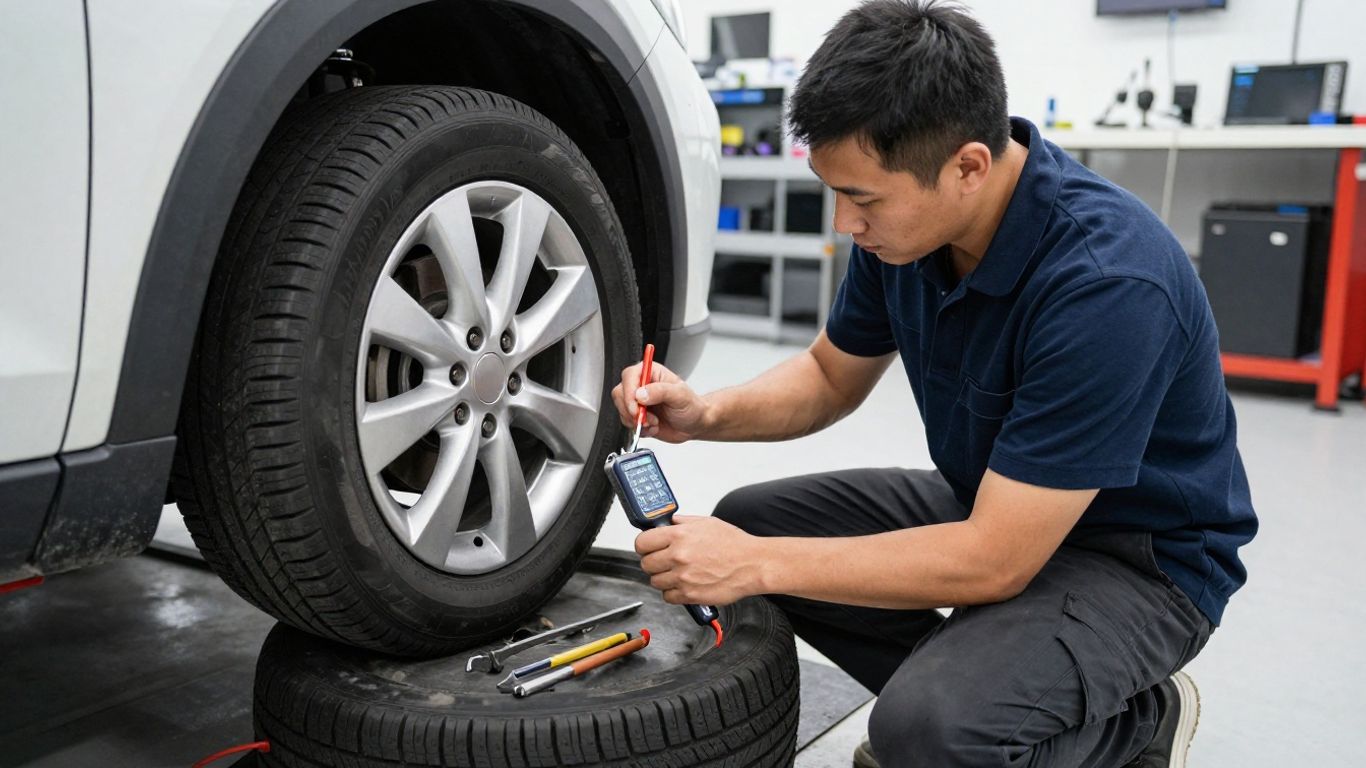
Inspecting tread patterns and measuring tread depth
Examine the inner shoulder, centre ribs, and outer shoulder of every tyre. Measure several points around each tyre with a tread-depth gauge, recording differences across the width and circumference. Look for exposed cords, cuts, bulges, lodged objects, or a tread pattern that repeats at regular intervals.
A hand check can identify feathering, but it cannot replace measurement. If the wear reaches a safety limit or the tyre structure is damaged, repair the cause and replace the unsafe tyre rather than trying to preserve it.
Checking steering and suspension components
A qualified technician can inspect tie rods, ball joints, bushings, rack mounts, wheel bearings, dampers, and control arms for looseness or damage. The vehicle may need to be lifted and unloaded in a particular way for play to show up accurately.
The check should include the wheel and tyre assembly. A bent rim, imbalance, or damaged tyre can create vibration and irregular wear without being caused by steering geometry.
Testing alignment angles
Alignment equipment measures toe, camber, and caster, along with thrust angle and differences between sides where applicable. Readings should be compared with the vehicle’s specified range. If an angle cannot be brought into specification, forcing an adjustment may hide a bent part rather than fix it.
The steering wheel should also be centred during the procedure. A technically acceptable reading with a crooked steering wheel or a vehicle that still pulls deserves a follow-up check.
Distinguishing steering problems from tyre or brake issues
Brake drag may heat one wheel and cause a vehicle to pull, while an imbalance usually creates speed-related vibration. A defective tyre can produce noise or a repeating bulge even when alignment is correct. Comparing temperatures, swapping positions where appropriate, and inspecting the wheel assembly can separate these possibilities.
Keep outside research in its lane: Michelin wear patterns can help describe tread shapes, while unrelated resources about custom home construction, French property financing, knitting size conversion, teen anger support, or home-exchange terms do not diagnose a vehicle. Good diagnosis depends on vehicle-specific measurements.
A short video can make the inspection process easier to visualize, especially for drivers unfamiliar with tread patterns.
How to fix uneven tyre wear due to steering
The repair should follow the diagnosis. Replacing a worn tyre may restore safe tread, but it will not stop the replacement from wearing unevenly if the wheel angle or steering linkage remains faulty. In many cases, the order of work matters as much as the individual repair.
Repairing or replacing worn steering parts
Loose tie rods, ball joints, rack mounts, bushings, or other damaged components should be repaired or replaced with suitable parts and installed to the vehicle’s service requirements. Afterward, the technician should recheck related fasteners, ride height, and any component that could affect wheel position.
If the vehicle has suffered impact damage, the inspection may need to include the subframe, steering rack, wheel, and suspension arms. Alignment is most meaningful once the parts holding the wheel are sound.
Setting the correct wheel alignment
With worn parts addressed, the wheels can be aligned to the manufacturer’s specifications. The technician should provide before-and-after readings and explain any value that remains outside the intended range. Steering-wheel centering and a suitable thrust angle are part of a complete result.
Alignment is not a substitute for tyre pressure maintenance. Correct geometry and correct inflation work together to distribute load across the tread.
Rotating, balancing, or replacing affected tyres
Rotation can even out normal differences between axles when the tyre design and vehicle manufacturer permit it. Balancing addresses wheel-and-tyre vibration, but it does not correct toe or camber. A tyre that is badly worn, structurally damaged, or below a safe tread level should be replaced.
Before fitting a replacement, identify why the old tyre failed. Otherwise, the new tread may inherit the same edge wear within a surprisingly short distance.
Confirming the repair with a road test
A road test should check straight-line tracking, steering-wheel position, vibration, noise, braking behavior, and response over ordinary road surfaces. The technician should also confirm that no warning signs remain after the vehicle reaches normal operating conditions.
Continue checking the tread after the repair. A corrected alignment may stop fresh damage, but it cannot restore rubber that has already been worn away.
How to prevent uneven tyre wear in the future
Prevention is mostly routine observation. Tyres provide useful clues about steering, suspension, pressure, and driving conditions, but only if their edges are inspected regularly. Small changes are easier and cheaper to address than a worn shoulder discovered after the tread has become unsafe.
Following a regular tyre inspection schedule
Look over all four tyres at least monthly and before long trips. Check the inner edges as well as the visible outer shoulders, and turn the steering only when safe and necessary to see hidden tread. Record unusual wear, vibration, pulling, or new noises instead of waiting for the next scheduled service.
A quick inspection is especially valuable after a hard pothole strike, curb impact, or sudden change in handling.
Checking tyre pressure and alignment
Measure pressure when the tyres are cold and use the vehicle’s recommended values. Check the pressure more often during major temperature changes or when carrying unusual loads. Arrange an alignment inspection after a significant impact or when the steering wheel is no longer centred.
Pressure checks do not replace mechanical inspections. If the tread pattern changes despite correct inflation, the steering and suspension deserve attention.
Rotating tyres at the recommended intervals
Follow the rotation schedule in the owner’s manual and confirm that the proposed pattern suits the tyre’s directional or staggered design. Rotation helps expose developing wear on each axle and can make differences easier to spot.
It cannot correct an alignment fault, so treat rotation as maintenance rather than a cure. Measure the tread while the wheels are being moved and note any emerging pattern.
Addressing steering and suspension symptoms early
Do not ignore a new clunk, drift, vibration, off-centre steering wheel, or vague response. Arrange an inspection before the symptom becomes severe, particularly if a tyre is losing tread quickly.
- Check pressure before diagnosing a wear pattern.
- Inspect both front and rear axles.
- Record recent pothole or curb impacts.
- Ask for alignment readings after repairs.
These simple steps create a useful record for the technician and reduce guesswork. They also make it easier to tell whether the repair has genuinely stopped the wear.
Conclusion
Uneven tyre wear due to steering usually points to a change in wheel geometry, a loose steering or suspension component, or a pressure problem that is making another fault worse. Read the tread pattern, inspect the hardware, measure alignment, and repair the cause before fitting replacement tyres. Consistent checks afterward help keep the vehicle predictable and the tread usable.
Frequently Asked Questions
Can bad steering cause uneven tyre wear?
Yes. Incorrect steering geometry or looseness in steering components can change how the tyre meets the road, producing edge wear, feathering, or other irregular patterns.
Which tyre wears first when alignment is wrong?
Front tyres often show damage first because they steer, corner, and frequently handle substantial braking forces. Rear tyres can also wear unevenly when their alignment or suspension is faulty.
What does inner-edge tyre wear mean?
Inner-edge wear may be linked to toe or camber, but low pressure, suspension damage, and driving conditions can create similar patterns. Alignment and component checks are needed to identify the cause.
Can tyre pressure cause edge wear?
Yes. Low pressure can increase wear at the shoulders, while excessive pressure can concentrate wear near the centre. Measure pressure cold using the vehicle manufacturer’s recommendation.
Is feathering a steering problem?
Feathering is often associated with toe misalignment, but looseness, tyre construction, and suspension condition can contribute. A tread inspection should be followed by a mechanical and alignment check.
Should I replace tyres before getting an alignment?
If a tyre is unsafe, replace it promptly, but arrange diagnosis and alignment as well. Installing a new tyre without correcting the underlying fault can lead to another uneven wear pattern.
How often should I check for uneven wear?
A monthly inspection and a check before long trips are sensible habits. Inspect after pothole or curb impacts and whenever the vehicle begins pulling, vibrating, or making unusual noises.