

Key Takeaways
Steering system wandering on the road can begin as a minor nuisance but may point to a tire, alignment, steering, or suspension problem. Careful checks and timely repairs help keep a vehicle predictable.
- Check tire pressure and tread before assuming the steering rack has failed.
- Road crown, grooves, and wind can create temporary drift, but not on every road.
- Worn joints, bushings, shocks, and alignment angles can all affect straight-line stability.
- Avoid driving at speed if the steering feels loose, delayed, or suddenly unpredictable.
- Recheck handling after repairs and keep a record of inspections and alignments.
What steering system wandering on the road feels like
Wandering is different from a single, steady pull. The vehicle may seem to float across its lane, while the driver makes repeated small steering inputs to keep it straight. Because the change can develop gradually, it is easy to blame the pavement or wind at first.
Drifting, pulling, and constant steering corrections
A wandering car may drift left, then right, without a clear reason. The steering wheel can feel light around center, or there may be a small delay between moving the wheel and feeling the vehicle respond. Drivers often describe the sensation as busy steering rather than a strong, continuous pull; a useful description of that experience appears in this road-wandering guide.
The key clue is repetition. If the same corrections are needed on several roads and in calm weather, the vehicle deserves an inspection rather than an assumption that the road is responsible.
Wandering after bumps, braking, or acceleration
A vehicle that changes direction after crossing a bump may have movement in a joint, bushing, or other suspension connection. If it pulls when braking, a brake problem or unequal braking force can be involved, although alignment and tire condition may contribute too.
Wandering under acceleration can point to suspension movement or torque-related changes in wheel alignment. Notice when the symptom occurs, but do not reproduce it aggressively in traffic.
Differences between road crown and a genuine fault
Most roads slope slightly toward the edge to move water away. A vehicle may follow that slope, especially with sensitive tires, but it should usually behave more consistently when the road direction changes. Grooves, ruts, and crosswinds can also demand occasional correction.
A fault is more likely when the car wanders on level pavement, reacts sharply to small inputs, or feels unstable at several speeds. Comparing a quiet, straight stretch with a visibly crowned road can help separate normal road influence from a mechanical issue.
Warning signs that the problem is becoming dangerous
Take a sudden increase in steering effort seriously. A clunk, repeated vibration, steering-wheel looseness, delayed response, or a vehicle that darts after a small input suggests more than ordinary road sensitivity.
A steering warning light, fluid leak, damaged tire, or visible wheel angle is another reason to stop using the vehicle until it has been checked. These symptoms can reduce directional control quickly, particularly at highway speed.
Common causes of steering wander
Several systems meet at the contact patch between tire and road, so the cause is not always the steering wheel or steering rack. Tire pressure, wheel alignment, steering joints, suspension bushings, and dampers can each change how faithfully the vehicle holds a line. Start with simple checks, then move toward components that require lifting or measuring.
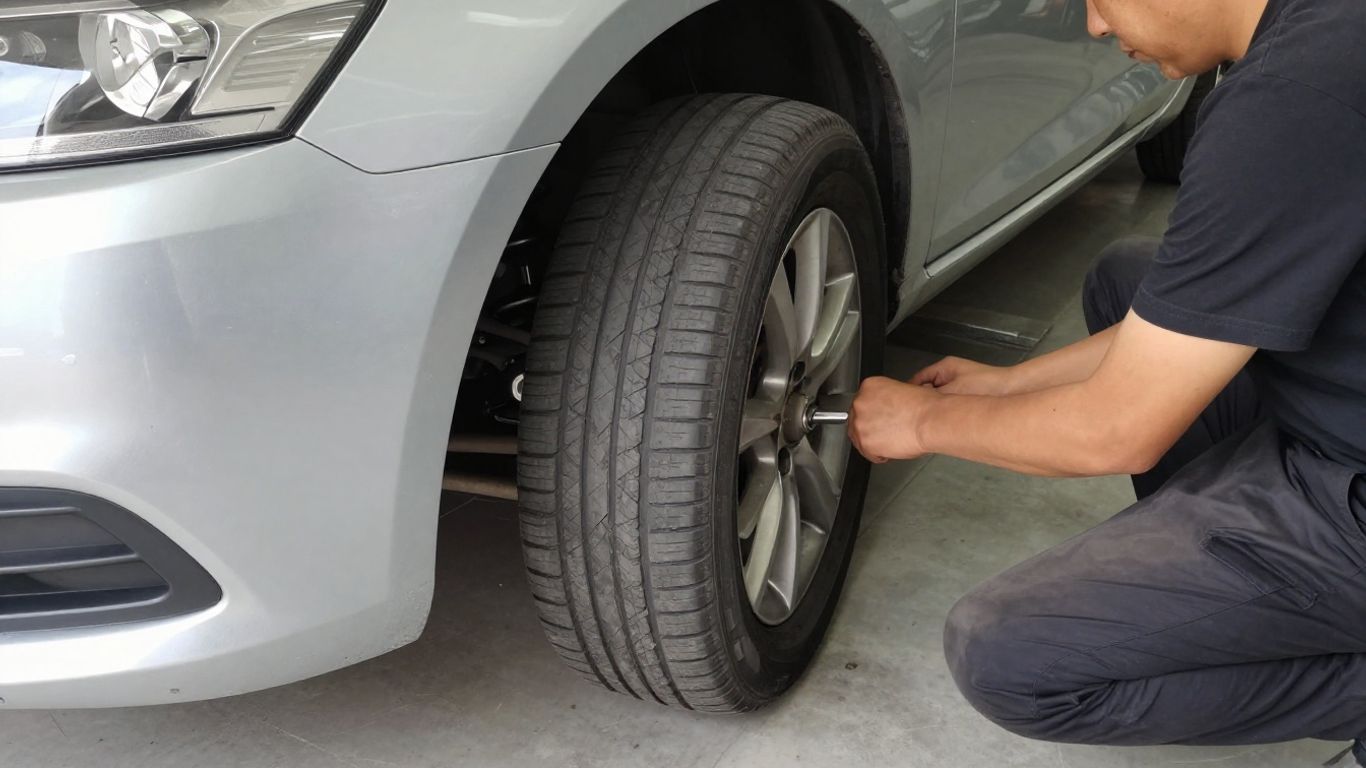
The most useful first step is to record what the driver feels and what the vehicle does. The following table helps connect common observations with areas worth inspecting.
Incorrect tire pressure or uneven tire wear
A tire with low pressure can increase drag and alter the vehicle’s response. Different pressures across an axle, uneven tread depth, a separated belt, or irregular wear can make the car feel as though it is steering itself.
Check pressures cold against the vehicle placard, not a generic number printed on the tire. Look for feathering, cupping, edge wear, bulges, and tread that is visibly different from its partner.
| Driver observation | Possible area | Useful first check |
|---|---|---|
| Pulls consistently to one side | Pressure or tire condition | Compare cold pressures and inspect tread |
| Wanders over grooves | Tire construction or wear | Check for irregular wear and damage |
| Wheel is off center | Alignment | Request a steering-angle and alignment check |
| Changes direction after bumps | Suspension or steering play | Inspect joints, bushings, and mounts |
These clues are not a diagnosis by themselves. They simply prevent an expensive component search from beginning before the tires and wheels have been assessed.
Poor wheel alignment and excessive toe change
Alignment angles determine how the tires point and lean as the vehicle moves. Incorrect toe can make the car feel nervous, while camber differences can encourage a pull and produce uneven tread wear. A suspension that changes toe significantly as it moves may wander most noticeably over bumps.
An alignment printout is more useful when it shows before-and-after measurements for all four wheels. If the readings will not hold, the shop should look for worn or bent parts rather than repeatedly adjusting the same angles.
Worn tie rods, ball joints, and control arm bushings
Tie rods transmit steering movement, ball joints allow controlled suspension motion, and control arm bushings manage movement under load. Wear in any of them can create looseness, clunks, delayed response, or a change in direction when braking.
The amount of movement may be difficult to judge by eye, and some joints only show their problem under load. This is why a careful inspection matters more than replacing a part based on one vague symptom.
Loose steering components or a failing steering rack
A loose steering connection can create a dead spot near the center of the wheel. Problems may involve linkage, mounting points, the steering gear, or the rack itself. Hydraulic or electronic assist faults can also change effort and response, but they should not be confused with ordinary alignment drift.
The steering system should be inspected if the wheel has unusual free play, the vehicle reacts late, or the driver feels a sudden dart. A broader discussion of loose linkages and steering components is available in this loose-steering reference.
Weak shocks, struts, or damaged suspension parts
Shocks and struts control how quickly the body and wheels settle after a bump. When they are weak, the tires may lose consistent contact over uneven pavement, especially during a lane change or curve. Bent suspension parts, broken mounts, and damaged springs can create similar instability.
Look for fluid leakage, excessive bouncing, uneven ride height, or tire cupping. A damaged part should be repaired before alignment, because alignment settings cannot compensate for a component that moves when it should be firm.
How to diagnose the problem safely
Diagnosis should begin without creating another safety risk. Do not test a suspected steering fault by making abrupt lane changes or driving faster to see whether it improves. Instead, collect simple observations while parked or during a calm, familiar drive, then have a qualified technician inspect anything that involves lifting the vehicle.
Checking tire condition and pressure first
Measure all four tires when they are cold and compare the readings with the door-jamb placard or owner’s manual. Inspect sidewalls and tread for cuts, bulges, exposed cords, embedded objects, and unusual wear. Make sure the lug nuts appear present and the wheels are not visibly damaged.
If a pressure adjustment changes the symptom, that is useful information but not proof that the underlying issue is solved. A tire that repeatedly loses pressure needs its valve, bead, wheel, and casing checked.
Inspecting steering and suspension components
With the vehicle on the ground, look for fluid leaks, sagging corners, damaged boots, and anything visibly displaced. Listen for clunks during slow turns and note whether the steering wheel returns toward center after a gentle bend.
A shop inspection should include steering linkage, rack or gearbox mounts, ball joints, control arm bushings, wheel bearings, shocks, struts, springs, and brake components. The inspection should consider the whole system, not just the part that is easiest to see.
Testing for play with the vehicle raised
Checking for play with a raised vehicle is best left to someone with the correct lift points, supports, and experience. A wheel rocking at different positions can suggest different faults, but the result must be interpreted alongside the vehicle’s design and inspection procedure.
Never rely on a jack alone while working underneath a car. If there is obvious looseness, a torn joint boot, or movement at a steering connection, do not continue driving simply because the vehicle still moves.
Comparing symptoms during braking and acceleration
Notice whether the car changes direction only while braking, only when power is applied, or whenever it crosses an uneven surface. A brake pull may feel different from a steering pull, while acceleration-related movement may reveal a bushing or geometry problem.
Write down speed, road surface, weather, steering position, and whether the vehicle was loaded. This simple record can help a technician reproduce the condition without risky road testing.
When a professional alignment check is necessary
An alignment check is sensible after a hard pothole or curb impact, abnormal tread wear, suspension work, or a persistent off-center wheel. It is also appropriate when the vehicle drifts on level roads even though tire pressures are correct.
Ask for a four-wheel measurement and an inspection for bent or loose parts. Alignment should follow, not replace, the search for mechanical play; a machine can measure angles but cannot make a worn joint safe.
How road conditions and vehicle setup affect wandering
Not every correction means the vehicle is defective. Pavement shape, wind, tire design, load distribution, and suspension changes all affect how much steering input a driver feels. The practical question is whether the behavior is predictable and limited, or persistent and out of character for the vehicle.

A careful comparison on different roads can reveal whether the symptom follows the pavement or follows the vehicle. That distinction is useful before parts are ordered.
The effect of crowned, rutted, or uneven roads
A crowned road can gently guide a vehicle toward the shoulder, while ruts can tug at the tires from side to side. Uneven pavement may also load one wheel more than another and briefly change the steering feel.
Normal road influence should ease when the surface changes. If the same drift appears on smooth, level pavement, or if the car reacts sharply instead of gradually, arrange an inspection.
Why crosswinds and grooves can increase correction
A gust from a passing truck or open-sided road can move a vehicle, especially one with a tall body or sensitive tires. Grooved pavement can make the tread follow channels, requiring more attention without indicating a mechanical failure.
Wind-related movement should feel like a temporary external force. A car that continues wandering after the air is calm, or that needs constant correction in both directions, deserves closer attention.
How tire size, tread design, and sidewall stiffness matter
Wide tires, stiff sidewalls, and certain tread patterns can follow grooves more readily than a softer, narrower setup. Changing tire size or construction may therefore alter steering sensitivity even when the alignment is correct.
Tires should match the vehicle’s approved specifications and be inflated consistently. If the symptom began after new tires or wheels were installed, include that timing in the diagnosis rather than assuming the change is unrelated.
The impact of towing, heavy loads, and suspension modifications
A trailer, roof load, or heavily packed cargo area changes axle loads and can make the vehicle less settled. Lowered suspension, altered ride height, different wheels, or incorrect spring rates may also affect alignment and steering geometry.
Use the manufacturer’s load limits and hitch guidance. If wandering began after a modification, return the setup to a known-good configuration or have the geometry and component clearances checked by a qualified shop.
Repairs that can restore stable handling
The right repair depends on the source of the movement, not on the word “wander” alone. A tire adjustment may solve a pressure problem, while a worn joint requires replacement before alignment. Good repairs restore both the vehicle’s geometry and the driver’s confidence in its response.
Correcting tire pressure and replacing damaged tires
Set pressures cold and inspect the tires for damage or irregular wear. Replace a tire with a bulge, exposed cords, severe separation, or an internal fault rather than trying to balance away a structural problem.
When replacing tires, consider axle pairing, tread depth, and the vehicle maker’s specifications. A balance check may address vibration, but it will not correct a pull caused by misalignment or a damaged tire.
Performing a four-wheel alignment
A four-wheel alignment measures toe, camber, and caster where adjustable, along with the steering wheel’s center position. The technician should check whether the readings are within specification and whether thrust direction is affecting how the vehicle tracks.
The vehicle must be mechanically sound before adjustment. If measurements change during the inspection or cannot be brought into range, the next step is finding bent, loose, or damaged hardware.
Replacing worn steering and suspension components
Replacement may involve tie-rod ends, ball joints, bushings, wheel bearings, shocks, struts, springs, or mounts. Parts should be installed correctly and tightened using the proper procedure, with related components checked for secondary wear.
After steering or suspension work, alignment is commonly needed. The repair is not complete until the vehicle tracks properly and the steering wheel is centered under normal conditions.
Repairing power steering or electronic steering faults
A warning light, changing steering effort, unusual assist noise, or an intermittent loss of assistance calls for system-specific diagnosis. Hydraulic systems may need checks for leaks, fluid condition, belts, and pressure; electronic systems may require fault-code reading and wiring or sensor checks.
Do not treat an assist fault as a simple tire or alignment issue. A vehicle can remain aligned yet become difficult or unpredictable to steer when assistance is failing.
Rechecking handling after repairs
A controlled road test should confirm that the original symptom has changed without introducing vibration, pulling, noise, or an off-center wheel. Tire pressures should be rechecked, and any warning lights should be verified as resolved.
Keep the alignment readings and parts replaced with the invoice. If the vehicle still wanders, return with the original symptom record rather than authorizing unrelated replacements.
When steering wander requires immediate attention
Some steering symptoms are inconvenient; others are warnings of a possible loss of control. A sudden change, visible damage, or major looseness should move the problem into the urgent category. When in doubt, slow down safely and arrange professional help.
Symptoms that indicate a serious loss of control risk
Stop driving if the steering wheel becomes unusually loose, the vehicle darts, a wheel appears misaligned, or a tire is damaged. Repeated clunks, grinding, severe vibration, fluid loss, and a steering warning light also warrant prompt attention.
A useful rule is simple: unpredictable steering needs immediate action. Do not wait for a scheduled service if the vehicle no longer responds consistently to small inputs.
Driving precautions before reaching a repair shop
If the vehicle remains controllable and a short trip is unavoidable, reduce speed, leave extra space, avoid heavy traffic, and keep both hands ready on the wheel. Choose a direct route with good visibility and stop if the symptom worsens.
Do not tow a trailer, carry unnecessary weight, or use cruise control while a steering fault is being evaluated. The aim is only to reach a safe place or nearby repair facility, not to prove that the car can manage a longer trip.
Situations where towing is safer than driving
Towing is the safer choice when the steering has substantial free play, a tire is damaged, the car pulls violently, a wheel is visibly out of position, or assist has failed. It is also appropriate when the driver cannot keep the vehicle in its lane without large corrections.
Tell the towing provider what happened and mention any suspected wheel or steering damage. The vehicle may need loading equipment that avoids putting additional stress on the affected parts.
How worn components can damage other vehicle systems
Loose or worn parts can accelerate tire wear and disturb alignment. Continued movement may also place extra load on neighboring joints, bushings, wheel bearings, brakes, and steering mounts.
Delaying a modest repair can therefore turn one faulty component into several. More importantly, wear can progress while the driver becomes accustomed to the vehicle’s abnormal behavior; guidance on critical steering symptoms is also covered in this steering safety checklist.
How to prevent steering wander from returning
Prevention is mostly consistent maintenance and attention to small changes. Tires provide the first warning, while service records help connect a new symptom with a recent impact or repair. A few minutes of checking can prevent a developing problem from becoming a roadside emergency.
Following a regular tire inspection routine
Check pressure at least monthly and before long trips, using cold tires and the vehicle’s recommended values. Look across the tread for feathering, cupping, edge wear, cracks, and objects, and inspect the sidewalls for bulges.
Rotate tires according to the vehicle maker’s schedule when rotation is permitted. Uneven wear should be investigated rather than hidden by rotation alone.
Scheduling alignments after impacts or suspension work
A hard pothole, curb strike, spring replacement, or control-arm repair can change alignment. Arrange a measurement when the wheel is no longer centered, the car pulls, or tread wear changes after such an event.
Use the before-and-after report to track whether settings remain stable. A recurring change may indicate a part that is bent, loose, or moving under load.
Maintaining shocks, struts, and steering components
Replace dampers and worn steering or suspension parts according to condition, not only appearance. During routine service, ask for boots, mounts, bushings, joints, leaks, and fasteners to be checked.
If your maintenance planning involves broader technical research, keep that separate from vehicle diagnosis; for example, an AI maturity guide, stablecoin payroll guide, or commercial painting guide addresses entirely different service questions and cannot substitute for an automotive inspection.
Recognizing early changes in handling
Pay attention when the steering wheel no longer returns to center, the car needs more correction, or a familiar road suddenly feels different. Changes after tire replacement, loading, weather, or suspension work are especially useful clues.
Take a short note rather than relying on memory. Early, specific information makes it easier to distinguish a tire issue from a developing mechanical fault.
Keeping service and repair records
Record tire pressures, tread observations, alignment readings, parts replaced, and the date of each service. Include any pothole impact, unusual noise, warning light, or change in vehicle load.
These records show patterns over time and help prevent repeated guesswork. They can also support a more focused inspection when the symptom returns.
Conclusion
Steering system wandering on the road is a symptom, not a diagnosis. Begin with tires and road conditions, then have alignment, steering, and suspension components checked when the behavior persists or becomes unpredictable. Prompt attention keeps a small tracking problem from becoming a serious control issue.
Frequently Asked Questions
Is steering wander always caused by poor alignment?
No. Incorrect pressure, tire wear, loose steering parts, worn bushings, weak dampers, brake problems, and road conditions can all contribute. Alignment is one possibility, not a complete diagnosis.
Can low tire pressure make a car wander?
Yes. Unequal or low pressure changes the tire’s shape, drag, and response. Check pressures when the tires are cold and investigate any tire that repeatedly loses air.
How can I tell whether road crown is the cause?
A crowned road usually creates a gradual, predictable tendency that changes with the road’s slope. If the vehicle wanders on smooth, level pavement or in calm weather, a mechanical or tire issue is more likely.
Is it safe to drive a car that needs constant corrections?
It depends on severity, but constant or worsening corrections should not be ignored. If the steering is loose, delayed, violent, or accompanied by noise or visible damage, stop and arrange a professional inspection or tow.
Does a wheel alignment fix worn steering parts?
No. Alignment adjusts angles, but it cannot remove play from a worn joint, bushing, bearing, or rack mount. Mechanical problems should be repaired before final alignment.
Why does a vehicle wander more after bumps?
A bump can expose looseness or excessive movement in a tie rod, ball joint, bushing, damper, spring, or related mount. It can also make an existing alignment problem more noticeable.
What should I tell a repair technician?
Describe when the symptom occurs, its direction, speed, road surface, weather, recent impacts, tire work, loads, and repairs. Mention warning lights, noises, vibration, tire wear, and whether braking or acceleration changes the behavior.