

Key Takeaways
A steering noise is often an early warning rather than a harmless quirk. Pay attention to when it occurs, whether the vehicle feels different, and whether other symptoms appear.
- A creak or groan may come from steering, suspension, tires, or power-assisted steering components.
- Noise that changes with steering angle, speed, bumps, or weather can help narrow the source.
- Play, vibration, pulling, fluid loss, or uneven tire wear raises the urgency.
- Basic visual checks are reasonable, but suspension and steering repairs can be dangerous without proper equipment.
- If control of the vehicle feels compromised, stop driving and arrange professional assistance.
What a creaking or groaning noise while steering can indicate
A Creaking or groaning noise while steering can come from several parts that move, carry vehicle weight, or assist the steering system. The sound may be mild at first, but it deserves attention when it is new, worsening, or accompanied by a change in handling. Careful observation can provide useful clues before an inspection.
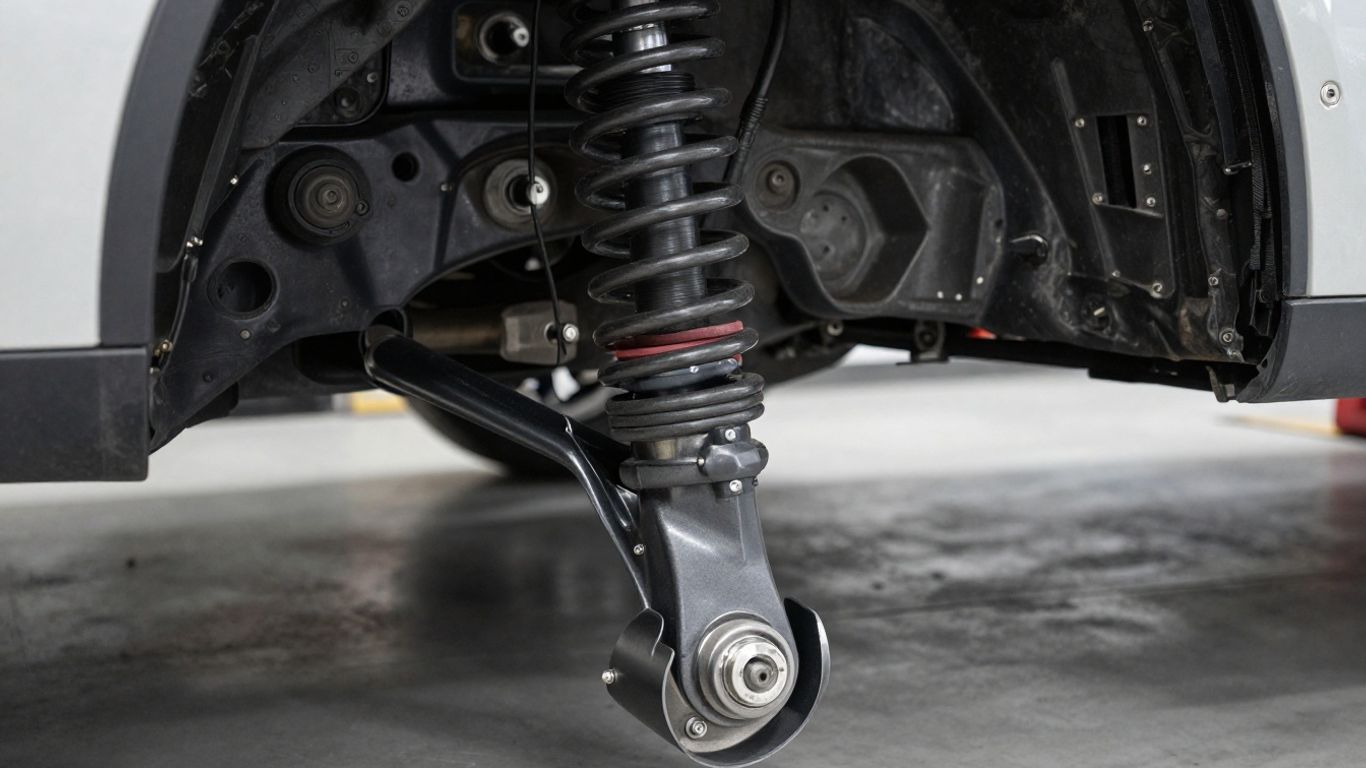
The goal is not to diagnose the fault by sound alone. It is to describe the pattern accurately so a technician can test the likely components without guessing.
How the sound changes with vehicle speed and steering angle
A noise that appears while the vehicle is stationary or moving very slowly often points toward parts loaded during steering, such as the strut mount, steering linkage, or power-assistance system. If it appears only at full lock, the steering system may be under greater load. A sound that grows with road speed can involve rotating or tire-related components instead.
Notice whether the noise happens during left turns, right turns, or both. Also record whether a small steering input is enough to trigger it, since that distinction can help separate a steering-joint concern from a suspension component that shifts as the body rolls.
What the noise reveals about the steering or suspension system
Steering and suspension parts work together, so a sound from one area may be transmitted through the body and seem to come from somewhere else. Bushings can creak as rubber twists, ball joints can complain when dry or worn, and strut hardware can groan as it rotates. A power-assisted system may produce a whine or groan when fluid is low or the pump is strained.
The sound itself is only one clue. A loose steering wheel, delayed response, clunk, uneven ride height, or visible leak gives the noise more significance and should be reported along with it.
Why cold weather, moisture, and vehicle age matter
Cold temperatures can stiffen rubber and make a marginal bushing noisier during the first few turns. Moisture may temporarily quiet or amplify a squeak, while road salt and water can accelerate corrosion around exposed hardware. These conditions do not prove that a component is failing, but they explain why an intermittent noise can still be worth checking.
Older vehicles naturally accumulate wear in joints, mounts, seals, and bushings. A noise that disappears after the car warms up should still be mentioned if it returns repeatedly or is joined by a change in steering feel.
Distinguishing a harmless rubber squeak from a serious fault
A brief squeak with no change in handling may be less urgent than a grinding noise, repeated clunk, or groan paired with looseness. Even so, a quiet rubber squeak cannot be declared harmless without examining the part that makes it. The surrounding symptoms matter most when deciding how quickly to arrange an inspection.
Keep a simple record of the conditions: outside temperature, wet or dry roads, steering direction, vehicle speed, and whether the brake pedal was applied. That information often proves more useful than trying to imitate the sound for someone else.
Common causes of steering-related creaks and groans
Several common faults can create a creaking or groaning noise while steering. The same sound may come from a worn joint, a dry bushing, a damaged mount, or a fluid-related problem. A visual inspection can suggest a direction, but the component usually needs to be loaded and tested to confirm the cause.
The following possibilities are not a checklist for replacing parts. They are a way to understand why a technician may inspect more than one area.
Worn ball joints and control arm bushings
Ball joints allow controlled movement between suspension and steering components while supporting substantial loads. When worn, they may produce a creak, clunk, or gritty movement, particularly during slow turns or when the vehicle moves over uneven ground. A damaged dust boot can allow contamination and loss of lubrication.
Control arm bushings can also dry, crack, or separate. Because they locate the wheel while allowing movement, deterioration may bring noise along with wandering, pulling, or uneven tire wear.
Failing tie rod ends and steering linkage components
Tie rod ends transfer steering movement to the wheel assembly. Excessive wear can cause knocking or clicking during turns, along with vague steering or a vehicle that does not hold a straight path. The noise may be felt through the steering wheel rather than heard clearly in the cabin.
Other linkage components can transmit similar sounds. A technician may check for looseness with the vehicle safely supported and compare the movement on both sides before recommending replacement.
Strut mounts, coil springs, and shock absorbers
The upper strut mount must allow the strut to rotate as the front wheels turn. A dry or damaged mount can groan during steering, especially while parked. Coil springs may creak if they shift against their seats, while worn shocks or struts can add bouncing, leaking, or a loose feeling over bumps.
A useful inspection considers the mount, spring, damper, and surrounding hardware together. Replacing only the noisy piece without finding why it moved or dried out can allow the problem to return.
Low or contaminated power steering fluid
Vehicles with hydraulic power steering may groan or whine when fluid is low, aerated, old, or contaminated. A low level can indicate a leak rather than simple consumption, so topping up the reservoir without finding the source is not a complete repair. Electric power steering systems have different components and do not use hydraulic fluid, which is another reason not to assume every steering noise has the same cause.
For additional context on arranging an inspection for steering and suspension sounds, see this steering noise inspection guide. It is still best to have the actual vehicle tested rather than matching symptoms to a list online.
How to identify where the noise is coming from
You can gather useful information without dismantling anything. Perform observations in a safe, quiet area and stop if the vehicle behaves unpredictably. The purpose is to describe the sound and its conditions, not to prove which component has failed.
A short video recorded from outside the vehicle can sometimes help a technician, provided another person records it and the driver is not distracted.
Testing the steering while parked
With the vehicle on level ground and the parking brake set, turn the wheel gently a small amount in each direction. Listen for a repeated creak, groan, click, or scrape, and notice whether the steering feels unusually heavy. Avoid holding the wheel against full lock for longer than necessary, since that can place extra load on the system.
Do not place hands near moving belts, pulleys, wheels, or suspension joints. If the noise is loud or accompanied by a sudden change in steering effort, end the test.
Comparing low-speed turns with normal driving
A quiet parking-lot turn can reveal noises that are masked by road and engine sounds. Compare a gentle left turn, a gentle right turn, and a wider turn at low speed. Then note whether the sound changes at normal driving speed, without deliberately creating an unsafe situation.
This comparison helps separate a noise tied to steering angle from one tied to wheel rotation, body movement, or road speed. It also gives a repair shop a more precise description than “it happens sometimes.”
Listening for noises over bumps and uneven roads
If the noise occurs while turning over a driveway edge or speed bump, suspension movement may be contributing. A creak on bumps but not on smooth turns can point toward bushings, mounts, springs, or other parts that move as the body rises and falls. A sharp clunk deserves more concern than a faint rubber squeak.
Use familiar roads and modest speeds. Do not repeatedly drive over potholes to reproduce a sound, since doing so can worsen an existing fault.
Checking whether the sound comes from inside or outside the cabin
Have a passenger listen from the front and rear seating areas while you drive slowly in a safe location. A noise heard mainly through the steering column may be inside the cabin, while a sound that is clearer with the window open may be near a wheel or strut. Sound can travel through the body, so location by ear is only an initial clue.
A few basic observations can be organized like this:
| Observation | Possible area to inspect | Useful detail to record |
|---|---|---|
| Noise while parked | Strut mount or steering assist | Direction and steering effort |
| Noise over bumps | Bushing, spring, or damper | Whether the body bounces |
| Noise at full lock | Steering assist or tire clearance | Left, right, or both directions |
| Noise with vibration | Wheel, tire, or linkage | Speed at which it begins |
After the observation, report the pattern rather than naming a part. That keeps the diagnosis open and reduces the chance of replacing an unrelated component.
Safety risks associated with steering noises
Noise alone does not tell you how dangerous a fault is. The risk rises when the sound is joined by looseness, vibration, pulling, fluid loss, or a visible change in a wheel’s position. Steering and suspension parts affect directional control, so delaying an assessment can have consequences beyond comfort.
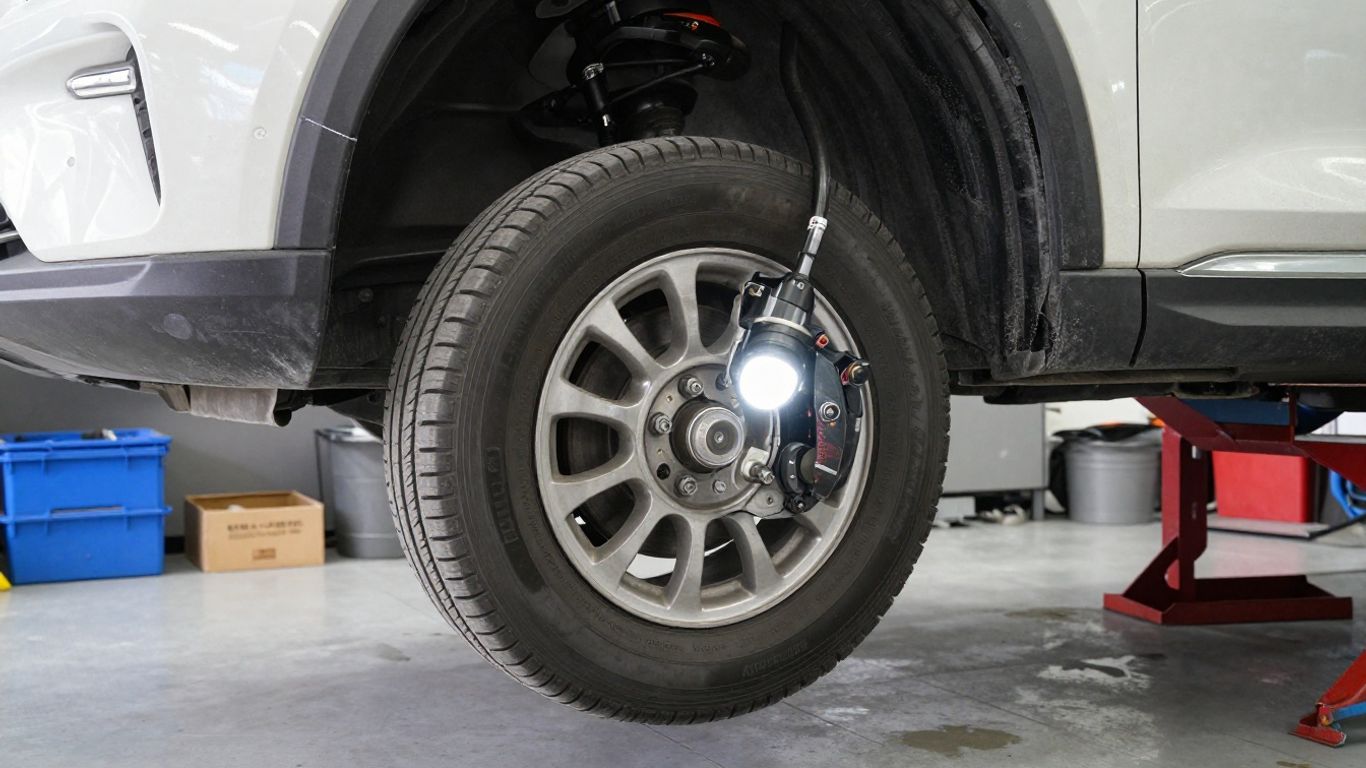
When in doubt, choose an inspection over repeated road tests. A vehicle that still moves normally can have a component approaching failure.
Signs of a potentially dangerous steering problem
Warning signs include a steering wheel that suddenly feels loose, a car that wanders, a wheel that appears tilted, or a repeated clunk during direction changes. Difficulty returning to center, heavy steering, and new vibration also deserve prompt attention. These symptoms may have several causes, but none should be dismissed because the noise is intermittent.
If the vehicle has recently struck a curb or pothole, mention that event. Impact damage can affect alignment, tires, wheels, and steering components at the same time.
When unusual play or vibration requires immediate attention
Play means a component moves farther than it should before the wheels respond. You may notice it as a dead area around the center of the steering wheel or a delayed reaction when changing direction. Vibration through the wheel, especially if it increases with speed or braking, should be assessed promptly rather than monitored indefinitely.
Do not crawl under a vehicle supported only by a jack to look for looseness. A proper inspection requires stable support and the right method for loading each joint.
How steering faults can affect braking and tire wear
A worn joint or bushing can allow the wheel to change position while braking or turning. That may produce pulling, instability, or a need for repeated steering corrections. Misalignment and abnormal movement can also wear a tire unevenly, sometimes hiding the mechanical problem until the tread is damaged.
Check the inside edges of the front tires when possible, since uneven wear is not always visible from a casual glance. A tire problem and a steering problem can also coexist, so one should not automatically be blamed for every symptom.
Situations in which you should stop driving
Stop and arrange roadside assistance if steering becomes difficult, the wheel no longer responds normally, a tire is rubbing, fluid is pouring out, or a wheel appears loose or badly angled. Stop as well if a loud impact is followed by vibration, pulling, or loss of control. Continuing to drive may turn a repairable fault into a collision risk.
A gentle drive to a repair shop may be reasonable only when the vehicle feels normal and a professional has advised it. Otherwise, have it transported.
Simple checks you can perform at home
Home checks should be limited to observation and simple maintenance described in the owner’s manual. They can reveal a low fluid level, a leak, tire damage, or an obvious obstruction. They cannot safely confirm the condition of a loaded ball joint or steering linkage.
Approach the check as information gathering. If anything looks uncertain, take photographs and show them to a qualified technician rather than attempting a repair.
Inspecting the power steering fluid reservoir
If the vehicle uses hydraulic power steering, check the reservoir on level ground with the engine off and the fluid cool, following the manual’s instructions. The level should be within the marked range, and the fluid should not look unusually dark, foamy, or contaminated. Use only the specified fluid; the wrong product can damage seals or create new problems.
If the level is low, look for the reason. A repeated drop after topping up is a repair clue, not a maintenance routine.
Looking for leaking fluid beneath the vehicle
Place clean cardboard beneath the front of the vehicle after parking and look for fresh drips. Fluid color varies by vehicle, so do not rely on color alone. Wet areas around hoses, the steering rack, pump, or nearby components should be reported rather than wiped away before inspection.
A small spot may come from another system, including an engine or transmission leak. Location, smell, and texture can help, but a shop should identify the fluid before you assume it is power steering fluid.
Checking tires, wheel wells, and visible suspension parts
Look for low tire pressure, bulges, exposed cords, stones rubbing inside a wheel well, or a plastic liner hanging loose. From outside the vehicle, you can also look for a broken spring, a torn rubber boot, or obvious fluid on a damper. Do not touch hot or recently moving parts.
When checking tires, use the pressure listed on the vehicle label rather than the maximum printed on the tire sidewall. Unequal pressure can change steering feel and create noises that complicate diagnosis.
Avoiding unsafe lifting and steering-system repairs
Never work beneath a car supported only by a portable jack, and do not loosen steering or suspension fasteners without the correct procedure and torque information. Some components require specialized tools, alignment afterward, or controlled spring release. A mistake can affect the vehicle’s ability to turn or stop.
If you are unsure what you are seeing, leave the parts assembled. Even a careful owner’s inspection is not a substitute for safe professional testing.
Professional diagnosis and repair options
A qualified repair shop will usually confirm the noise before recommending parts. The technician may inspect the vehicle on a lift, reproduce the sound on the ground, and check for play, leaks, damaged boots, or abnormal tire wear. A clear description from the driver can shorten that process.
An inspection service focused on steering and suspension noises can be a sensible starting point; this turning noise diagnosis resource covers several of the same symptom patterns. The diagnosis should still be specific to the vehicle’s design and condition.
What a steering and suspension inspection includes
The inspection may include tire and wheel checks, steering linkage movement, ball joints, control arms, bushings, strut mounts, springs, dampers, and power-assistance components. The technician may also check alignment angles and scan for electronic steering faults when the vehicle uses electric assistance.
A road test can show whether the sound changes under braking, acceleration, cornering, or bumps. The shop should explain which finding connects the noise to the recommended repair.
How mechanics isolate the source of the noise
Mechanics use controlled loading, listening tools, visual inspection, and comparison between left and right sides. They may turn the steering while the vehicle is stationary, inspect components under changing load, and remove nearby trim or shields only when needed. This process helps distinguish a sound’s true source from vibration transmitted through the chassis.
Good diagnosis also considers recent repairs, collision damage, tire changes, and weather-related patterns. It is usually more efficient than replacing several parts in sequence.
Typical repairs for worn or damaged components
Repairs may involve replacing a ball joint, tie rod end, bushing, strut mount, spring, shock absorber, hose, pump, or steering rack. The correct repair depends on measured wear and the manufacturer’s service procedure. Alignment may be needed after work that changes the position of steering or suspension parts.
Ask whether related hardware, protective boots, seals, or fasteners should be renewed at the same time. A complete repair addresses the cause and verifies that the noise and handling concern are gone.
Factors that influence repair costs
Cost depends on the failed component, vehicle design, parts availability, labor time, rust, and whether alignment or additional diagnosis is required. A simple bushing and a steering rack can create similar sounds while requiring very different work. The estimate should identify parts, labor, recommended related work, and any safety urgency.
For perspective, topics such as hidden gutter leaks, senior living planning, COA review procedures, and school refusal support require their own specialized assessments; they are not substitutes for a vehicle inspection. Keeping the diagnosis tied to the actual system prevents unrelated advice from muddying the decision.
How to prevent recurring steering and suspension noises
Prevention is mostly routine observation and timely maintenance. Steering and suspension parts live under load, and road impacts, moisture, temperature changes, and neglected tire care can shorten their service life. Small symptoms are easier to address before they affect alignment or control.
The best approach is consistent rather than elaborate. Follow the vehicle’s schedule, respond to changes, and use a repair shop that documents what it found.
Following the recommended maintenance schedule
Use the owner’s manual for inspection intervals, fluid specifications, tire pressures, and alignment guidance. Some vehicles require checks that are not obvious from the dashboard. Maintenance should also reflect driving conditions, including rough roads, heavy loads, and frequent short trips.
Keep records of inspections and repairs. A history makes it easier to spot a recurring leak, repeated bushing wear, or a noise that returned after related work.
Replacing worn components before they fail
A cracked boot, leaking damper, or bushing with visible separation may deserve attention before it creates a larger handling problem. Parts do not all wear at the same rate, so replacement should be based on inspection rather than an arbitrary universal interval. If one side has failed, ask whether the opposite side shows similar wear.
Replacing parts early is not a reason to replace healthy components without evidence. The useful distinction is between preventive repair supported by findings and unnecessary parts swapping.
Keeping tires properly inflated and aligned
Check tire pressure regularly and after major temperature changes. Rotate tires as recommended, inspect tread for uneven wear, and have alignment checked after a significant impact or suspension repair. Correct tire care reduces steering effort and makes new mechanical symptoms easier to recognize.
Do not ignore a slow leak. A tire that repeatedly loses pressure can affect handling even when the steering and suspension are in good condition.
Choosing quality parts and qualified repair service
Use parts that meet the vehicle’s specification and a technician familiar with steering and suspension work. Ask whether the repair includes proper fastening, lubrication where specified, alignment, and a final road test. The cheapest estimate may not include all of the steps needed for safe, durable work.
A clear explanation of the failed part and the evidence behind the recommendation is a good sign. You should leave knowing what was repaired and what, if anything, needs monitoring.
Conclusion
A steering creak or groan can be caused by something minor, but it can also signal wear in a part that affects control. Note the conditions, perform only safe visual checks, and arrange a professional inspection when the noise persists or handling changes. If steering feels unreliable, stop driving and have the vehicle transported.
Frequently Asked Questions
Is a creaking or groaning noise while steering always serious?
No. Rubber bushings or mounts can make temporary noises, especially in cold or damp conditions. However, repeated noise or any change in steering, ride, braking, or tire wear should be checked.
Why does my car groan when I turn the wheel while parked?
Stationary steering places significant load on steering assistance, tires, mounts, and suspension joints. Low fluid, a worn strut mount, a dry bushing, or excessive tire scrub may be involved.
Can low power steering fluid cause a groaning sound?
Yes, on vehicles with hydraulic power steering. Low or aerated fluid can make the system groan, but the underlying cause may be a leak. Electric power steering vehicles do not use hydraulic fluid.
Is it safe to drive with a steering noise?
It depends on the cause and the vehicle’s behavior. Do not drive if steering is loose or heavy, the vehicle pulls sharply, a wheel is misaligned, fluid is rapidly leaking, or vibration is severe.
Can bad suspension parts make noise only when turning?
Yes. Strut mounts, springs, bushings, and ball joints can move or carry different loads during turns. A road test and hands-on inspection are needed to identify the specific part.
Should I lubricate a noisy suspension component myself?
Usually not without confirming that the component is designed for lubrication and knowing the correct procedure. Some parts are sealed, and adding lubricant may hide wear rather than repair it.
What information should I give the mechanic?
Describe when the noise occurs, its direction, vehicle speed, steering angle, weather, road surface, and any accompanying vibration or pulling. Mention recent impacts, repairs, tire work, or fluid loss as well.