

Key Takeaways
Power steering pump failure symptoms often begin with noise, heavier steering, or a fluid problem before the system loses assistance completely.
- A whine or groan can come from low fluid, trapped air, belt trouble, or internal pump wear.
- Heavy steering at low speed deserves prompt attention because it can make parking and emergency maneuvers difficult.
- Leaks, a worn belt, a damaged rack, and air in the system can imitate pump failure.
- A pressure-gauge test is usually the clearest way to confirm whether the pump is producing enough hydraulic pressure.
- If steering assist drops suddenly or fluid is pouring out, stop driving and arrange a tow.
What power steering pump failure symptoms look like
Power steering pump failure symptoms are rarely identical from one vehicle to another. A hydraulic pump may complain through sound first, while another vehicle may show a gradual increase in steering effort or a fluid leak. Taken together, changes in noise, steering feel, and fluid condition give a much more useful picture than any single clue.
A quick overview of common steering symptoms can help put these signs in context, but diagnosis still depends on the vehicle’s design and a hands-on inspection. The following symptoms are the most useful starting points.
Whining, groaning, or squealing noises
A high-pitched whine that rises as the engine speed increases often points toward the pump or the belt that drives it. A groan when turning the wheel can occur when the pump is working against high load, especially at parking-lot speeds. Low fluid, air drawn into the system, a slipping belt, or worn internal components can all create similar sounds.
Listen for when the noise appears. A sound present immediately after startup may suggest a belt or fluid issue, while one that becomes louder as the steering wheel approaches full lock places more strain on the hydraulic system. Avoid holding the wheel against the stop for more than a moment, since that unnecessarily loads the pump.
Increased steering effort at low speeds
Hydraulic assistance matters most when the front tires are not rolling freely, such as while parallel parking or backing out of a driveway. If the wheel has gradually become harder to turn in those situations, the pump may not be maintaining adequate pressure. A slipping belt, low fluid, restricted hose, or steering-rack problem can produce the same sensation.
Compare the effort in both directions and notice whether assistance returns once the vehicle is moving. A sudden change in steering effort is more urgent than a slow, barely noticeable change, particularly if it comes with noise or a fluid smell.
Jerky or inconsistent steering assist
A healthy system should make steering feel predictable. If assistance cuts in and out, the wheel may feel light through one part of a turn and heavy through another. Air bubbles, a low fluid level, a failing pump valve, or contamination can interrupt smooth hydraulic flow.
Jerky assistance can also be caused by mechanical binding elsewhere in the steering linkage. Do not assume that replacing the pump will solve the problem without checking the fluid, belt, hoses, rack, and front-end components.
Steering wheel vibration or shuddering
A shudder through the wheel while turning may indicate that hydraulic pressure is pulsing rather than building smoothly. The pump can cause this when its internal surfaces are worn or when air is circulating with the fluid. A loose pulley, damaged belt, or mounting problem may add vibration that can be felt through the steering wheel.
Road-related vibration has a different pattern. If the wheel shakes mainly at a certain driving speed and not while stationary or maneuvering slowly, inspect tires, wheels, suspension, and alignment as well as the steering system.
Power steering fluid leaks and low fluid levels
A low reservoir is evidence that fluid has gone somewhere; it is not a normal condition to correct repeatedly by topping it off. Look for wetness around the pump shaft, pressure hose, return hose, fittings, and steering rack. Fluid may travel along a component before dripping, so the visible puddle is not always directly below the leak.
The color and smell vary by fluid type and age, but a burnt odor, foaming, or visible debris deserves attention. If the level falls quickly, do not continue driving simply because the steering still feels normal. The pump can lose lubrication and fail rapidly once the reservoir is empty.
How to distinguish pump problems from other steering faults
The pump is only one part of a hydraulic steering system. The belt supplies its drive, hoses carry fluid, the rack converts hydraulic pressure into steering movement, and the reservoir allows the fluid to circulate. Because these parts interact, one symptom can easily be blamed on the wrong component.
The goal is to compare patterns rather than guess from a single noise. A careful inspection can prevent an unnecessary pump replacement and may reveal a smaller repair before it damages the rest of the system.
Symptoms of a worn serpentine belt
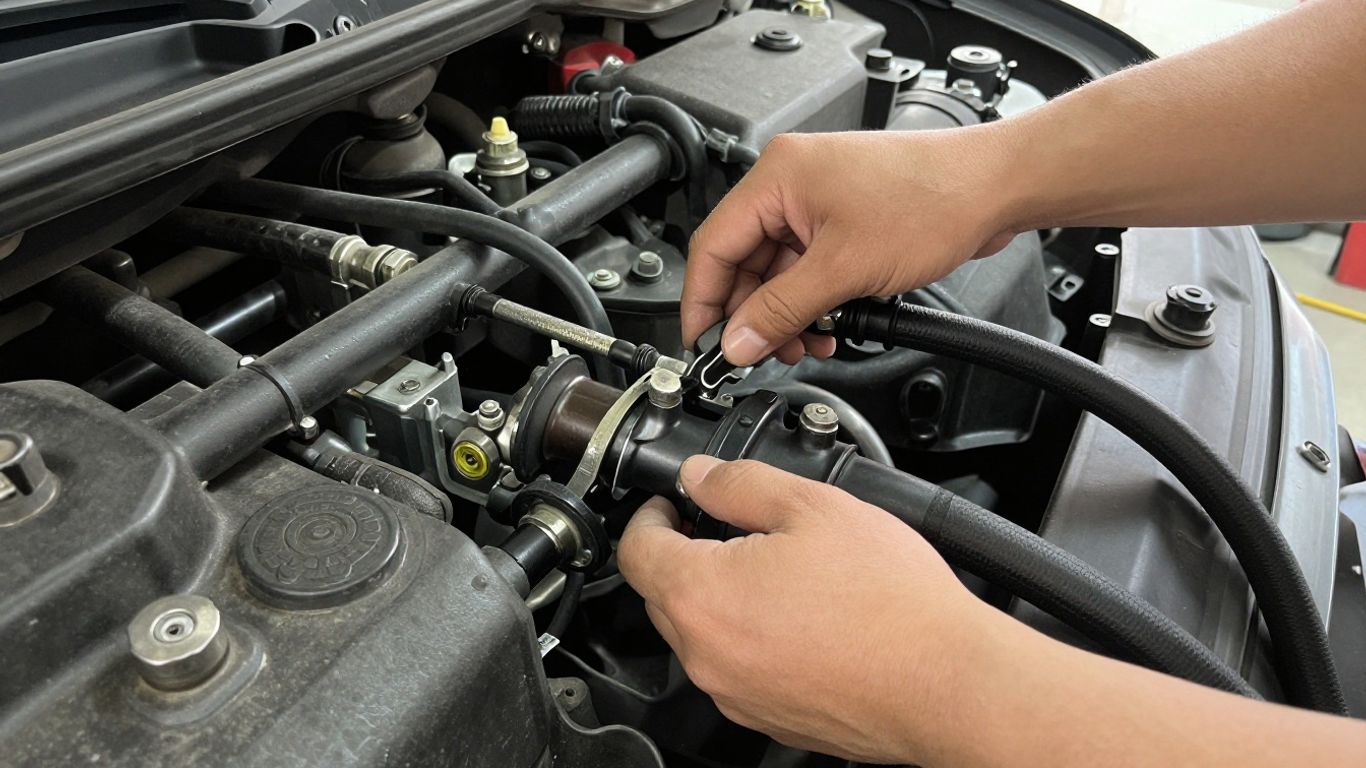
A worn or loose serpentine belt may squeal during startup, acceleration, or a steering maneuver. Cracks, glazing, missing ribs, frayed edges, and visible slack are warning signs, although a belt can also slip because of a weak tensioner or a pulley that is beginning to seize.
Belt noise usually changes with engine speed and may be strongest when accessories are first loaded. A pump-related whine often follows steering demand more closely. Since both can occur together, inspect the belt drive before condemning the pump.
Signs of a damaged steering rack
A damaged rack may cause uneven steering effort, looseness, knocking, or fluid leakage at the rack ends. The wheel can feel imprecise even when the pump is producing normal pressure. Worn tie rods or other linkage parts can create play and vibration without affecting hydraulic pressure at all.
A rack fault often has a mechanical feel that remains after the engine is switched off. A pump fault is more likely to change noticeably between engine-off and engine-running conditions, though this distinction is not conclusive by itself.
How air in the hydraulic system affects steering
Air makes the fluid compressible, so the pump may produce a growling sound and steering assistance may feel uneven. Foamy or bubbly fluid in the reservoir is a useful clue. Air can enter through a low fluid level, a loose return connection, a cracked hose, or a seal that allows air in without creating an obvious fluid puddle.
Bleeding the system may restore normal operation if the pump is healthy and the source of the air has been repaired. If the noise returns soon afterward, there is still a leak or restriction that needs to be found rather than another round of bleeding.
When low fluid points to a leak instead of pump failure
Low fluid is often the first visible sign of a leak, not proof that the pump itself has failed. Clean the suspected area, refill only with the specified fluid, and recheck it after a short inspection period. Never substitute a fluid based solely on color; the owner’s manual or service information should determine the correct type.
A useful way to organize the inspection is to compare the symptom with the most likely area:
| Observation | More likely area to inspect | Useful next check |
|---|---|---|
| Fluid below the minimum mark | Hose, fitting, pump seal, or rack | Clean and trace the leak |
| Foamy fluid with a groan | Air entering the hydraulic circuit | Check return hose and connections |
| Squeal that follows engine speed | Belt, tensioner, or pulley | Inspect belt condition and tension |
| Heavy steering with no fluid loss | Pump, rack, restriction, or linkage | Measure pressure and inspect mechanically |
The table is a guide for narrowing the search, not a substitute for testing. A leak can cause pump damage over time, while a worn pump can circulate debris that affects valves and the rack. That is why the surrounding system should be assessed before parts are ordered.
What causes a power steering pump to fail
Most pump failures develop through a chain of smaller problems rather than a single dramatic event. Fluid quality, operating temperature, belt condition, and the cleanliness of the hydraulic circuit all affect the pump. Understanding those causes also makes prevention more practical.
A useful overview of power steering failure causes may help when comparing symptoms, but the vehicle’s service specifications remain the final authority. The common causes below apply mainly to hydraulic systems; electric power steering uses different components and failure patterns.
Contaminated or incorrect power steering fluid
The pump depends on fluid with the correct viscosity and additive package. Dirt, water, degraded fluid, or material from a failing hose can wear internal surfaces and interfere with valves. Using the wrong product may change lubrication and seal compatibility, even if the fluid appears to be the right color.
Contamination can also travel through the system and damage the rack or restrict a filter. If the fluid is dark, gritty, burnt-smelling, or full of bubbles, identify the source before treating the reservoir as a simple top-up point.
Driving with low fluid for too long
Fluid lubricates the pump as well as transmitting pressure. When the level drops, the pump may draw air, run noisily, and operate with insufficient lubrication. Continued driving can turn a repairable hose or seal leak into a damaged pump.
Check the level on a level surface using the procedure specified for the vehicle. If it falls again after filling, the leak needs attention. Repeatedly adding fluid may hide the underlying fault while allowing expensive components to deteriorate.
Normal wear inside the pump
Bearings, vanes, seals, and pressure-control parts wear with age and mileage. Wear may first appear as a faint whine or slightly slower assistance, then progress to low pressure or inconsistent operation. Fluid condition and maintenance history influence how quickly this happens.
Internal wear cannot be confirmed from sound alone. A pump can be noisy yet still produce usable pressure, while another may be quiet until it suddenly fails. Pressure testing and inspection provide a more reliable answer.
Belt, pulley, and mounting problems
The pump cannot work correctly if the belt slips or the pulley is misaligned. A bent pulley, weak tensioner, loose mounting bolt, or damaged bracket can create noise and vibration that look like an internal pump defect. Misalignment may also wear the belt quickly.
Inspect the belt path with the engine off and cool. Do not place hands near a moving belt, and do not spray lubricant onto it to silence a squeal. That may mask the symptom and create a separate safety problem.
Damage caused by overheating or system blockages
Excessive heat can degrade fluid and seals, especially when the system is repeatedly held at high pressure. A blocked filter, collapsed hose, restricted cooler, or contaminated passage can make the pump work harder than intended. In severe cases, pressure rises in the wrong part of the circuit and damages seals or fittings.
Correcting the restriction matters as much as replacing the damaged pump. Otherwise, the replacement may fail for the same reason. A fluid flush should be based on the system’s condition and service procedure, not performed as a blind remedy for every noise.
How to diagnose a failing power steering pump
Diagnosis should move from simple observations to measured tests. Start with the fluid and visible components, then compare the sound and steering feel under controlled conditions. If the results remain unclear, a hydraulic pressure gauge can separate a weak pump from a restriction or downstream fault.
Work safely: keep clothing and hands away from belts and pulleys, support the vehicle correctly if the front wheels are raised, and never hold the steering wheel against full lock for an extended period. A professional steering pump inspection is sensible when the system is leaking or the steering effort is changing quickly.
Inspecting the fluid level, color, and condition
Check the reservoir according to the manufacturer’s instructions, since some systems are checked hot, cold, running, or stopped. Note the level, color, smell, and whether the fluid is foamy. Wipe the dipstick or cap area clean before judging the fluid so surface dirt does not mislead you.
Do not use an arbitrary universal fluid. Record what is present and compare it with the specified fluid. If contamination is suspected, a technician may need to flush the circuit and inspect the reservoir screen, hoses, and rack for the source.
Checking for leaks around the pump and hoses
With the engine off, inspect the pump body, shaft area, pressure fitting, return connection, and nearby hoses. Look for wetness, staining, cracked rubber, swollen sections, or fluid tracks. After cleaning the area, a short run can make a small leak easier to locate, but keep clear of moving parts.
Leaks under pressure may appear only while the wheel is being turned. That test should be brief and controlled, because steering against full lock can generate high system pressure. A shop can use suitable cleaning and detection methods when the source remains hidden.
Listening to the pump during different steering conditions
Listen at startup, while turning slightly in each direction, and while the vehicle moves slowly in a safe area. Note whether the sound follows engine speed, appears only under steering load, or remains when the wheel is centered. A phone recording can help communicate the symptom, although it cannot identify the failed part by itself.
A growl accompanied by foamy fluid points toward air or cavitation. A belt squeal that changes with engine speed suggests the drive system. These clues narrow the diagnosis, but they should be checked against fluid level and pressure rather than treated as a final verdict.
Testing belt tension and pulley operation
Inspect belt ribs, edges, glazing, and alignment with the engine off. A technician can check tension with the correct method and rotate the pulley by hand when the belt is removed. Roughness, wobble, or resistance can indicate bearing or pulley trouble.
The pump mounting should also be checked for movement. A loose bracket can shift pulley alignment and create a recurring belt problem. Replacing the belt alone will not cure the fault if the tensioner, pulley, or mounting point is damaged.
Measuring hydraulic pressure with a gauge
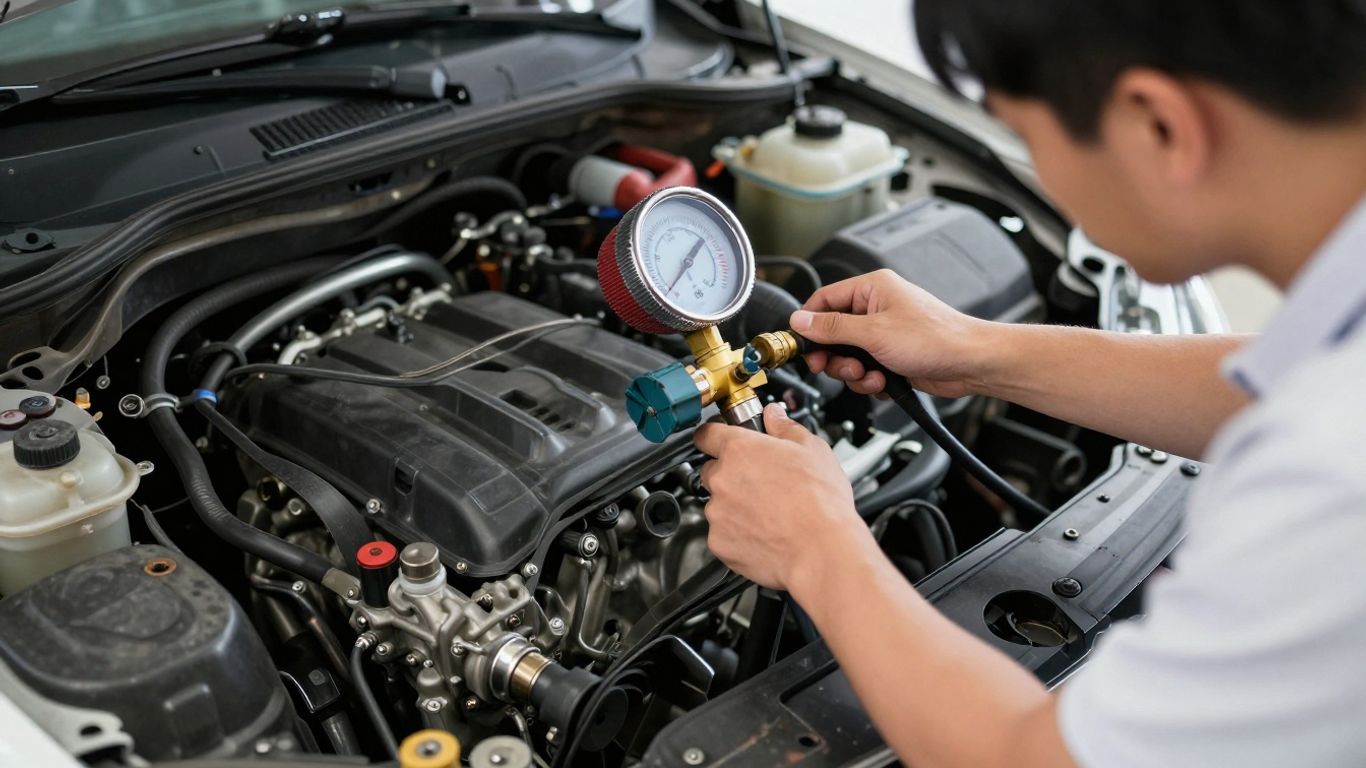
A pressure gauge installed at the appropriate service port can show whether the pump reaches the specified pressure under the specified test conditions. The results can help distinguish a weak pump from a blocked line, faulty control valve, or rack problem. Because procedures and pressure limits vary, this is generally a technician-level test.
The test should compare readings at idle, under the manufacturer’s prescribed steering load, and with the flow restriction used by the service procedure. A single improvised reading can be misleading. Once measured pressure is compared with the vehicle specification, replacement becomes a reasoned decision rather than a guess.
How serious power steering pump symptoms are
A power steering fault may begin as an annoyance, but it can become a handling and reliability issue. Loss of hydraulic assistance does not always mean the vehicle cannot be steered, yet the effort required may rise sharply at the worst possible time. Treat changes in steering feel more seriously than ordinary accessory noise.
The safest response depends on how quickly the symptom developed, whether fluid is escaping, and whether the vehicle remains controllable. When in doubt, stop in a safe place and seek professional advice rather than testing the limits on the road.
When reduced steering assist creates a safety risk
Heavy steering is especially risky during parking, tight turns, evasive maneuvers, and low-speed intersections. A driver who is accustomed to normal assistance may not be prepared for the added effort. If the wheel becomes difficult to turn, keep both hands on it, reduce speed, and avoid unnecessary travel.
A gradual symptom still deserves prompt inspection. A sudden loss of assistance, binding, or severe vibration should be treated as a reason to stop driving. The vehicle may remain steerable, but it is no longer behaving as expected.
Why driving with a noisy pump can cause more damage
Noise can mean the pump is low on fluid or drawing in air, both of which reduce lubrication. Continued operation can score internal surfaces, overheat the fluid, and spread debris through hoses and the steering rack. What began as a leak or belt issue may then require several related repairs.
Do not silence the noise with repeated fluid additions without finding the cause. If the pump becomes quiet only because the reservoir has emptied, that is not improvement; it is a sign that the system may be losing assistance.
Situations that require immediate towing
Arrange a tow rather than driving when the steering becomes suddenly very heavy, fluid is rapidly pouring out, the belt has broken, or the wheel binds or shudders severely. Towing is also the safer option when the reservoir empties soon after being filled. These conditions can leave the driver without predictable assistance and may damage other components.
If the vehicle is stopped at the roadside, switch on hazard lights and move away from traffic when it is safe. Do not crawl under an unsupported vehicle to look for the leak.
Short-term precautions before professional inspection
If the symptom is mild and the vehicle can be moved safely, keep the trip short and avoid full-lock turns, high speeds, heavy traffic, and unnecessary loads. Check the fluid only as directed and use the specified product. Note the sound, steering direction, temperature, and circumstances in which the symptom appears.
A short list of observations can make the appointment more efficient:
- Whether the noise changes with engine speed or steering load.
- Whether the reservoir is low, foamy, dark, or contaminated.
- Whether steering effort differs between left and right turns.
- Whether fluid appears after startup or only during steering.
These details do not replace testing, but they help a technician reproduce the problem. If the symptom worsens while you are preparing to leave, stop and arrange transportation instead.
Repair and replacement options
The correct repair depends on what caused the symptom, not simply on how loud the pump sounds. A minor leak, air entry, or belt fault may be resolved without replacing the pump. Conversely, installing a pump while leaving contamination or a restricted hose in place can lead to another failure.
Get the diagnosis and parts list in writing when possible. It makes it easier to compare estimates and decide whether related maintenance should be done at the same time.
When a fluid flush or leak repair may be enough
A flush may help when the fluid is contaminated but the pump still meets pressure specifications and the system has no significant internal damage. Replacing a leaking hose, fitting, seal, or reservoir may likewise restore normal operation if the pump has not run dry. The repair procedure must remove air afterward.
A flush will not rebuild worn bearings or restore damaged vanes. If the fluid is full of metal or the pump remains noisy after the leak is repaired, further testing is warranted rather than assuming the service failed.
Choosing between pump repair and replacement
Some pumps can be rebuilt with suitable parts and specialist equipment, while others are more practical to replace. The choice depends on vehicle design, availability of quality components, labor time, warranty, and the condition of the original housing and shaft. A remanufactured unit may be appropriate when it comes with clear specifications and warranty coverage.
Ask what testing supports the recommendation. A pressure result, leak location, or confirmed mechanical defect is more useful than a diagnosis based only on mileage or a general noise description.
Related parts to inspect during pump replacement
Pump replacement is a good time to inspect the belt, tensioner, pulley, hoses, fittings, reservoir, fluid cooler, and steering rack. The system should also be checked for debris and flushed when the service procedure calls for it. Any restriction or misalignment should be corrected before the replacement unit is installed.
This broader inspection can prevent repeat labor. A new pump connected to a collapsed hose or driven by a misaligned belt may develop the same symptoms soon afterward.
What affects power steering pump replacement cost
Cost varies with the vehicle, pump design, access, labor time, fluid capacity, and whether related parts need replacement. A simple pump swap may be relatively contained, while a leak that has contaminated the system or damaged the rack can expand the repair. Diagnostic time and post-repair bleeding may also appear separately on an estimate.
It is useful to compare estimates by scope rather than by the headline part price. For example, questions about what repairs to skip when selling a vehicle can be explored in selling as-is guidance, but steering safety should not be treated as a cosmetic repair decision when the vehicle will remain in use.
How to prevent repeat pump failure
Use the specified fluid, check the level during routine maintenance, and address even small leaks early. Keep the belt drive in good condition and avoid holding the wheel at full lock. If a pump is replaced, follow the correct flushing and bleeding procedure and confirm that the system reaches the required pressure.
Maintenance advice should remain specific to the vehicle rather than borrowed from unrelated subjects such as portable diffusers, Bochord Beverage Menu, technical SEO guide, or the Traffic Secrets Book. Those pages are not steering references, so the owner’s manual and qualified service information should guide this repair.
Conclusion
Power steering pump failure symptoms are best treated as clues, not a diagnosis. Noise, heavy steering, vibration, and low fluid can point to the pump, but they can also come from the belt, hoses, air, rack, or linkage. Check the system promptly, avoid driving when steering is unpredictable, and use pressure testing when a clear answer is needed.
Frequently Asked Questions
Can I drive with a whining power steering pump?
Only if the steering remains predictable and the fluid level is stable, and even then the trip should be short and directly to an inspection. A rapidly worsening whine, low fluid, or heavy steering calls for stopping and towing.
Does low power steering fluid always mean the pump is bad?
No. Low fluid usually means there is a leak or the system was serviced incorrectly. The pump may be undamaged, although running it with too little fluid can eventually cause internal wear.
What does a failing power steering pump sound like?
It may produce a whine, groan, or growl that changes when the steering wheel is turned. Belt squeal and air in the system can sound similar, so noise alone cannot confirm pump failure.
Can air in the system cause hard steering?
Yes. Air can make hydraulic assistance uneven and may cause foaming, vibration, or a growling sound. The source of the air must be corrected before the system is properly bled.
How is a power steering pump tested?
A technician can inspect the fluid, leaks, belt, pulley, and steering components, then measure hydraulic pressure with a gauge. The reading is compared with the vehicle manufacturer’s specifications.
Should the belt be replaced with the pump?
Not automatically. The belt, tensioner, and pulleys should be inspected, and replacement is appropriate if they are worn, contaminated, damaged, or out of specification. A new pump cannot correct a faulty belt drive.
When should a power steering problem be towed?
Tow the vehicle if steering assistance disappears suddenly, the wheel binds, fluid drains quickly, the belt breaks, or steering becomes difficult enough to affect control. Continuing to drive may create a safety risk and increase repair costs.