

Key Takeaways
A clunking noise over bumps can come from suspension, steering, brakes, exhaust parts, or something loose inside the vehicle. The sound itself offers clues, but a safe inspection is the only reliable way to identify the cause.
- Worn sway bar links, bushings, strut mounts, ball joints, and control arms are common causes.
- A loose brake part, heat shield, exhaust hanger, or trunk item can sound surprisingly similar.
- Note where and when the clunk occurs before attempting any diagnosis.
- Steering changes, tire wear, instability, leaks, or a broken spring call for prompt attention.
- Repairs should address the failed part and any related hardware affected by the same wear.
What a clunking noise over bumps can indicate
A clunk usually means that two components are moving more than they should, contacting one another, or no longer being held firmly in place. The source may be in the suspension, but the sound can travel through the body and seem to come from somewhere else. A common suspension noise guide can provide useful background, though the vehicle still needs to be assessed on its own symptoms.
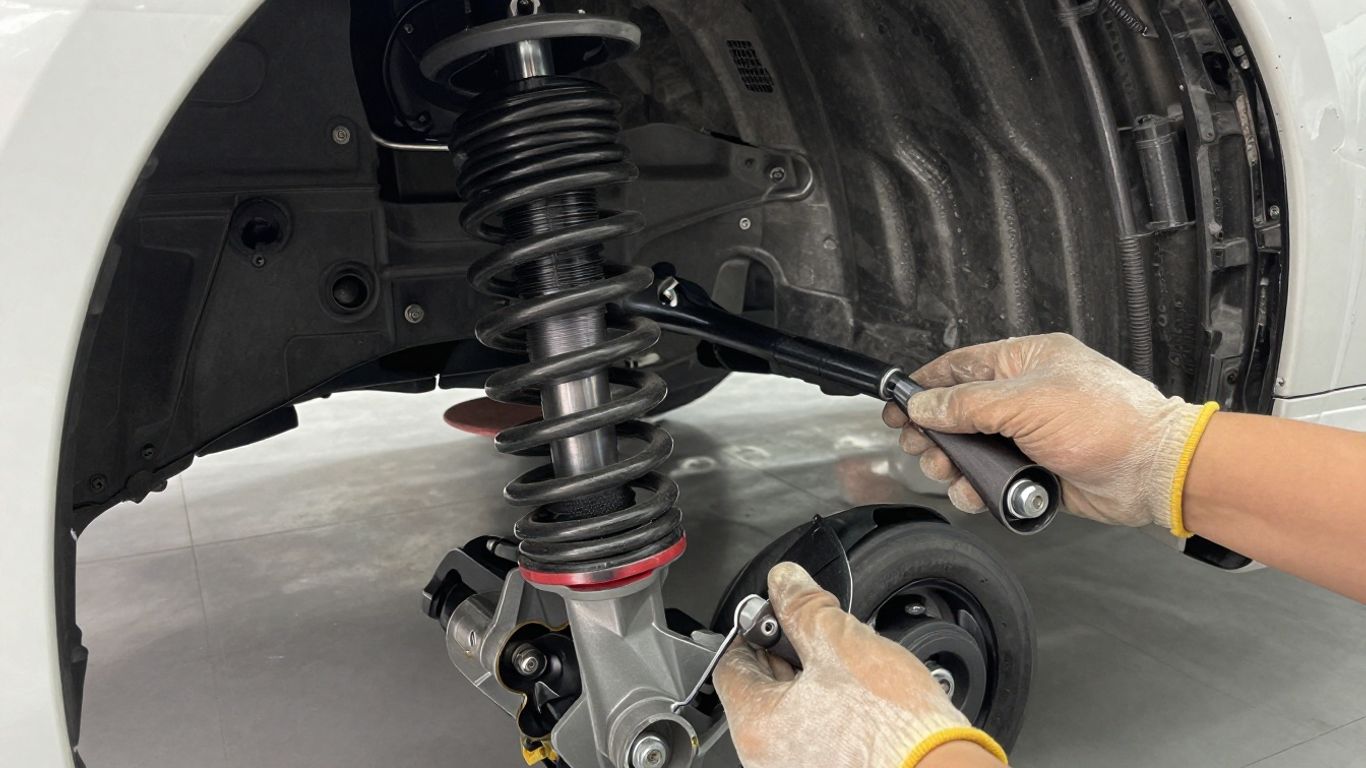
How suspension and steering noises differ
Suspension-related clunks tend to appear when a wheel moves vertically over a bump, dip, or uneven patch of pavement. Steering-related noises may occur while turning the wheel, changing direction, or loading one side of the front end, sometimes with a sensation of looseness. The two systems share several mounting points, so a worn ball joint or control arm can produce both a noise and a change in steering feel.
Why the sound may occur only on rough roads
Smooth pavement may not move the suspension far enough to expose a small amount of play. On rough roads, one wheel can rise or fall independently, loading sway bar links, bushings, springs, and strut mounts in quick succession. That is why a vehicle can seem quiet around town yet make a repeated knock on broken pavement or a speed bump.
What the noise’s location can reveal
A sound at the front corner points attention toward components such as a sway bar link, strut mount, control arm, or ball joint. A noise near the center or rear may instead come from an exhaust shield, mount, spare tire, or rear suspension hardware. Location is only a starting clue because metal body panels and subframes can carry a sharp impact several feet from its origin.
How speed and temperature affect the sound
At low speed, the suspension has time to move through a larger part of its travel, making a loose connection easier to hear. Higher speed can add tire and road noise, masking a softer thud, while a cold vehicle may sound different from one that has been driven for an hour. Temperature can change the stiffness of rubber bushings and the behavior of lubricants, but a recurring clunk should not be dismissed as seasonal.
Common suspension components that cause clunking
Suspension parts work as a connected system, so wear in one joint can place extra movement into nearby components. The usual suspects are the pieces that guide the wheel, control body roll, or attach the suspension to the vehicle structure. A suspension maintenance overview offers another general explanation of these connections.
Worn sway bar links and bushings
Sway bar links connect the stabilizer bar to the suspension, while bushings hold the bar against the vehicle body. When their joints or rubber mounts wear, the bar can shift and knock as the vehicle rolls over an uneven surface. The noise is often most noticeable when one wheel hits a bump before the other, rather than when both wheels rise together.
Loose or damaged struts and shock absorbers
A strut or shock absorber can clunk if its mounting hardware is loose, its upper mount has deteriorated, or its internal structure is damaged. A leaking unit may also allow excessive suspension movement, although a leak does not prove that it is the source of the noise. Because these parts affect how the tire follows the road, a diagnosis should include handling and ride symptoms as well as sound.
Failing control arm bushings and ball joints
Control arm bushings cushion movement while helping keep the wheel in its intended position. Cracked or separated rubber can let the arm shift under braking or over bumps. Ball joints provide a pivot between suspension and steering components; excessive play there is more serious because it can affect wheel control and alignment.
Broken coil springs and spring seats
A cracked coil spring may make a sudden metallic sound when its broken end moves in its seat. A damaged spring seat or isolator can create a dull knock and may allow the spring to sit incorrectly. Look for a corner of the vehicle that appears lower than the others, but do not reach beneath a vehicle supported only by a jack.
Other possible sources of the noise
Not every bump is a suspension diagnosis. Underbody parts and interior cargo can move at the same moment the suspension reacts, creating an almost identical sound. Isolating these simpler causes first can prevent unnecessary parts replacement.
Loose brake hardware and calipers
Brake pads, clips, caliper bolts, and other hardware can rattle or knock when the wheel moves over rough pavement. The noise may change when the brake pedal is lightly applied, because braking pressure can temporarily restrain a loose part. Never treat a loose caliper as a harmless rattle; it needs inspection before the vehicle is driven normally.
Exhaust hangers and heat shields
A stretched rubber exhaust hanger can let the pipe contact the body, while a loose heat shield may buzz, tap, or clunk over a bump. These sounds often seem to come from beneath the cabin rather than from a wheel. With the exhaust fully cool, a technician can check for safe clearance and loose fasteners without confusing the issue with suspension wear.
Engine, transmission, and subframe mounts
Worn mounts permit more movement when the vehicle accelerates, decelerates, or crosses an uneven surface. A mount-related knock may therefore appear during a bump and during gear changes, rather than only when the wheels move. Subframe hardware deserves particular attention because looseness there can affect the position of several suspension components at once.
Items moving inside the trunk or cabin
Before booking a repair, remove loose tools, bottles, floor mats, and cargo from the vehicle. Secure the spare tire, jack, and cargo-cover hardware, then repeat the same route. This simple check has saved many drivers from chasing a noise underneath the car that was actually coming from the trunk.
How to diagnose the problem safely
Diagnosis begins with observation rather than replacing the first part commonly associated with a clunk. Record the road surface, speed, weather, direction of travel, and whether braking or turning changes the sound. General clunking diagnosis advice and front-end inspection tips may help you describe the symptom, but neither replaces a hands-on check.
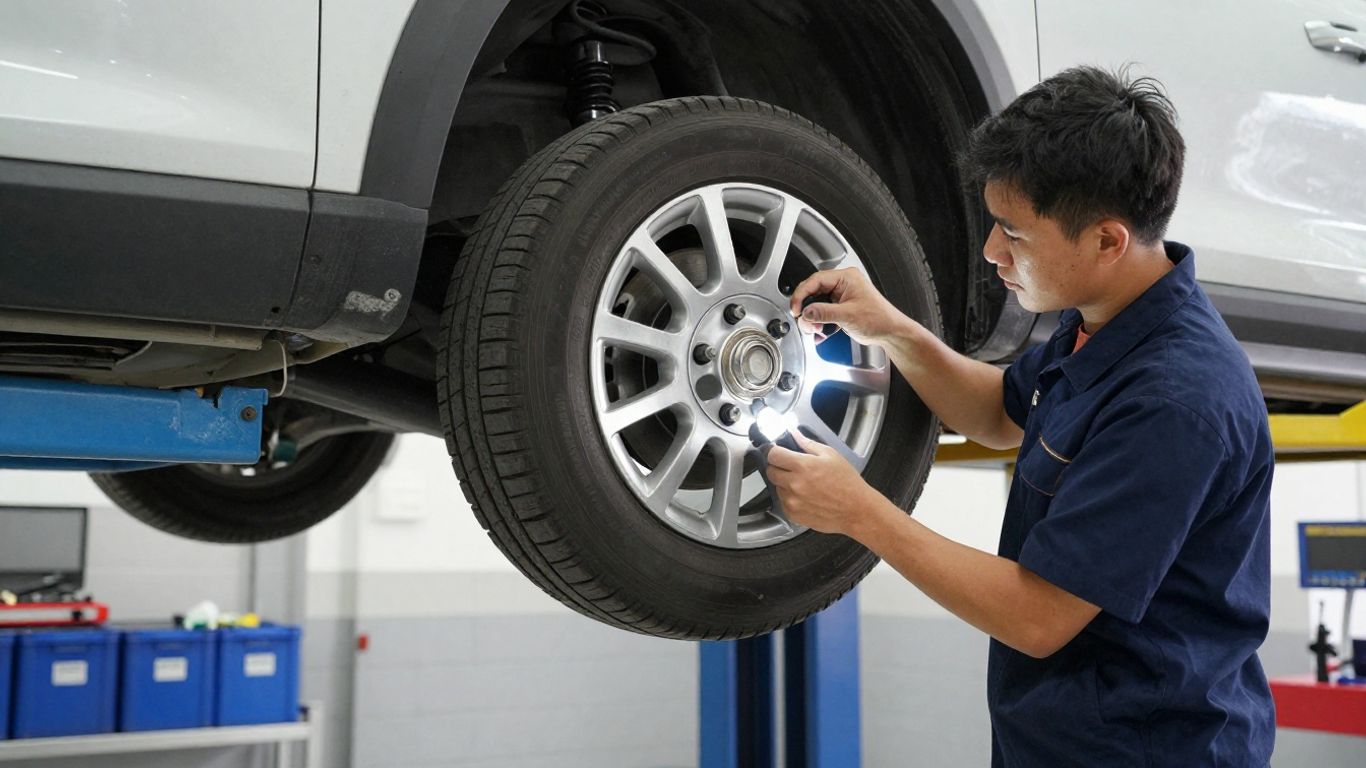
Recreating the noise during a road test
Choose a quiet, familiar route and keep the test brief. Pay attention to whether the sound occurs when both wheels cross a bump, when only one wheel does, or when the vehicle transitions into a driveway. Do not deliberately strike potholes, drive at unsafe speeds, or ask someone to work beneath a moving vehicle.
Checking for loose parts during a visual inspection
Park on level ground, switch off the engine, apply the parking brake, and allow hot components to cool. Look for a visibly broken spring, displaced rubber, leaking damper, damaged shield, or missing fastener, but do not rely on sight alone. A professional noise assessment explains why worn or loose connection points can produce a knock even when the damage is not obvious.
A few safe checks can narrow the possibilities without putting hands near unsupported suspension parts:
- Empty and secure the trunk, jack, spare tire, and loose cabin items.
- Compare the vehicle’s ride height from side to side on level ground.
- Check tires for damage, unusual wear, and correct inflation.
- Observe whether gentle braking changes the sound during a controlled test.
These observations give a repair professional useful context. They are not a substitute for lifting and supporting the vehicle correctly.
Testing suspension components for play
Checking joints and bushings for play usually requires the vehicle to be raised and supported at approved points. The correct test varies by component, and a spring or ball joint can store substantial energy if handled incorrectly. A technician may use a pry bar, wheel movement checks, torque inspection, or a lift-based visual examination while keeping clear of pinch points.
When a professional inspection is necessary
Arrange an inspection when the noise is persistent, becoming louder, or accompanied by steering or braking changes. Stop driving and request assistance if a wheel appears misaligned, a spring is broken, a tire is damaged, or the vehicle feels unstable. Online resources can help you ask better questions, but parts should not be ordered solely from a sound description.
Warning signs that require immediate attention
A clunk by itself does not reveal how urgent the fault is. The risk rises when the noise comes with a change in the vehicle’s path, ride height, tire condition, or braking behavior. These symptoms can indicate that a component is no longer simply noisy but is affecting control.
Steering wheel vibration or pulling
Vibration through the steering wheel, a vehicle that drifts, or a need to constantly correct direction deserves prompt inspection. The cause may involve suspension or steering parts, a damaged tire, or wheel and alignment issues. Avoid high-speed driving until the source is known, especially if the symptom began after a pothole or curb impact.
Uneven tire wear and alignment changes
Feathered edges, cupping, or wear concentrated on one side can point to alignment changes or poor control of wheel movement. A clunk together with new tire wear is more concerning than a noise that has remained unchanged for months. Have the underlying mechanical condition checked before paying for an alignment alone.
Vehicle instability during braking or turning
If the car wanders while braking, leans unusually in a turn, or feels loose during a lane change, reduce speed and arrange an inspection. Worn bushings, joints, dampers, and mounts can all affect how consistently the tires meet the road. A new clunk paired with instability should be treated as a handling problem, not just an annoyance.
Fluid leaks, sagging suspension, or broken springs
A leaking shock or strut, a visibly low corner, and a broken spring each warrant prompt attention. Do not place a hand near a displaced spring or attempt to push it back into position. If a tire is rubbing, the vehicle is resting on a damaged part, or a suspension component is hanging loose, have it towed rather than driven.
Repair options and typical considerations
The right repair depends on the failed component, the vehicle’s condition, and the evidence found during inspection. A shop should explain what is worn, how it affects the noise or handling, and whether any safety-related damage is present. Estimates may include labor, alignment, fasteners, corrosion-related work, and a post-repair road test.
Replacing worn links, bushings, or joints
Sway bar links and bushings are often replaced when their joints develop play or their rubber has deteriorated. Control arm bushings and ball joints require closer evaluation because the replacement may involve a complete arm, a pressed-in bushing, or related alignment work. The repair should restore the intended movement without introducing new play at the mounting points.
Repairing or replacing struts and shocks
A damaged or leaking damper may be replaced, while a worn upper mount or spring seat may need attention at the same time. Because the work involves spring compression and precise fastening, it is not a good choice for improvised tools or an unsupported vehicle. Afterward, the ride height, tire contact, and alignment should be checked where applicable.
Tightening loose hardware and mounting points
Some clunks are caused by a loose bolt, bracket, shield, or mount rather than a failed major part. Correct tightening requires the manufacturer’s procedure and torque specification, and certain suspension bushings must be tightened at a particular ride height. Correct torque matters because simply making a fastener feel tight may not restore the intended clamping force.
Deciding whether related components should be replaced together
Replacing parts in pairs can make sense when both sides have similar age and wear, particularly for components that influence ride or handling. It is not automatically necessary for every repair, however. The decision should be based on inspection results, vehicle mileage, corrosion, labor access, and whether replacing one old companion part would leave the system uneven.
How to prevent suspension clunking from returning
Suspension wear cannot be eliminated, but it can often be found before a small noise becomes a handling problem. Regular checks are especially useful after severe pothole impacts, collisions with curbs, or long periods on rough roads. Prevention is mostly a matter of noticing changes early and avoiding avoidable loads.
Following scheduled suspension inspections
Ask for suspension, steering, brake, and underbody checks during routine service. A useful inspection includes tire condition, ride height, visible leaks, mounting hardware, bushings, and joint play. Keep a note of previous repairs so a new sound can be compared with the vehicle’s recent history.
Replacing worn tires and maintaining correct pressure
Tires with damaged casings or irregular wear can add vibration and impact harshness, making other problems harder to identify. Check pressure when the tires are cold and use the vehicle manufacturer’s recommended setting rather than the maximum printed on the tire. Replace tires with severe damage or insufficient tread before they complicate a suspension diagnosis.
Avoiding potholes, overloaded vehicles, and harsh impacts
Slow down for speed bumps and scan ahead for broken pavement when conditions allow. Avoid carrying more weight than the vehicle is designed to support, since extra load increases suspension travel and stress. When a pothole cannot be avoided, keep the vehicle straight and do not brake sharply while one wheel is entering it.
Choosing quality replacement parts and proper installation
Parts should match the vehicle and be installed according to the repair procedure. Hardware that is reused when it should be replaced, or bushings tightened in the wrong position, can lead to premature noise. A final inspection and controlled road test help confirm that the repair solved the original problem rather than merely changing its sound.
Conclusion
A clunking noise over bumps is a useful warning that something deserves closer attention, even when the vehicle still feels normal. Start with simple observations, avoid unsafe under-car checks, and have persistent noise or any handling change inspected by a qualified professional before it becomes a larger repair or a safety concern.
Frequently Asked Questions
Is a clunking noise over bumps always caused by the suspension?
No. Suspension parts are common sources, but loose brake hardware, exhaust shields, engine mounts, and unsecured cargo can make similar sounds. The noise must be traced rather than assumed.
Can I keep driving with a clunking noise?
It depends on the cause and the vehicle’s behavior. A quiet, unchanged noise without other symptoms may allow a cautious trip to an inspection, but steering pull, instability, a broken spring, tire damage, or a fluid leak calls for stopping and arranging assistance.
Why is the clunk louder at low speed?
Low-speed travel often makes suspension movement easier to hear because road and tire noise are reduced. A wheel may also move more distinctly over a bump, exposing play in a joint, bushing, mount, or link.
Could a loose spare tire cause the noise?
Yes. A spare tire, jack, tools, or cargo-cover hardware can move in the trunk and sound like an underbody clunk. Empty and secure the cargo area before assuming the problem is mechanical.
Do worn shocks or struts make a clunking sound?
They can, especially when a mount, bushing, fastener, or internal part is damaged. A leak or poor ride control may accompany the sound, but those symptoms do not identify the exact failed component by themselves.
Should suspension parts be replaced in pairs?
Sometimes. Paired replacement can help maintain balanced performance for components with similar wear, but the decision depends on inspection findings, age, mileage, vehicle design, and the manufacturer’s repair guidance.
How quickly should a clunk be inspected?
Arrange an inspection soon if the noise repeats or grows louder. Seek immediate help when it is joined by vibration, pulling, uneven tire wear, unstable braking or turning, a sagging corner, a broken spring, or a visible leak.