

Key Takeaways
A steering wheel that suddenly feels tight and stiff deserves attention, especially if the change is severe or accompanied by noise, warning lights, fluid loss, or wandering control.
- Stop driving if steering effort changes sharply or the vehicle is difficult to control.
- Hydraulic systems may lose assistance because of low fluid, leaks, pump trouble, belt problems, or trapped air.
- Electric power steering can become heavy because of low voltage, sensor faults, a failed motor, or control-module problems.
- Tire pressure, alignment, road surfaces, and worn steering or suspension parts can also increase effort.
- A professional inspection is the safest path when the cause is not obvious or the stiffness returns.
What to do when the steering wheel suddenly feels stiff
A sudden change in steering effort is more than an annoyance. It can reduce your ability to avoid a hazard, hold a lane, or make a controlled turn. If your steering wheel feels tight and stiff, slow down smoothly and assess the vehicle before continuing. The safest response depends on how severe the change is and whether other symptoms appeared at the same time.
Recognize signs that make the problem urgent
Treat the issue as urgent if the wheel becomes difficult to turn in both directions, sticks during a turn, or does not return toward center normally. Grinding, squealing, clunking, a burning smell, visible fluid, tire damage, or a steering warning light adds to the concern. A vehicle that pulls sharply or feels loose after the steering becomes heavy should not be driven farther than necessary.
A small change that appears only during a cold start may have a simpler explanation, but it still deserves a closer look. The related stiff steering guide is useful for comparing common causes, while symptoms that appear suddenly should be judged by their effect on control rather than by how inconvenient they are.
Safely test steering effort before driving farther
Park on a level surface, set the parking brake, and keep people clear of the tires. With the engine off, note how much effort is needed to turn the wheel; then start the vehicle and compare the feel without forcing the wheel against its stop. Do not reach near belts, pulleys, or moving steering parts, and do not crawl beneath a vehicle supported only by a jack.
If the wheel remains unusually heavy with the engine running, look for warning lights, fluid beneath the vehicle, or a damaged tire before moving. A short, slow test in a safe area may reveal whether the problem affects both directions, but it is not a substitute for an inspection.
Check whether the stiffness occurs at low or high speeds
Heavy steering that is most noticeable while parking often points toward lost assistance, low tire pressure, tire scrub, or resistance in a component. At higher speeds, steering normally feels more weighted, so compare the effort with the vehicle’s usual behavior rather than expecting the wheel to feel light. Stiffness that appears during highway driving, lane changes, or a long curve is especially concerning because it may interfere with quick corrections.
Pay attention to whether the wheel is heavy only at one point in its rotation. A consistent increase in effort suggests a different line of investigation from a tight spot, notch, or intermittent bind.
Decide when to call for roadside assistance
Call for help instead of driving if the steering is nearly immovable, the car cannot track safely, a tire is damaged, fluid is leaking heavily, or a warning light is paired with a major change in control. Assistance is also sensible when the fault returns after a brief improvement. A tow can prevent a minor repair from becoming a collision or a larger steering-system failure.
How power steering problems make steering feel heavy
Hydraulic power steering uses a pump, belt, fluid, hoses, and steering gear to reduce the effort required at the wheel. A fault in any part can make parking and low-speed turns noticeably harder. The exact symptom matters: whining, foamy fluid, a slipping belt, or a wet hose can help separate one cause from another.
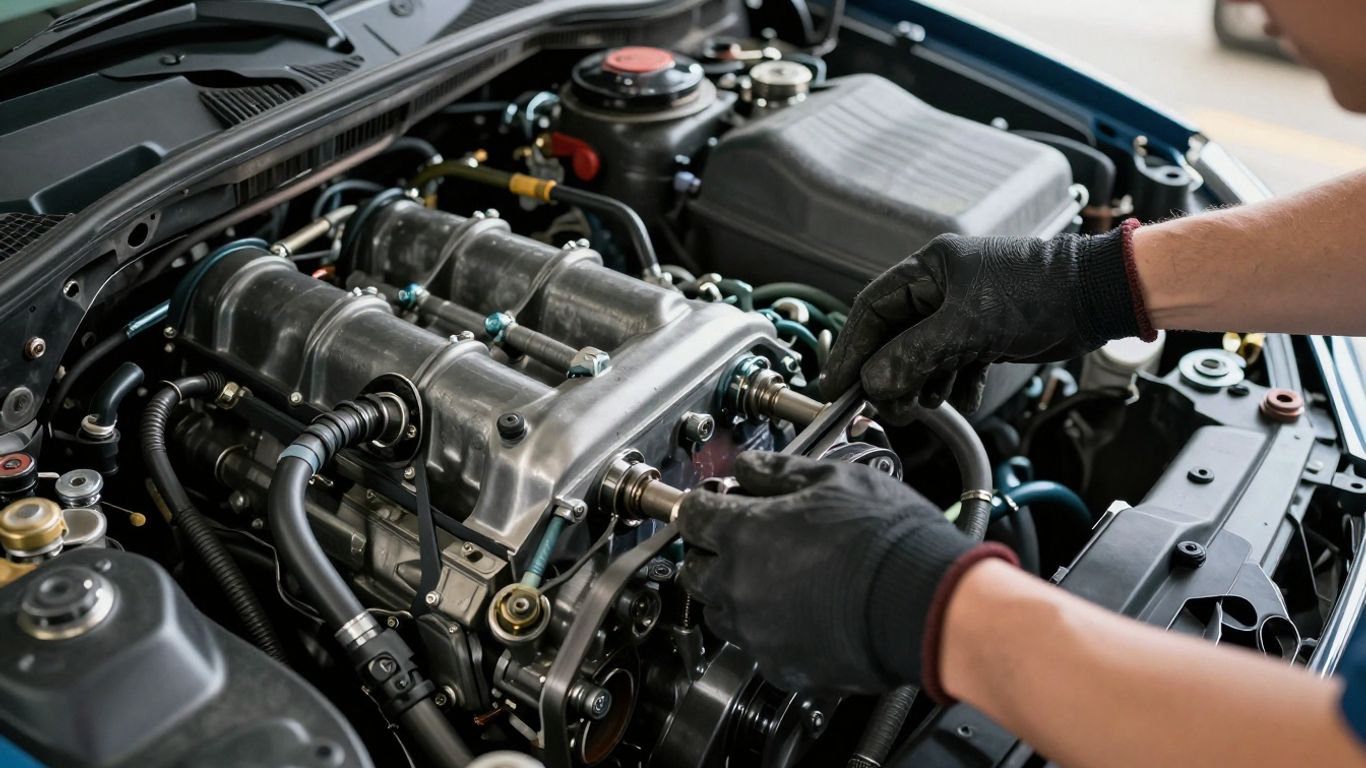
Low or leaking hydraulic power steering fluid
A low reservoir level usually means fluid has escaped or the system has another problem; fluid does not normally disappear without a reason. Check the level only as described in the owner’s manual and use the specified fluid. Leaks may occur at hoses, seals, the pump, or the steering rack, and topping up can mask the problem without repairing it.
Look for fresh dampness around hose connections and beneath the front of the vehicle, while remembering that a small leak may not leave a large puddle. Discolored or contaminated fluid can also affect operation, but diagnosis should follow the vehicle manufacturer’s procedure.
A failing power steering pump
A worn pump may produce a whine or groan that changes with engine speed, while steering assistance fades or varies during a turn. It may fail to create enough pressure even when the reservoir is full. Testing pressure and flow is more reliable than replacing the pump based on noise alone, since low fluid, air, belt slip, or internal steering resistance can produce similar symptoms.
Do not keep turning the wheel against its stop to test the system. That can raise hydraulic pressure and add unnecessary strain while the underlying fault remains unknown.
A worn or loose drive belt
On vehicles that use a belt-driven pump, a loose, cracked, glazed, or contaminated belt can slip and reduce assistance. Squealing on startup or during a turn is a useful clue, but a quiet belt can still be incorrectly tensioned. Inspecting belt condition and tension with the engine off is safer than touching it while running.
A belt problem may affect other accessories as well, depending on the vehicle’s layout. Follow the service information for inspection and replacement rather than relying on a universal tension rule.
Air trapped in the hydraulic system
Air can enter after a leak, hose repair, low-fluid condition, or incorrect service. The wheel may feel notchy, and the fluid can look foamy or produce a pump whine. Bleeding the system requires the correct procedure; repeatedly turning the wheel without following that procedure may circulate more air or stress the pump.
If the reservoir level keeps falling after bleeding, there is likely still a leak. Repairing the entry point matters more than repeatedly adding fluid.
How electric power steering faults affect steering effort
Electric power steering does not use a conventional hydraulic pump to provide assistance. Sensors, wiring, a motor, a control module, and the vehicle’s power supply work together to vary steering help. Because the system is electronic, a heavy wheel may appear alongside a warning message even when there is no fluid reservoir to inspect.
Warning lights and stored steering system codes
A steering-wheel icon, EPS message, or related warning light should be recorded rather than ignored. The fault may be active or stored, and the code’s description must be interpreted with the vehicle’s service information. A basic code reader may not access the steering module, so absence of a code on a simple scan does not prove the system is healthy.
Write down when the light appeared and whether steering effort changed at the same time. That detail can help distinguish a voltage event from a continuing sensor or motor fault.
Weak battery voltage or charging system problems
Low battery voltage, a failing alternator, poor connections, or a damaged ground can reduce or disable electric steering assistance. Starting difficulty, flickering lights, multiple warning lamps, or a recent battery replacement are useful clues. Voltage testing should be performed with suitable equipment and compared with the manufacturer’s specifications.
A battery that starts the engine is not automatically supplying stable power to every control system. Repairing the charging fault may restore assistance, but the steering system should still be scanned afterward for stored faults.
Failed steering motor or control module
An electric steering motor may develop an internal fault, excessive resistance, or a wiring problem. The control module can also detect a sensor disagreement or communication failure and reduce assistance as a protective response. Testing must identify whether the failure is in the motor, module, sensor, wiring, or power supply before parts are replaced.
The tight steering causes overview offers another general way to organize these possibilities, but model-specific testing remains essential because electric steering layouts differ widely.
Why restarting the vehicle may not fix the underlying fault
A restart can clear a temporary voltage disturbance, yet it cannot repair a weak connection, failing motor, damaged sensor, or charging fault. If the wheel becomes light again, treat that as useful evidence rather than proof that the vehicle is safe. Record the warning message and arrange a scan or inspection while the symptom is fresh.
How tires, wheels, and alignment can increase steering effort
Not every stiff steering wheel points to the assistance system. The front tires are the vehicle’s contact with the road, and their pressure, size, condition, and alignment affect how much force is needed to turn them. This is especially noticeable during parking, when the tires must scrub across the pavement instead of rolling freely.
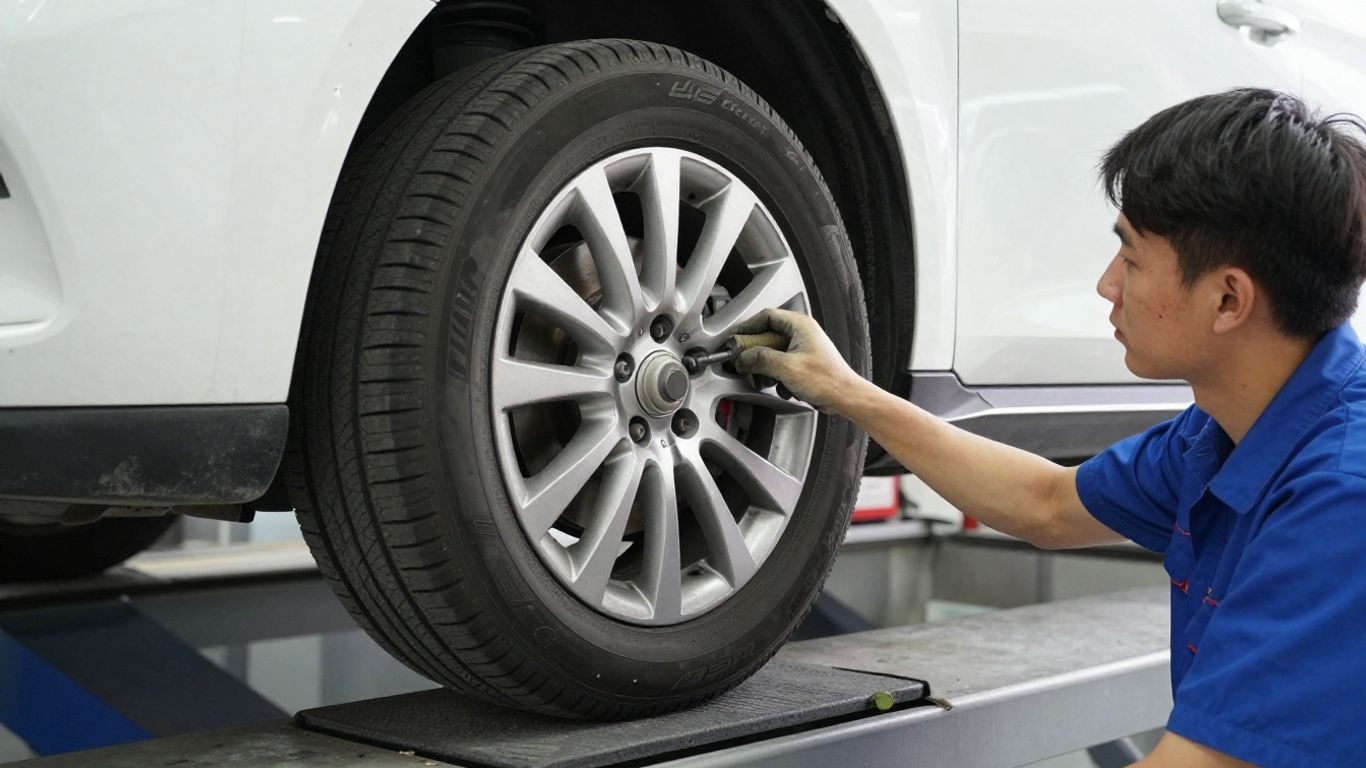
Underinflated or mismatched tires
Low pressure enlarges the tire’s contact patch and can make the wheel heavier, particularly at low speed. Check all four tires when cold and use the pressure listed on the vehicle’s door label, not the maximum molded into the sidewall. Mismatched sizes, unusual construction, or a temporary spare can also change steering feel.
A pressure warning should be addressed before more diagnosis. If one tire repeatedly loses pressure, find the puncture or valve problem instead of continually adding air.
Incorrect wheel alignment angles
Incorrect toe, camber, or caster can make a vehicle resist turning, pull to one side, or fail to return smoothly after a corner. Alignment often changes after a pothole strike, curb impact, or suspension repair. Uneven tread wear and an off-center steering wheel are clues, although an alignment check is needed to confirm the angles.
Alignment should be measured after tire and suspension conditions are checked. Adjusting angles cannot correct a bent wheel, worn joint, or damaged tire.
Tire damage, uneven wear, or excessive friction
A bulge, separated tread, bent wheel, or badly worn shoulder can alter the effort and make the vehicle unpredictable. A dragging brake or seized wheel bearing may also increase resistance, sometimes with heat, smell, or noise from one corner. Compare the tires visually, but avoid touching a wheel that may be hot after driving.
If the vehicle recently hit debris, inspect the tire and wheel promptly. Do not assume that a steering complaint is an alignment issue when there is visible damage.
How road surfaces and parking conditions affect steering feel
Dry pavement, a steep driveway, gravel, and a tire pressed against a curb can all make a healthy system feel heavier for a moment. Turning the wheel while completely stopped creates much more tire scrub than allowing the car to roll slowly. That temporary resistance should ease when the vehicle moves, while a persistent change deserves diagnosis.
Which steering and suspension parts can bind
Steering effort can rise when a joint, bearing, shaft, rack, or suspension component no longer moves freely. These faults may be gradual, or they may become obvious after water intrusion, impact, corrosion, or a failed protective boot. Because many parts are connected, a technician usually checks the system as a group rather than naming one part from the driver’s description alone.
Sticking tie-rod ends or ball joints
Tie-rod ends transfer steering movement to the wheel, while ball joints allow controlled movement between suspension pieces. If either binds, the wheel may feel stiff, uneven, or reluctant to return. If a joint is loose rather than tight, the driver may notice wandering, clunks, or delayed response instead.
These parts support vehicle control and should be inspected with the vehicle safely lifted and unloaded as required by the service procedure. A visual glance cannot reliably rule out a worn joint.
A worn steering rack or gearbox
Internal wear, corrosion, contamination, or damage in a rack or gearbox can create tight spots or uneven effort. Fluid leakage may accompany a hydraulic rack problem, while an electric rack may store a fault code. A steering wheel that binds at the same position repeatedly is a strong reason to stop guessing and arrange a professional inspection.
Replacing a rack is a significant repair, so the diagnosis should account for tire condition, alignment, shaft joints, and assistance-system tests first.
Binding steering shaft joints
Universal joints in the steering shaft must transfer movement smoothly as the shaft changes angle. Rust, lack of movement, impact damage, or a deteriorating joint can create a notch or tight spot felt through the wheel. The problem may be more obvious at certain steering angles than others.
Inspection around the shaft can involve cramped spaces and rotating parts. Keep hands away from the system unless the vehicle is secured and the correct procedure is known.
Damaged struts, bushings, or wheel bearings
A seized strut bearing can resist rotation as the front wheel turns, while a damaged bushing can shift the suspension and alter steering response. Wheel-bearing problems more often cause noise or looseness, but severe damage can add friction. The surrounding symptoms help guide testing, though they do not identify the failed part by themselves.
A repair shop should check for play, binding, noise, and abnormal movement together. Replacing one visibly worn component may not resolve the complaint if another part is also damaged.
Temporary conditions that can cause a stiff steering wheel
Some steering complaints are brief and tied to the conditions around the vehicle. That does not automatically make them harmless. A temporary symptom can be an early sign of a developing fault, so note the temperature, road surface, vehicle speed, and time since startup whenever the stiffness occurs.
Cold weather and thickened fluids
Low temperatures can make hydraulic fluid more resistant to movement and can reduce battery performance in electric systems. Tires also lose pressure as temperatures fall. If steering becomes normal after a short warm-up, check the fluid level, tire pressure, battery condition, and warning lights rather than dismissing the event.
Use only the fluid specified for the vehicle. Mixing products or adding an unsuitable fluid can create a separate problem.
Steering resistance at a standstill
A car’s tires naturally resist being twisted across dry pavement when the vehicle is stationary. Allowing the car to creep slightly while turning usually reduces that scrub and is easier on the steering system. This is normal only when the wheel becomes smooth once the vehicle rolls and no warning signs are present.
If the wheel is heavy even while moving, or if it sticks at one point, the standstill explanation is not enough.
Water, dirt, or corrosion near moving components
Splashing water, packed mud, road salt, and corrosion can affect exposed joints, belts, connectors, and bearings. A temporary change after a storm may point toward contamination, but it can also reveal a damaged boot or seal. Avoid spraying high-pressure water directly at steering joints, electrical connectors, or under-hood belts.
Letting the area dry may change the symptom without correcting the cause. A recurring complaint after wet weather should be documented for inspection.
Why stiffness that comes and goes still needs attention
Intermittent symptoms are often harder to reproduce, not less real. A loose electrical connection, belt slip, temperature-sensitive component, or joint that binds only at one angle may improve before the vehicle reaches a shop. The steering safety advice and power steering warning signs both support the same practical response: note the pattern and have the vehicle checked if it returns.
How to diagnose and fix a stiff steering wheel
Good diagnosis begins with observations, not a parts list. Record whether the stiffness is constant, whether it changes with engine speed, and whether it is worse at a standstill or in one direction. Online explanations can help you ask better questions, but the repair must match the vehicle’s design and measured fault.
Perform basic checks under the hood and around the tires
With the engine off and the vehicle secure, check the specified fluid reservoir if the vehicle has hydraulic assistance, inspect for obvious leaks, and examine belt condition without touching moving parts. Check tire pressures cold and look for punctures, bulges, separated tread, or a wheel sitting unusually close to the body. Confirm warning lights and note any new noise.
A useful sequence keeps simple causes from being overlooked:
- Compare steering effort with the engine off and running.
- Check tire pressure and visible tire or wheel damage.
- Look for fluid loss, belt damage, or wet hose connections.
- Record warning lights, messages, noises, and when they occur.
These checks narrow the possibilities without encouraging unsafe work. If anything looks damaged or the wheel remains very heavy, stop there and arrange assistance.
Use the vehicle’s service information and fault codes
Service information identifies the correct fluid, test points, voltage limits, bleeding method, and steering-module procedures. A scan tool may reveal codes from the electric steering, body, or charging systems, but a code is a starting point rather than a final diagnosis. Test results must be compared with the vehicle’s specifications.
For a repair facility, even background IT planning can matter when service records and diagnostic equipment must remain available. The Detroit automotive IT guide discusses automotive-business providers including Safety Net, Nuspire, and Centaris; those names belong to that separate business-technology context, not to a mechanical steering diagnosis.
Compare repair costs for fluid, electrical, and mechanical faults
A fluid leak or belt adjustment may be relatively straightforward, while a pump, electric steering motor, rack, or suspension repair can require more labor and alignment afterward. Ask which test confirmed the failed part, whether related damage was found, and whether the estimate includes fluid, calibration, alignment, or towing. The cheapest first guess is not always the least expensive repair.
When researching any service estimate, keep the comparison focused. Advice about avoiding booking traps, preparing an exterior for paint, full STI testing, or gluten ataxia belongs to other decisions and should not distract from vehicle-specific evidence.
Know when a professional steering inspection is necessary
Professional help is warranted when steering effort changes suddenly, a warning light appears, the wheel binds, a leak is visible, or the cause cannot be confirmed through basic checks. A qualified inspection can evaluate assistance pressure, electrical supply, steering codes, joint movement, alignment, and tire condition in a controlled way. This is especially important after a collision, curb strike, or suspension work.
A careful inspection is not overreacting when steering control has changed. It is the most direct way to separate a temporary condition from a fault that could worsen while driving.
Conclusion
A stiff steering wheel can come from fluid loss, an electrical fault, tire or alignment trouble, or a binding mechanical part. Check the simple clues safely, but do not drive a vehicle that is difficult to control; prompt diagnosis protects both your safety and your repair budget.
Frequently Asked Questions
Is it safe to drive when the steering wheel feels stiff?
Not always. If the change is sudden, severe, intermittent during turns, or paired with a warning light, noise, fluid leak, tire damage, or pulling, stop in a safe place and arrange an inspection or tow.
Can low tire pressure make steering feel heavy?
Yes. An underinflated front tire has more contact with the pavement and can increase effort, especially while parking. Check pressures when the tires are cold and investigate any tire that repeatedly loses air.
Why is steering harder when the car is stopped?
A stationary tire must scrub across the pavement as it turns. Allowing the vehicle to roll slowly usually reduces that resistance, but stiffness that continues while moving may indicate a steering, tire, alignment, or suspension problem.
What does a power steering warning light mean?
It means the vehicle has detected a possible fault in its steering-assistance system. The light should be diagnosed with the appropriate scan equipment and service information, particularly if steering effort has changed.
Can restarting the vehicle fix electric power steering?
A restart may clear a temporary electrical event, but it does not repair a weak battery, charging fault, damaged wiring, failed motor, or control-module problem. If the symptom returns, have the system tested promptly.
How can I tell whether power steering fluid is leaking?
Check the specified reservoir and look for wetness around hoses, seals, the pump, or beneath the front of the vehicle. Use only the recommended fluid, and do not treat topping up as a permanent repair.
When should a stiff steering wheel be inspected by a professional?
Arrange professional help when the stiffness is new, recurring, uneven, accompanied by noise or warning lights, or not explained by tire pressure or stationary tire scrub. A tow is safest when the vehicle is difficult to control.