

Key Takeaways
Choosing a steering part is easier when you confirm the fault, match the vehicle details, and compare the full cost—not just the part price.
- Identify the component that needs attention before ordering.
- Confirm fitment using the VIN, make, model, and year.
- Compare new, used, and reconditioned parts on condition, warranty, and price.
- Check stock, delivery or pickup arrangements, and return terms before paying.
- Budget for qualified installation and a wheel alignment when needed.
Identify the steering parts your vehicle needs
Steering systems combine several moving and hydraulic components, and a symptom in one area can sometimes have more than one possible cause. Start with the vehicle’s behavior and any inspection findings rather than ordering a part based on a guess. A mechanic can help identify the fault, while the vehicle details help narrow down the correct replacement.
Common components in a steering system
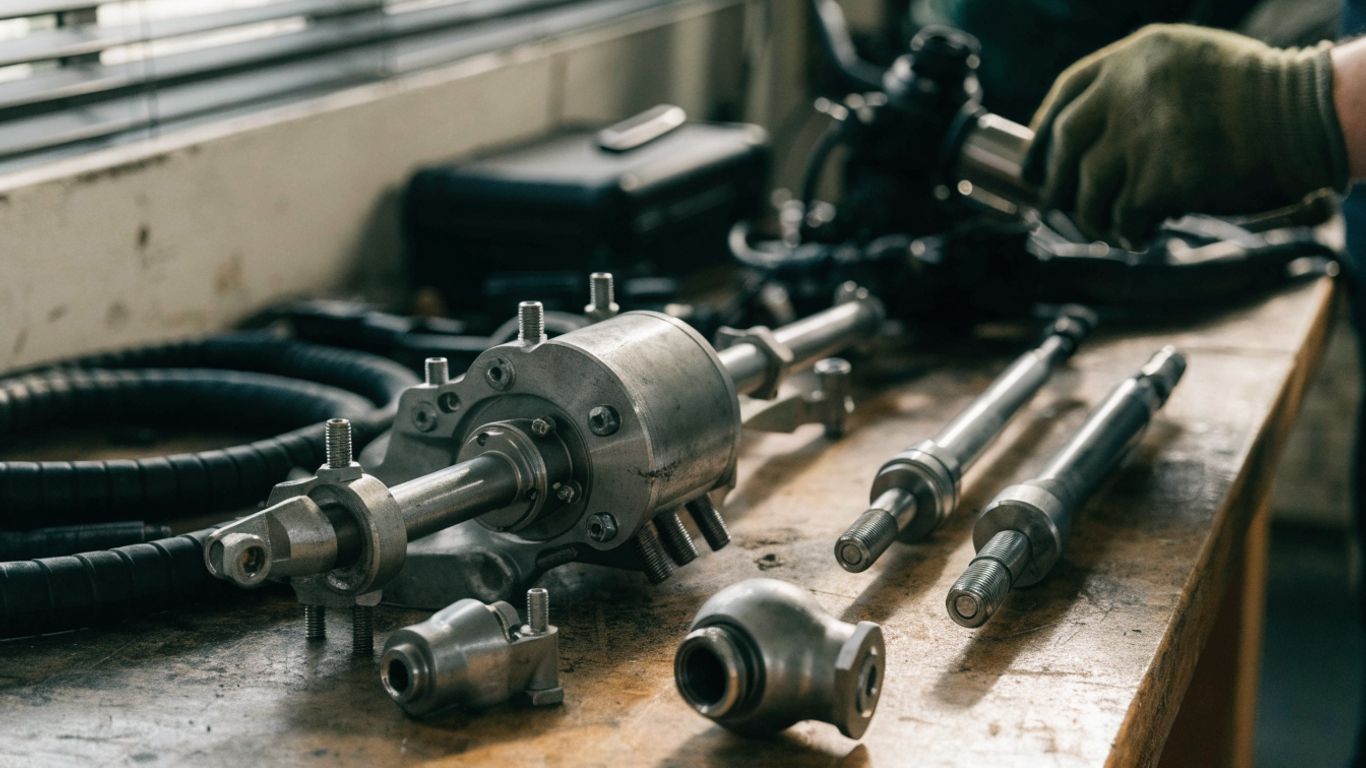
Depending on the vehicle, steering components may include a steering rack or gear, pump, tie rods, tie-rod ends, steering column parts, and hydraulic hoses. Some vehicles use electric assistance rather than a hydraulic pump, so the parts fitted can differ even among vehicles with similar names. Knowing which assembly is involved helps you ask for a more precise match.
A steering system inspection may identify one of several parts, so treat a parts list as a starting point rather than a diagnosis. If you are gathering information before booking an inspection, note these details to share with the mechanic:
- Whether the steering feels heavy, loose, or inconsistent.
- Any noise and the conditions when it occurs.
- Whether there is visible fluid around steering components.
- Recent repairs, impacts, or changes in tire wear.
These observations can help focus the inspection, but they do not confirm a failed component by themselves. A video overview can also help you recognize common steering-system parts before discussing the repair with a professional.
Symptoms that may point to a faulty part
Unusual noise when turning, steering that feels loose or heavy, vibration, and fluid leaks can all be reasons to arrange an inspection. Uneven tire wear may also be associated with steering or suspension problems, but it can have other causes. A symptom is a clue, not a diagnosis; avoid replacing parts until the cause has been checked.
If steering suddenly becomes difficult or unpredictable, do not assume the vehicle is safe to drive. Seek professional advice promptly, especially if the change affects your ability to control the vehicle. Clear notes about when the symptom occurs can make the inspection more useful.
How vehicle make, model, and year affect fitment
Parts can vary across model years, trim levels, engine configurations, and production changes. Even two vehicles with the same badge may use different steering assemblies, fittings, or mounting points. When you request a part, provide the full vehicle details and, where possible, the part number from the existing component.
The part itself should also be checked against the vehicle, not just its label. A car parts network that covers Brisbane and other Australian locations can make it easier to search among used, genuine, and aftermarket options, but the exact fit still needs confirmation before purchase.
Choose between new, used, and reconditioned parts
The right condition depends on the component, its availability, the vehicle’s intended use, and your budget. A lower upfront price may not be the best value if condition or warranty terms are unclear. Compare the part’s history and the seller’s policies along with its listed price.
When new parts are the practical choice
A new part can be a practical option when you want an unused component and a clear product description. Check whether it is genuine or aftermarket, whether the listing names the exact application, and what warranty applies. New parts are not automatically compatible, so fitment confirmation still matters.
For a vehicle that needs to return to regular use quickly, availability may also influence the decision. Ask whether the quoted item is physically in stock, when it can be dispatched or collected, and whether the seller has verified the application against your vehicle details.
Potential benefits and trade-offs of used parts
A used component may cost less than a new one, and it can be worth considering when the part is difficult to source or the vehicle’s value makes a new replacement less practical. The trade-off is uncertainty about wear, previous use, and remaining service life. Ask what inspection has been carried out and whether the part can be returned if it does not fit.
A used part should be assessed on its own merits, not just the fact that it came from a compatible vehicle. Check for damage, corrosion, worn joints, and missing fittings where those apply. A lower purchase price can be offset by extra labor if the component proves unsuitable.
What to check before buying reconditioned components
Reconditioned components have been worked on before resale, but the work and testing can vary. Ask what was replaced or repaired, what checks were performed, and whether the part is supplied with any test information. The description should distinguish a reconditioned unit from an uninspected used part.
Also ask what the warranty covers and whether it depends on installation requirements. Keep the answers with the invoice, especially if the seller specifies that installation must be completed by a qualified mechanic. Clear terms make it easier to compare the offer with a new or used alternative.
Find compatible steering parts in Brisbane
Finding a part locally can be useful when timing matters, but Brisbane availability does not guarantee that a component suits your vehicle. Start with exact vehicle information and ask the supplier to confirm the application. Our network connects customers with parts in Brisbane as well as Melbourne, Sydney, and nationwide, with a focus on making the search fast and affordable.
Use your vehicle identification number to confirm fitment
A vehicle identification number can help a supplier check the vehicle’s exact configuration, but it is still worth providing the make, model, year, and any relevant trim or engine details. Share the VIN through an appropriate channel and ask the supplier to confirm the part number or application in writing. If you have the old part number, provide that too.
A quick fitment request works best when it includes a few concrete details. Gather them before calling or submitting an inquiry:
- The full VIN, make, model, and year.
- The steering part name or part number, if known.
- Any relevant engine, body, or trim information.
- Whether you need delivery or plan to collect the part.
Use the supplier’s confirmation to check the item when it arrives, before installation begins. If the vehicle has been modified or the part is an unusual variant, mention that at the outset rather than relying on a standard listing.
Compare OEM and aftermarket options
OEM parts are made to the vehicle maker’s specification, while aftermarket options are produced by other manufacturers. The right choice can depend on availability, price, warranty, and the particular component. Ask whether the part is genuine or aftermarket, and check that its application and any included fittings match the repair.
Do not compare products on the category name alone. Confirm the precise part number and review any stated limitations, installation requirements, and return conditions. Our car parts network includes genuine and aftermarket options, alongside used parts, so asking about each category can help establish what is available for your vehicle.
Check stock availability and delivery or pickup options
Before paying, distinguish between an item that is in stock and one that can only be ordered. Ask when it can be dispatched, whether local pickup is available, and what happens if the part is delayed. Regional warehouse information can also clarify delivery and emergency pickup arrangements; check the Brisbane stock and pickup details and confirm current terms directly with the supplier.
A confirmed dispatch estimate is more useful than a general promise of fast delivery. If the repair is time-sensitive, make sure the part is reserved and that the pickup location or delivery address is correct. Keep the written confirmation with your order details.
Understand steering parts prices and value
The listed price is only one part of the total repair cost. Condition, availability, warranty, freight, and installation can all affect what you ultimately spend. Comparing the same part and condition across offers helps keep the decision grounded.

Factors that affect part prices
Prices can differ depending on whether a part is new, used, or reconditioned, how readily it is available, and whether it includes associated fittings. Freight and the urgency of delivery may also change the total. When comparing offers, separate the part price from any additional charges so the difference is clear.
A simple comparison can help you identify what is and is not included in a quote. Ask suppliers to specify the condition and any charges rather than relying on a headline figure.
| Cost detail | What to confirm | Why it matters |
|---|---|---|
| Part condition | New, used, or reconditioned | Like-for-like comparison depends on condition |
| Fitment | Confirmed application or part number | Avoids buying an incompatible component |
| Freight or pickup | Delivery charge, timing, and location | Affects total cost and repair timing |
| Warranty | Coverage period and conditions | Clarifies what support is offered |
Once the details are set out, compare the total expected cost rather than choosing the lowest initial quote. A slightly higher part price may include clearer warranty terms or a more convenient delivery arrangement, while a low quote may leave important costs unstated.
Compare warranties and return policies
Warranty terms may differ by part type and condition, so ask what is covered, how long coverage lasts, and what conditions apply. Return policies matter too, particularly when fitment has not been confirmed or the part arrives damaged. Check whether the seller requires the item to remain uninstalled for a return.
Keep the policy details available before purchase, not just after a problem occurs. If anything is unclear, ask for clarification in writing and retain the response. This is especially useful when the component is a special order or has installation requirements.
Account for installation and wheel-alignment costs
The cost of replacing a steering component can include diagnosis, labor, related hardware, and alignment. Ask the workshop whether the quoted labor includes removal and refitting, and whether further work might be needed once the assembly is inspected. A part that appears affordable on its own can lead to a different total once labor is included.
Some steering repairs can affect wheel alignment, so ask the mechanic whether an alignment is appropriate after the work. Include that likely cost when comparing options, and avoid treating it as an optional extra if the repair calls for it.
Assess suppliers before you buy
A reliable purchase starts with clear answers about fitment, condition, price, and after-sales terms. Suppliers should be able to explain what they are offering and what information they used to identify it. Our network is intended to connect customers with quality used, genuine, and aftermarket parts, while the same careful questions remain useful whichever option you consider.
Questions to ask about product quality and fitment
Ask how the supplier confirmed that the part suits your vehicle and whether the quoted item is new, used, or reconditioned. For a used or reconditioned component, ask what inspection or work has been completed. For any option, confirm whether the quoted part includes the fittings or associated pieces needed for installation.
It can also help to see how other service providers explain their scope and terms. For example, a clear HVAC service visit can help a customer understand what diagnostics and options are being discussed; for steering parts, request the same kind of clarity about the component and its fitment. Treat each purchase on its own terms rather than assuming policies transfer between industries.
How to review warranty and returns information
Read the warranty and return policy before ordering, including any time limits, exclusions, or installation conditions. Check who handles a claim and what proof of purchase or inspection may be required. If a policy uses broad wording, ask how it applies to the exact part you are buying.
Comparing service terms is useful beyond automotive purchases, too: Belconnen plumbing service checks cover practical questions around pricing, insurance, and warranties. For a steering part, focus on the supplier’s actual written policy rather than assuming another seller’s terms apply.
Documents and details to keep with your purchase
Keep the invoice, part number, fitment confirmation, warranty information, and any written advice about installation. These records can help resolve a mismatch or support a warranty request later. Store them together with the vehicle’s service documents, especially if the part is fitted by a workshop.
Some purchases require careful records for reasons quite separate from vehicle repairs. For instance, Hawaii wedding planning details, Queensland home-buying support, and a pond-cover specification each involve their own requirements and documentation. The useful lesson here is simply to keep the paperwork that applies to your own purchase, without assuming those other processes resemble a parts order.
Plan installation and ongoing maintenance
A correct part is only one element of a safe repair; installation and checks afterward matter as well. Steering work can affect how the vehicle responds, so decide who will fit the part and what follow-up is appropriate. If anything feels wrong after the repair, arrange an inspection rather than waiting for the next scheduled service.
Decide whether to use a qualified mechanic
Steering components are safety-related, and the right installation method depends on the part and vehicle. If you are not equipped to perform the work or are unsure about the procedure, use a qualified mechanic. A workshop can also confirm whether the component is actually the source of the problem before fitting a replacement.
Before installation, have the mechanic verify the supplied part against the vehicle and the repair requirements. Keep the packaging and paperwork until fitment is confirmed, particularly if the supplier has specific return conditions. This small step can prevent avoidable confusion if the part is incorrect.
Arrange a wheel alignment after relevant repairs
Some steering repairs can change alignment, particularly when components that locate or connect the wheels are replaced. Ask the mechanic whether an alignment check is needed for the specific work completed. If it is, arrange it promptly rather than relying on the steering wheel’s appearance alone.
An alignment may help address handling concerns and uneven tire wear when those issues relate to the repair. The mechanic can advise whether other suspension or tire problems should also be checked, so the alignment is not treated as a cure for every driving symptom.
Follow up on unusual noises, looseness, or uneven tyre wear
After the repair, pay attention to changes in steering feel, new noises, looseness, and tire wear. A brief check after fitting does not replace ongoing observation, especially if the vehicle is driven regularly. If a symptom remains or returns, contact the workshop and describe when it occurs.
Keep the repair invoice and note when the symptom first appeared. That context helps a mechanic assess whether the issue is related to the recent work or has another cause. Do not continue driving if steering control becomes difficult or unsafe.
Conclusion
Choosing steering parts in Brisbane is a matter of matching the component carefully, checking its condition and terms, and accounting for installation as well as the purchase price. Confirm the fitment before ordering, keep a record of the supplier’s answers, and involve a qualified mechanic when diagnosis or installation is beyond your experience. A little care at each step can make the repair process more straightforward.
Frequently Asked Questions
How do I know which steering part my vehicle needs?
Start with an inspection of the steering symptoms and share the vehicle’s VIN, make, model, and year with a mechanic or parts supplier. A symptom alone cannot confirm which component has failed.
Can I use a used steering part?
A used part may be suitable, but ask about its condition, inspection, fitment, and return terms. Compare its total cost and uncertainty with new or reconditioned options.
What is the difference between a genuine and an aftermarket steering part?
A genuine part is supplied as an original vehicle-maker part, while an aftermarket part is made by another manufacturer. Confirm the part number, application, and warranty for the specific item.
Should I provide my VIN when ordering a part?
Yes. The VIN can help identify the vehicle’s configuration. Provide it with the make, model, year, and any known part number, then ask the supplier to confirm fitment.
Do steering repairs require a wheel alignment?
Some repairs can affect alignment, but the need depends on the component and work performed. Ask the mechanic whether an alignment check should be included.
What should I compare when looking at steering part prices?
Compare part condition, confirmed fitment, freight or pickup charges, warranty terms, and installation costs. The lowest listed price may not be the lowest total repair cost.
Is it safe to drive with noisy or loose steering?
A new noise or change in steering feel should be checked promptly. If steering becomes difficult or unpredictable, avoid driving the vehicle and seek professional assistance.