

Key Takeaways
Contaminated fluid can affect both steering feel and the life of the hydraulic system. A careful inspection helps separate dirty fluid from low fluid, leaks, trapped air, or mechanical wear.
- Clean fluid is usually clear and may have a light tint specified for the vehicle.
- Dark, cloudy, milky, foamy, or gritty fluid deserves further investigation.
- Whining, stiff steering, vibration, and repeated low levels can point to a system problem.
- Always match replacement fluid to the owner’s manual or manufacturer’s specification.
- A flush may help, but leaks or damaged steering components still need repair.
What contaminated power steering fluid looks like
Power steering fluid changes as it ages, but every color change does not prove contamination. The best assessment considers appearance, smell, texture, fluid level, and how the steering behaves. Compare what you see with the vehicle’s service information rather than relying on color alone.
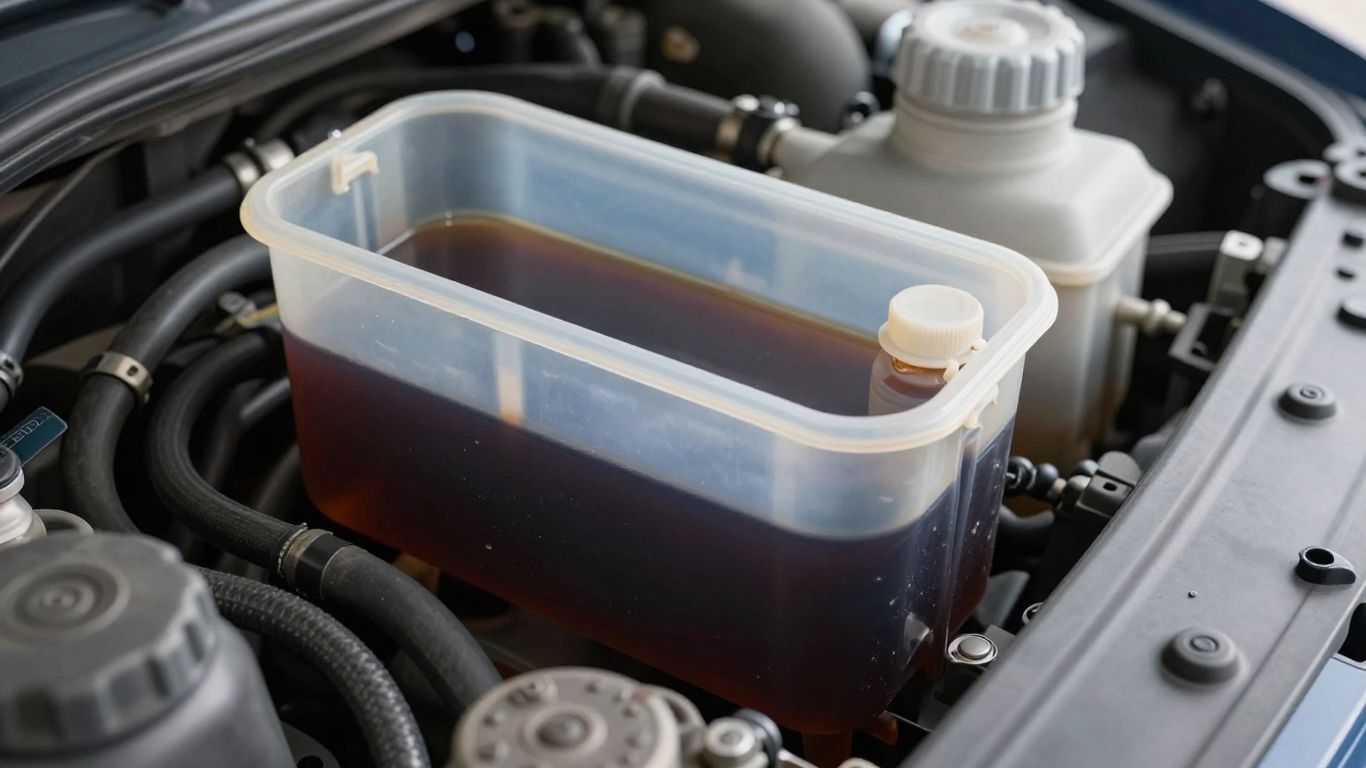
Normal fluid color, clarity, and consistency
Fresh fluid is commonly clear to lightly tinted, although the correct appearance varies by vehicle and fluid type. It should look reasonably uniform and flow easily, without thick sediment or floating material. Some systems use a fluid that is not interchangeable with ordinary power steering fluid, so the owner’s manual is the proper reference.
A small amount of darkening over time can be normal, particularly in an older system. The more useful question is whether the fluid has become unusually opaque, gritty, separated, or foul-smelling. A power steering fluid guide can provide useful general background, but the vehicle’s own specification takes priority.
Dark, cloudy, or milky fluid
Dark brown or nearly black fluid may have oxidized or collected wear material. Cloudiness can indicate suspended dirt or fine particles, while a milky appearance may suggest moisture or another fluid has entered the system. These signs are more concerning when they appear alongside noise, steering effort, or a recurring leak.
Do not judge the fluid from a dirty reservoir cap or a poorly lit engine bay. Wipe the dipstick or inspect a small sample in good light, using a clean container if the service procedure permits. Appearance is a clue, not a diagnosis; the surrounding symptoms matter.
Metal particles, sludge, or visible debris
Glitter-like particles, flakes, thick sludge, or obvious grit are not expected in clean fluid. They may come from wear inside the pump, steering gear, hoses, or other hydraulic components. A few dark traces can be difficult to interpret, but abundant material suggests that replacing fluid alone may not address the underlying source.
Avoid stirring the reservoir unnecessarily. Contaminants can circulate through narrow passages and valves, and a sample can be useful to a technician trying to identify whether the system is wearing internally. If debris returns soon after a fluid change, further inspection is warranted.
Burnt or unusual odors
A sharp burnt smell can accompany fluid that has been overheated or worked excessively. A chemical odor may indicate an incompatible product, while a musty smell can raise concern about moisture. Odor by itself is not conclusive, since fluid can pick up smells from nearby engine-bay components.
Smell should be checked only with the vehicle safely parked and the engine cool enough to avoid burns. If the odor is strong and the steering is noisy or heavy, treat the combination as a reason to arrange an inspection rather than simply topping up the reservoir.
Common signs of contaminated power steering fluid
The signs of contaminated power steering fluid often overlap with symptoms caused by low fluid, a loose belt, trapped air, or failing steering hardware. That is why the fluid should be checked alongside the steering behavior. Notice when the symptom occurs, whether it changes with engine speed, and whether the fluid level keeps falling.
Whining during a turn or a steering wheel that suddenly feels heavier should not be dismissed as ordinary age. A fluid change schedule guide can help with routine maintenance, but a new symptom calls for a closer check even if the vehicle has not reached a suggested interval.
Whining or groaning when turning
A whine or groan while turning can occur when the pump is working against low fluid, aerated fluid, or restricted flow. Contaminated fluid may reduce lubrication or carry particles through the pump, increasing noise. Noise that becomes louder near full lock is especially worth reporting, though holding the wheel at full lock should be avoided.
Listen for changes between idle and a gentle turn in a safe location. A squeal on startup may instead involve a belt, so sound location and timing are useful details for a technician.
Steering that feels stiff or inconsistent
Stiff steering, particularly during parking or other low-speed maneuvers, can result from insufficient hydraulic assistance. Contaminated fluid may contribute when it restricts flow or damages a pump, but a leak, belt problem, tire issue, or mechanical fault can feel similar.
If assistance comes and goes, do not continue driving as though the issue were only cosmetic. A steering system that behaves differently from one turn to the next deserves prompt attention because the driver cannot reliably predict the effort required.
Shuddering or vibration through the steering wheel
A shudder while turning may reflect air in the hydraulic circuit, uneven pump operation, or a mechanical problem elsewhere in the front end. Contaminated fluid can be part of the picture when it has become foamy or carries debris, but vibration should not automatically be blamed on the fluid.
Record whether the vibration occurs only at low speed, only near full lock, or over bumps. That pattern helps distinguish hydraulic symptoms from wheel, tire, suspension, or steering-linkage concerns.
Foamy fluid or air bubbles in the reservoir
Foam and persistent bubbles usually mean air is being drawn into the system or has not been removed after service. A low fluid level, loose hose connection, cracked return line, or poor bleeding procedure can all introduce air. Contamination may coexist with the problem, especially if fluid is old or has been mixed incorrectly.
Do not keep turning the wheel repeatedly to “work out” the bubbles without following the vehicle’s service procedure. Excessive cycling can heat the fluid and place extra load on the pump.
Fluid leaks and repeated low-fluid levels
Power steering fluid does not normally disappear without a cause. Wet hose connections, stains around the pump, rack, or reservoir, and repeated drops on the dipstick point toward a leak or another system fault. A low level can produce noise and heavy steering even when the remaining fluid looks clean.
Check the ground after parking and inspect only from a safe position; never reach beneath an unsupported vehicle. A power steering leak warning guide can help you recognize common leak-related symptoms before they become a larger steering problem.
What causes power steering fluid contamination
Contamination usually develops through a pathway rather than appearing suddenly. Wear, heat, moisture, dirt, incorrect fluid, and deteriorated components can all change the fluid. Finding the pathway matters because a flush cannot permanently solve contamination that is still entering the system.
Routine checks are useful after a repair, a hose replacement, or any event that may have opened the hydraulic circuit. They also help establish whether the fluid is changing gradually or has become abnormal after a specific service.
Internal wear from the pump or steering components
The pump and steering components operate under pressure and can release fine material as they wear. That material may darken the fluid or create a fine shimmer, while larger particles can indicate more advanced damage. Noise, inconsistent assistance, or debris that quickly returns after service strengthens this suspicion.
A technician may need to inspect the pump, rack, or steering gear rather than repeatedly replacing fluid. Continuing to operate a failing component can spread material through the rest of the hydraulic circuit.
Moisture, dirt, and debris entering the system
Open caps, damaged seals, loose connections, and careless servicing can allow moisture or dirt inside. Water may cloud the fluid or promote corrosion, while grit can damage small passages and moving surfaces. Even a clean-looking reservoir does not prove that the entire circuit is free of contamination.
Keep the reservoir cap and surrounding area clean before opening it. Use only clean tools and containers, and avoid leaving the system open longer than the service procedure requires.
Mixing incompatible fluid types
Different vehicles call for different hydraulic fluids, and similar-looking products are not automatically compatible. Mixing them can alter viscosity, lubrication, seal behavior, or foaming characteristics. The correct fluid may be listed by name, specification, or part number in the owner’s manual.
If the wrong fluid was added, tell the technician exactly what was used and how much. Guessing at a corrective top-up can make the mixture harder to identify and may increase the eventual repair work.
Deteriorated hoses, seals, or reservoir filters
Old hoses can shed material internally, while cracked seals can allow air or moisture into the system. Some reservoirs incorporate a screen or filter that can become restricted or damaged. These faults may cause turbulence, foam, leaks, or poor fluid circulation.
Replacing fluid without examining the hose ends and reservoir can leave the contamination source in place. The inspection should include the connections, clamps, belt-driven pump area, and visible steering hardware.
How to check the fluid and confirm contamination
Start with safety and the vehicle-specific procedure. Park on level ground, secure the vehicle, and allow hot components to cool before opening the reservoir. A visual inspection can identify obvious problems, but confirmation often requires checking the level, specification, leaks, and symptoms together.
Do not assume that a full reservoir means a healthy system. Fluid can be at the correct height and still be aerated, degraded, contaminated, or circulating through a worn component.
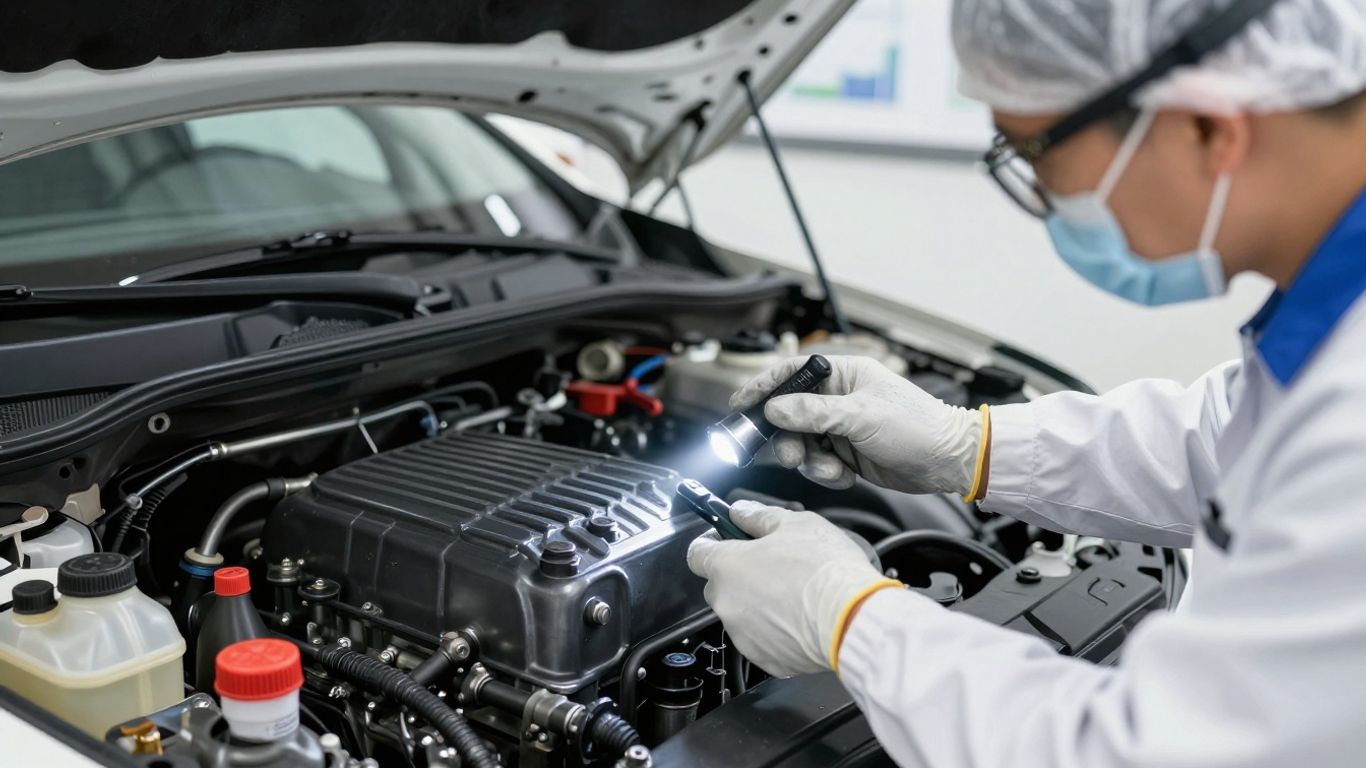
Inspecting the reservoir safely
Locate the reservoir using the owner’s manual and clean the cap area before opening it. Check the level against the correct hot or cold markings, then examine the fluid for cloudiness, foam, sediment, or unusual color. Keep hands, clothing, and tools away from belts and pulleys when the engine is running.
Use a clean white cloth or suitable sample container if the procedure allows it. This makes fine particles easier to see without introducing lint or dirt into the reservoir.
Comparing the fluid with the manufacturer’s specifications
The owner’s manual should identify the approved fluid and the conditions for checking its level. Some vehicles require a specific hydraulic product rather than a generic substitute. The manual may also provide service intervals, bleeding instructions, or warnings about fluid mixing.
General schedules can be a useful starting point, but they cannot replace vehicle-specific information. If the manual is unavailable, a parts or repair professional can identify the required specification from the vehicle details before any fluid is added.
Checking for leaks and damaged components
Inspect visible hoses, clamps, the reservoir, pump area, and steering gear for wetness or accumulated grime. A leak may be obvious, but some fluid escapes only under pressure or while the steering is being operated. Look for a level that falls again after topping up rather than repeatedly adding fluid without finding the cause.
A simple symptom table can help organize what you observe, although it cannot replace a hands-on diagnosis:
| Observation | Possible direction | Useful next step |
|---|---|---|
| Dark or gritty fluid | Age, wear, or contamination | Sample fluid and inspect the system |
| Foamy fluid | Air entry, low level, or poor bleeding | Check level, hoses, and bleeding procedure |
| Heavy steering | Low assistance or mechanical fault | Check fluid, belt, pump, and steering parts |
| Repeated low level | Leak or component failure | Locate and repair the leak |
The same symptom may have several causes, so treat the table as a way to describe the problem clearly. A technician will still need to verify pressure, component condition, and the source of any leak.
Identifying symptoms caused by low fluid instead of contamination
Low fluid often produces whining, groaning, or heavier steering even when the fluid itself looks reasonably clean. A sudden drop in level, visible wetness, or a reservoir below its marking points more strongly toward a leak or underfill than contamination alone. Air drawn into a low system can then create foam and inconsistent assistance.
Top up only with the specified fluid and only enough to reach the correct mark. If the level falls again, the vehicle needs a leak inspection rather than another temporary refill.
When a professional fluid analysis is worthwhile
Most routine cases do not require laboratory testing, but analysis can help when contamination is unclear, debris returns after a flush, or a costly pump or steering repair is being considered. A technician may inspect a sample for particles, moisture, or evidence of mixed fluids. The result is most useful when paired with the vehicle’s symptoms and service history.
Bring details about recent repairs, fluid additions, noises, and changes in steering feel. That history can prevent a narrow focus on fluid appearance when the real issue is a failing component.
What can happen if contaminated fluid is ignored
Contaminated fluid may not cause immediate failure, which can make postponement tempting. However, dirty or incorrect fluid can reduce lubrication, carry abrasive material, or contribute to poor hydraulic operation. The risk rises when contamination appears with noise, foam, leaks, or stiff steering.
The longer the system operates in that condition, the more difficult it can be to tell whether a fluid change will be enough. Early inspection generally gives the owner more options.
Accelerated power steering pump wear
The pump depends on clean fluid for lubrication and controlled hydraulic flow. Abrasive particles, incorrect viscosity, or air can increase internal stress and noise. Continued operation may turn a serviceable fluid problem into a pump replacement.
A flush should therefore be considered alongside an assessment of why the fluid became dirty. Replacing the fluid without addressing a worn pump may only provide a short-lived improvement.
Damage to seals, hoses, and the steering rack
Incorrect or degraded fluid can be hard on seals and hoses, while debris can move into the steering rack or gear. A damaged seal may cause a leak, and the leak can then draw air back into the circuit. This creates a cycle of low level, noise, and further wear.
Visible wetness around a component is a reason to investigate, not proof that the nearest part is the source. Hydraulic fluid can travel along surfaces before it drips.
Increased steering effort and reduced control
If hydraulic assistance becomes weak or intermittent, turning may require more effort than expected. The change can be most noticeable while parking, but it can also affect confidence during normal maneuvers. Any sudden loss of assistance should be treated as a safety concern.
If steering effort changes sharply while driving, slow down safely, avoid unnecessary turns, and arrange assistance. Do not rely on a fluid top-up when the system is leaking or making severe mechanical noise.
Higher repair costs over time
A modest fluid service can become more expensive when contamination damages the pump, hoses, rack, or seals. Contaminants may also require a more thorough cleaning after a failed component is replaced. Delaying diagnosis can mean paying for both the original fault and the resulting damage.
That does not mean every dark sample requires major work. It means the decision should be based on evidence rather than waiting for the steering system to fail completely.
How to flush and replace contaminated power steering fluid
A fluid replacement is straightforward on some vehicles and more involved on others. The procedure may require access to return lines, a specified flushing method, or a particular bleeding sequence. Follow the service information closely, and stop if the system’s layout or fluid requirement is uncertain.
A complete flush is not always appropriate when a component is failing or a leak remains. The condition of the pump, hoses, rack, and reservoir should guide the work.
Choosing the correct replacement fluid
Use the exact fluid type or specification listed by the manufacturer. Do not select a product solely because its bottle says it works for many vehicles. When fluid has been mixed or misidentified, drain and flush according to the vehicle’s procedure rather than trying to balance the mixture with another additive.
Keep the new container clean and sealed until use. Record the product and quantity for future servicing, especially if the vehicle has an unusual hydraulic-fluid requirement.
Preparing the vehicle and protecting surrounding components
Park on a level surface, secure the vehicle, and protect painted or rubber components from spilled fluid. Gather clean containers, approved fluid, suitable tubing if required, and the correct tools before opening the system. Support the vehicle only with properly rated equipment if the procedure calls for the front wheels to be raised.
Before disconnecting anything, identify the pressure and return lines and read the bleeding instructions. A photograph of the original hose routing can help prevent an incorrect reconnection.
Removing old fluid and flushing the system
Remove old fluid using the method specified for the vehicle. Some procedures draw fluid from the reservoir and cycle the return flow; others require a different arrangement. Never run the pump dry, and do not use solvents or unapproved additives in the hydraulic circuit.
Work slowly and monitor the fluid’s color and level during the flush. Stop if metal debris, a major leak, or severe pump noise appears, since that points beyond a simple fluid exchange.
Bleeding air after refilling
Air must be removed after the system has been opened or the fluid has been replaced. The vehicle may require engine-off steering cycles, engine-on checks, or a defined sequence with the front wheels raised. Follow the manual and avoid holding the steering at full lock.
Watch for returning foam, a rising or falling level, and changes in pump noise. If bubbles persist after the correct procedure, look for a suction-side leak, loose connection, damaged hose, or another source of air entry.
A short, controlled sequence is generally safer than repeated rapid steering movements:
- Confirm the reservoir is filled to the correct mark.
- Cycle the steering only as directed by the service procedure.
- Pause to check the level and watch for foam.
- Stop and inspect for leaks if noise or bubbles persist.
Once the air has cleared, the fluid should settle and the steering should become more consistent. Persistent aeration means the system needs further diagnosis rather than more cycling.
Verifying steering performance and fluid condition
After service, check for leaks, unusual noise, correct level, and smooth assistance at low speed in a safe area. Reinspect the fluid after a short drive and again once the system has cooled, following the manufacturer’s checking conditions. A small level change may occur as air leaves the system, but a continuing drop is not normal.
If the original symptoms remain, the flush has not proved that the system is healthy. The pump, belt, rack, hoses, and steering linkage may need separate testing.
When to seek professional power steering service
Some fluid checks are suitable for an owner, but steering faults deserve caution. A professional inspection is sensible when symptoms are sudden, severe, recurring, or accompanied by a leak. It is also the safer choice when the correct fluid, bleeding method, or system layout is unclear.
Describe what you saw and heard instead of asking only for a fluid change. That encourages a diagnosis of the complete system rather than a narrow service based on appearance alone.
Warning signs that require prompt inspection
Arrange prompt inspection for sudden heavy steering, grinding, substantial fluid loss, persistent foam, smoke or a strong burning odor, or a pump that becomes extremely loud. If steering assistance disappears, reduce speed and stop in a safe place when possible. Continuing to drive can make control more difficult and worsen component damage.
A leak that leaves fluid on the ground also needs attention. Repeatedly topping up the reservoir can hide the progression of the fault.
Situations where a fluid change is not enough
A new fluid will not repair a leaking hose, worn pump, damaged rack, failed seal, loose belt, or steering linkage problem. Nor will it reliably correct contamination caused by a component that continues to shed material. If symptoms return soon after service, the system needs diagnosis rather than another flush.
This is especially true when the fluid contains visible metal or when the pump remains noisy with the level correct. Those clues suggest a mechanical source that should be addressed.
Questions to ask a repair shop
A good repair conversation should establish what was found, what was tested, and why a particular service is recommended. Ask whether the fluid is contaminated, low, aerated, or simply aged, and whether a leak was located. Also ask which fluid specification will be used and how the system will be bled.
Useful questions include:
- What evidence identifies the source of the contamination?
- Was the pump, rack, hose system, and reservoir inspected?
- Does the proposed service include a flush, leak repair, or both?
- How will the shop verify the result after refilling?
Clear answers make it easier to compare repair estimates and avoid paying for a fluid change that cannot solve the underlying fault. Keep the invoice and fluid specification for future reference.
How to prevent future contamination and fluid problems
Prevention starts with using the approved fluid and keeping the reservoir area clean. Check the level during routine maintenance, inspect for wetness after repairs, and address unusual steering noise early. Following the vehicle’s service guidance is more reliable than adopting one universal mileage interval.
If you regularly source replacement components, a trusted car parts network can help you identify suitable parts, but verify compatibility by vehicle details and manufacturer specification before ordering. Do not install a hose, reservoir, or pump based on appearance alone.
Conclusion
Contaminated power steering fluid is best treated as a diagnostic clue rather than an isolated maintenance issue. Check its appearance and smell, compare the level with the correct markings, look for leaks and air, and pay attention to changes in steering effort or noise. A careful flush may restore the system when the components are sound, while persistent symptoms call for professional inspection.
Frequently Asked Questions
What color should clean power steering fluid be?
Clean fluid may be clear or lightly tinted, depending on the vehicle and product specification. The owner’s manual is more reliable than a universal color rule.
Does dark power steering fluid always mean it is contaminated?
No. Fluid can darken with age and use, but very dark, cloudy, gritty, milky, or foul-smelling fluid deserves closer inspection alongside the system’s symptoms.
Can contaminated fluid make the steering wheel hard to turn?
It can contribute to heavy or inconsistent steering, but low fluid, a leak, belt trouble, pump wear, or a mechanical steering fault can cause the same symptom.
Is foamy power steering fluid dangerous?
Foam usually indicates air in the hydraulic circuit, often from a low level, leak, loose connection, or incomplete bleeding. Continued operation can increase pump noise and wear.
Can I just top up contaminated power steering fluid?
Topping up may correct a low level temporarily, but it does not remove debris, moisture, or incompatible fluid. If the level keeps falling, find and repair the leak.
How often should power steering fluid be changed?
There is no single interval for every vehicle. Follow the manufacturer’s schedule and consider a service sooner if the fluid is degraded or the steering system develops symptoms.
When should I stop driving and seek help?
Stop safely and seek prompt help if steering assistance suddenly disappears, the fluid is leaking heavily, the pump is grinding, or the steering becomes unexpectedly difficult to control.