

Key Takeaways
The pump and rack work together, but they perform different jobs. Knowing which part is responsible for a symptom can prevent an unnecessary repair.
- The pump creates hydraulic pressure in traditional power steering systems.
- The steering rack turns steering input into side-to-side wheel movement.
- Electric power steering may not use a hydraulic pump at all.
- Noise and low fluid often point toward the pump or its drive system.
- Play, leaks at the boots, and wandering often point toward the rack.
What the power steering pump and steering rack do
The power steering pump vs rack difference becomes clearer when their jobs are separated. One component supplies assistance; the other directs that assistance into wheel movement. They are connected, but they are not interchangeable parts. A fault in either one can change the way the vehicle feels.
The pump’s role in creating hydraulic assistance
In a hydraulic steering system, the pump draws fluid from the reservoir and pressurizes it as the engine runs. When the driver turns the wheel, that pressurized fluid is directed through the steering valve and helps reduce the effort needed at the wheel. The pump is usually driven by a belt, so its operation depends on the engine running and the drive system remaining intact.
A pump does not decide where the wheels point. It supplies the force that makes the steering gear easier to operate. If its pressure falls, the driver may still be able to turn the wheels, but steering can become especially difficult at parking-lot speeds.
The rack’s role in converting steering input into wheel movement
The steering rack receives movement from the steering shaft through a pinion gear. As the pinion turns, it moves the rack bar from side to side. Tie rods connected to the rack then transfer that movement to the steering knuckles and front wheels.
On many hydraulic systems, the rack also contains a control valve and hydraulic assist piston. That means the rack is both a mechanical steering gear and, in some designs, the place where hydraulic pressure is applied to help the driver.
How hydraulic and electric steering systems differ
Hydraulic systems use fluid, hoses, a reservoir, and a pump to provide assistance. Electric power steering uses an electric motor and control electronics instead, so it may have no power steering fluid or belt-driven pump. The motor can be mounted on the steering column, pinion, or rack, depending on the vehicle design.
This distinction matters during diagnosis. A vehicle with electric assistance cannot be assessed by checking hydraulic pressure, and a missing pump does not automatically indicate a fault. The service information for the specific vehicle should establish which system is installed.
Why both components affect steering feel and control
The pump affects how much assistance is available, while the rack affects how accurately the driver’s input reaches the wheels. A weak pump can make steering heavy without creating looseness. A worn rack can create play or inconsistent response even when hydraulic pressure is normal.
That is why the symptom pattern matters more than one isolated clue. Steering effort, noise, fluid location, wheel movement, and return-to-center behavior should be considered together.
Power steering pump vs rack difference in design and operation
The pump and rack differ not only in location but also in construction. The pump is a pressure-producing device attached to the engine or an electric drive circuit. The rack is a steering gear mounted to the vehicle body or subframe, where it links the steering column to the suspension.
A visual comparison helps, but it should not replace testing. Components can share symptoms, especially when low fluid or contaminated fluid affects the entire hydraulic circuit.
Main components inside a power steering pump
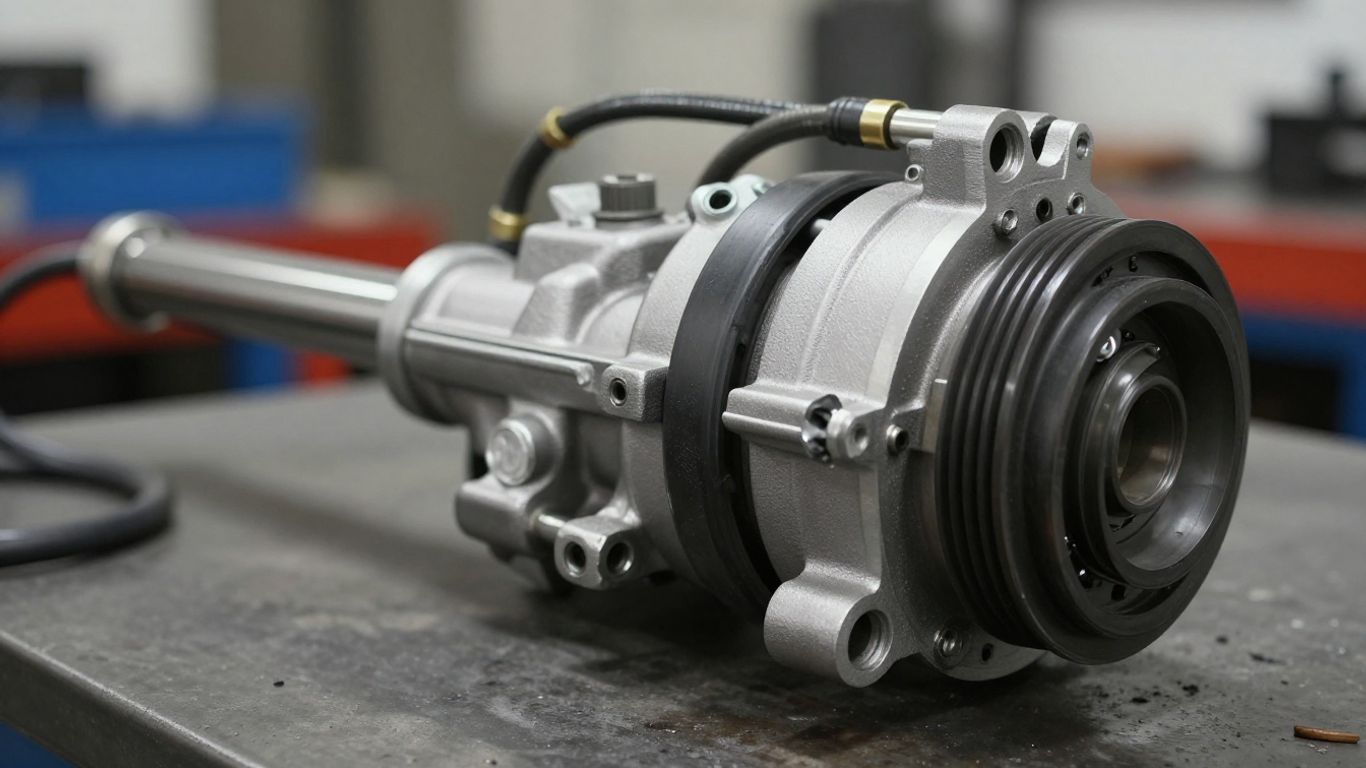
A typical belt-driven pump contains a housing, an input shaft, a pulley, and an internal pumping element such as a vane or gear assembly. It also has an inlet and outlet, seals, bearings, and a pressure-control valve. Wear in these parts can reduce output or create noise.
The pulley and shaft are external clues to an internal problem. A rough bearing, damaged pulley, slipping belt, or leaking shaft seal can all make the pump area appear suspicious, even when the pressure-producing section is still usable.
Main components inside a steering rack
A rack-and-pinion unit normally includes the pinion shaft, rack bar, housing, bearings or bushings, seals, and inner tie-rod connections. Hydraulic versions add a control valve, fluid passages, and an assist piston. Electric racks add a motor and related sensors or gearing instead.
Because the rack is connected directly to the steering linkage, wear inside it can be felt as free play or uneven movement. Leaks may appear at the housing, shaft seals, or the protective boots around the inner tie rods.
How fluid pressure moves from the pump to the rack
The pump sends pressurized fluid through a high-pressure hose to the rack’s control valve. Steering input shifts that valve, allowing pressure to act on one side of an assist piston while fluid from the other side returns through a low-pressure line. Turning in the opposite direction reverses the pressure path.
The reservoir, hoses, pump, valve, and rack form one circuit. A restriction or air leak in one area can produce noise or poor assistance elsewhere, which is why replacing the loudest-looking component without checking the circuit can lead to a repeat failure.
What changes in an electric power steering system
Electric systems replace hydraulic pressure with motor torque controlled by sensors and an electronic module. The system detects steering input and vehicle conditions, then applies assistance as needed. There may be no reservoir, hydraulic lines, or belt-driven pump to inspect.
The rack can still be a mechanical source of play, binding, or wandering in an electric system. However, an assistance fault may also involve wiring, a sensor, a motor, or a control module, so hydraulic pump tests would not apply.
Symptoms of a failing power steering pump
Pump problems usually show up as changes in steering effort, sound, or fluid circulation. The symptoms may be strongest during low-speed turns because the steering system needs more assistance at that time. They can also change with engine speed.
None of these signs proves that the pump is defective by itself. A low reservoir, loose belt, restricted hose, or failing rack can create a similar complaint.
Whining or groaning noises while turning
A whining or groaning sound that rises when the wheel is turned can indicate aerated fluid, low fluid level, pump wear, or excessive load. If the noise changes with engine speed, the belt-driven pump and its pulley deserve close attention.
Do not hold the steering wheel against its stop while trying to reproduce the sound. That places high load on the system and can produce a normal relief-valve noise or worsen an existing problem.
Heavy steering at low speeds
A failing pump may provide too little pressure to assist parking maneuvers and tight turns. The steering can feel acceptable while driving faster, then become noticeably heavy during a three-point turn or parallel parking.
Heavy steering can also result from low tire pressure, seized suspension parts, a damaged belt, or a mechanical fault in the rack. Comparing steering effort in both directions and checking the basic mechanical causes helps narrow the diagnosis.
Fluid leaks around the pump or belt area
Fluid around the pump pulley, shaft, housing, or nearby hose connections points toward a leak in that area. A leaking shaft seal can spread fluid onto the pulley or belt, making the source harder to identify than it first appears.
Clean the area before inspecting it again. Fresh fluid appearing at the pump after cleaning is more useful evidence than an old, wet coating that may have traveled from a hose or reservoir connection.
Pressure loss that comes and goes
Intermittent assistance can occur when the pump has internal wear, the belt slips, or air enters through a loose inlet connection. The fluid may foam, and steering effort may vary after the vehicle warms up or the wheel is turned repeatedly.
A pressure test performed under controlled conditions is more reliable than judging the pump from one short drive. The result should be compared with the vehicle manufacturer’s specifications rather than a general rule.
Symptoms of a failing steering rack
Rack faults tend to affect precision and wheel control more than overall assistance. The driver may notice looseness, uneven response, leaks near the boots, or a vehicle that does not track naturally. Some faults are mechanical, while others involve hydraulic seals inside the rack.
The rack is part of a larger steering linkage, so tie rods, ball joints, and suspension bushings can imitate rack wear. A careful inspection should separate those possibilities.
Steering fluid leaks from the rack boots or seals
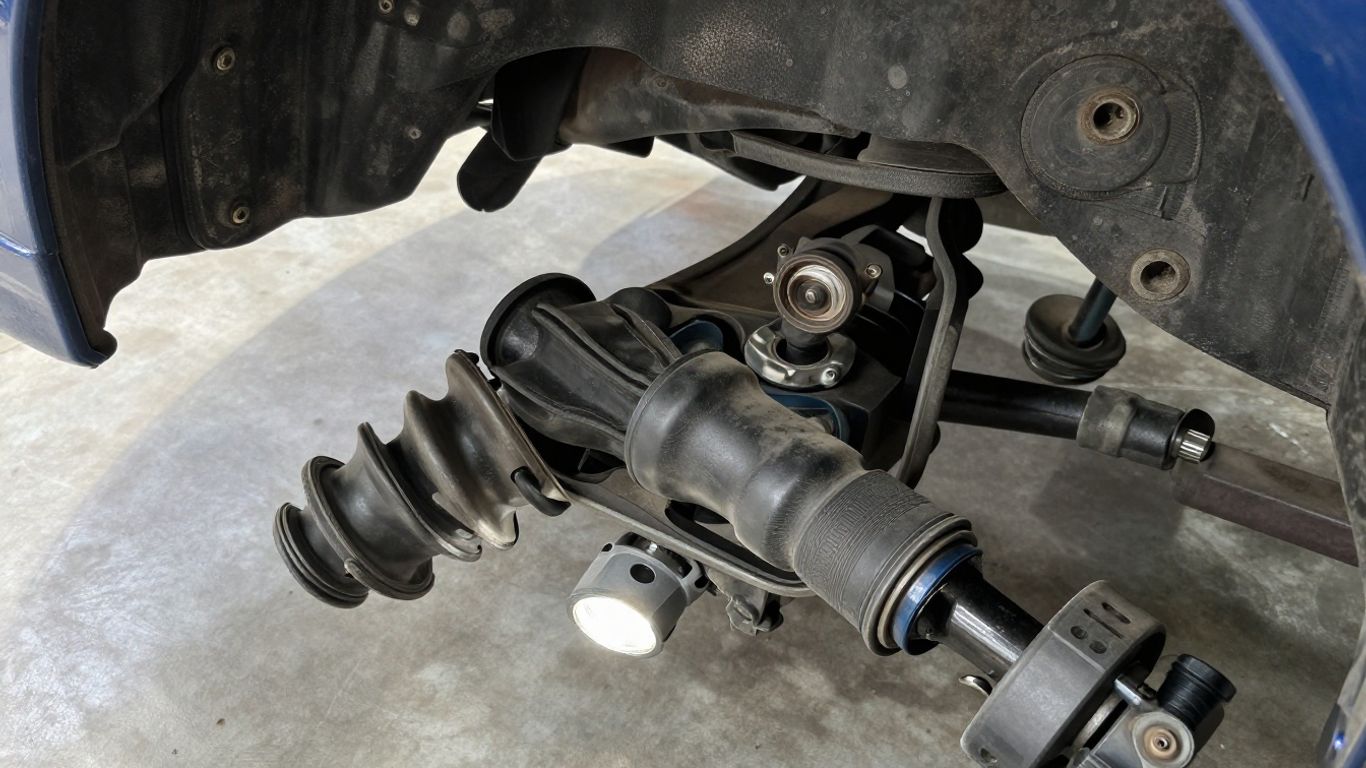
Fluid inside a rack boot, dripping from the rack housing, or collecting near the inner tie-rod area can indicate a failed rack seal. A boot itself normally protects the joint; it is not meant to store hydraulic fluid. Fluid inside it therefore deserves particular attention.
Not every wet area near the rack originates inside the rack. Fluid can run along a hose or subframe before dripping, so the area should be cleaned and traced from the highest fresh point.
Excessive play or looseness in the steering wheel
A worn rack gear, pinion support, inner tie rod, or mounting bushing can create free play before the wheels respond. The driver may feel a dead spot around center or notice that small steering corrections do not immediately change the vehicle’s path.
Play should be checked with the wheels safely supported and the steering linkage observed while an assistant moves the wheel. The movement must be tracked to its source rather than assigned to the rack automatically.
Uneven steering response or poor return to center
A rack with internal wear or binding may respond differently on one side than the other. The steering may also fail to return toward center after a turn, although alignment, tire condition, suspension wear, or a tight ball joint can cause similar behavior.
Changes in steering feel across the range of travel are useful clues. A smooth center with stiffness near one end suggests a different line of investigation from consistent looseness throughout the travel.
Clunking, binding, or wandering while driving
Clunks may come from rack mounts, inner tie rods, or nearby suspension joints. Binding can indicate internal rack damage or a restricted mechanical connection. Wandering, meanwhile, can result from steering play, poor alignment, worn tires, or loose suspension components.
A vehicle that wanders or binds should not be treated as a minor noise complaint. Steering faults can affect control, so an inspection is appropriate before continued normal driving.
How to diagnose the faulty component
Diagnosis works best as a sequence rather than a parts guess. Start with simple observations, then move toward measurements that can distinguish assistance loss from mechanical looseness. The vehicle’s service information remains the final reference for pressure values and test procedures.
A useful rack inspection checklist should be automotive-specific; similarly named equipment from other contexts does not describe steering-system service. Keeping that distinction clear avoids confusion when searching for repair information.
Checking power steering fluid level and condition
With the vehicle on level ground and the system at the specified temperature, check the reservoir level according to the owner’s manual. Look for dark or dirty fluid, foam, metal particles, and a burnt smell. The wrong fluid can damage seals or alter system operation.
If the level is low, find the leak instead of simply topping it up repeatedly. A low reservoir can allow air into the pump, producing noise and inconsistent assistance.
Inspecting the serpentine belt and pump pulley
Inspect the belt for cracking, glazing, contamination, and incorrect tension. With the engine off, check whether the pump pulley feels rough or has noticeable wobble. A damaged belt drive can mimic a weak pump because the pump is not being driven properly.
Keep hands and clothing away from rotating components during any running inspection. A belt problem should be corrected before condemning the pump itself.
Testing steering pressure and pump output
A pressure gauge connected at the appropriate point can show whether the pump reaches the required pressure and how it behaves under load. The technician may compare base pressure, flow, and response while turning the wheel, following the manufacturer’s procedure.
Pressure testing is especially helpful when the pump is noisy but the rack has no obvious leak or play. A result outside specification supports a pump or flow-control diagnosis, while normal pressure shifts attention toward the rack or linkage.
Examining rack boots, tie rods, and fluid leaks
Inspect both rack boots for tears, displaced clamps, and fluid accumulation. Check the inner and outer tie rods for looseness, then examine the rack mounts and housing. Fresh fluid, visible play, and uneven movement provide stronger evidence when they occur together.
The location of the leak matters. A pump-area leak and a rack-boot leak are different repair paths, even if both eventually lower the reservoir level.
Distinguishing pump noise from rack noise
Pump noise commonly changes with engine speed or steering load and is often heard near the belt-driven accessory area. Rack noise is more likely to appear as a clunk, knock, bind, or irregular response during steering movement. These are tendencies, not absolute rules.
A short road test followed by a stationary inspection can help separate them. If the noise is difficult to localize, a technician can listen at different components while checking fluid condition and system pressure.
Repair, replacement, and cost considerations
Repair cost depends on the vehicle, the failure mode, part availability, and the amount of access required. A pump may be relatively accessible but still require belt or hose work. A rack can take longer because the linkage, subframe area, and alignment may be involved.
The least expensive estimate is not always the best comparison. It should identify the failed component, included parts, fluid service, bleeding procedure, and any required alignment.
When a power steering pump can be repaired or replaced
Some pumps can be rebuilt with seals, bearings, or internal components, while others are replaced as complete units. The practical choice depends on the pump design, the quality of available parts, and the condition of the housing and shaft.
If contaminated fluid caused the failure, the system may need flushing and related components may need inspection. Installing a replacement pump into a dirty or restricted circuit can shorten its service life.
When a steering rack requires replacement or rebuilding
A rack with leaking internal seals, damaged gear surfaces, excessive wear, or persistent binding may require replacement or professional rebuilding. Rebuilding can be appropriate when the housing and major mechanical surfaces remain serviceable.
A replacement rack should match the vehicle’s steering design and equipment. Electric racks, hydraulic racks, and variable-assistance units may look similar externally while requiring different procedures and programming.
Comparing labor time and replacement costs
Pump replacement often involves removing the belt, disconnecting hoses, installing the unit, and bleeding the system. Rack replacement may involve disconnecting tie rods and the steering shaft, supporting or lowering nearby components, then carrying out an alignment.
The following comparison shows why the invoice cannot be judged by the part price alone:
| Repair path | Main labor factors | Common additional work |
|---|---|---|
| Pump replacement | Belt and hose access | Fluid flush and bleeding |
| Rack replacement | Linkage and subframe access | Alignment and tie-rod inspection |
| Pump rebuild | Removal and specialist bench work | Seal and bearing assessment |
| Rack rebuild | Removal and specialist rebuilding | Boot, seal, and linkage inspection |
After the table, the key question is whether the repair restores the whole circuit. A cheaper component installed without correcting contamination, air entry, or a related worn part may only delay the same complaint.
Additional parts to inspect during the repair
Related parts should be checked while the system is open because they can cause symptoms or damage a replacement unit. A focused inspection commonly includes:
- High- and low-pressure power steering hoses
- Reservoir filters, fittings, and return lines
- Serpentine belt condition and tensioner operation
- Inner and outer tie rods and rack mounts
These checks do not mean every listed part needs replacement. They help prevent a new pump or rack from being blamed for a separate fault that was left in place.
Why alignment is often necessary after rack replacement
Removing and reinstalling a rack can alter tie-rod positions or disturb the relationship between the steering gear and suspension. Even a small change can affect toe settings, steering-wheel centering, and tire wear.
An alignment confirms that the wheels point correctly after the repair. It also provides a chance to identify bent or worn suspension parts that could have contributed to the original steering complaint.
Which component should you replace?
There is no universal answer to the power steering pump vs rack difference because the correct replacement depends on the confirmed failure. Noise alone does not prove pump failure, and looseness alone does not prove rack failure. Testing should connect the symptom to a component before parts are ordered.
A complete steering inspection is often the most efficient route when symptoms overlap. It may cost more at the diagnostic stage, but it can prevent replacing one part while another fault remains.
Choosing based on the confirmed failure
Replace or rebuild the pump when testing shows inadequate output, and the belt, fluid supply, and hoses are in suitable condition. Choose rack repair or replacement when the rack has confirmed internal leakage, excessive mechanical play, or binding that cannot be corrected elsewhere.
The repair decision should also account for the system type. Electric steering faults require a different diagnostic path from hydraulic steering faults and may involve electrical testing or calibration.
Risks of replacing the pump when the rack is damaged
A new pump cannot remove play from worn rack gears, loose inner tie rods, or damaged rack mounts. It may restore hydraulic pressure while leaving the vehicle loose, wandering, or difficult to control accurately.
A replacement pump can also be affected by debris or leakage from a damaged rack. If the rack is the source of contamination or fluid loss, the original problem may return.
Risks of replacing the rack when the pump is weak
A new rack may still feel heavy if the pump cannot provide adequate pressure or flow. The rack replacement may solve a leak or play problem without restoring normal assistance.
This is why pressure and mechanical checks belong in the same diagnosis when the steering is both heavy and loose. Treating only one symptom can produce an expensive repair with an incomplete result.
When a complete steering system inspection is the better choice
Inspect the full system when the fluid is low, the source of a leak is unclear, symptoms change intermittently, or more than one steering complaint is present. The check should include fluid, hoses, belt drive, pump output, rack seals, rack mounts, tie rods, and related suspension joints.
It is also wise to pause before following unrelated search results about a rack interface, since that term belongs to web software rather than vehicle steering. Clear terminology helps keep the diagnosis focused on the actual system.
Conclusion
The pump supplies assistance in a hydraulic system, while the rack translates steering input into wheel movement and may apply that assistance. Once those roles are clear, noise, heavy effort, leaks, play, and wandering become more useful diagnostic clues. Confirm the failed component, inspect related parts, and complete the required fluid service or alignment instead of replacing parts by guesswork.
Frequently Asked Questions
Is the power steering pump the same as the steering rack?
No. The pump creates hydraulic pressure in a hydraulic system, while the rack transfers steering input to the wheels and may use that pressure to assist movement.
Can a bad pump damage the steering rack?
It can contribute to trouble if it sheds debris, operates with contaminated fluid, or allows air into the circuit. The exact risk depends on the system and the failure mode.
Can a bad steering rack make a whining noise?
A rack can create unusual noises, but a whining sound that changes with engine speed or steering load more commonly directs attention toward the hydraulic circuit, pump, fluid, or belt drive.
What causes heavy steering at low speed?
Possible causes include low fluid, a weak pump, a slipping belt, restricted hoses, a mechanical rack fault, low tire pressure, or binding suspension components.
How can I tell if steering play comes from the rack?
Observe the steering linkage while an assistant moves the steering wheel. The movement should be traced through the tie rods, rack mounts, pinion, and rack rather than blamed on one part immediately.
Does replacing a steering rack require an alignment?
Usually, an alignment is recommended because rack removal or tie-rod adjustment can change toe and steering-wheel centering. The vehicle’s service procedure determines the final requirement.
Is an electric steering system tested the same way as a hydraulic system?
No. Electric systems use a motor, sensors, wiring, and control electronics, so diagnosis generally involves electrical checks and system-specific scan or calibration procedures rather than hydraulic pressure testing.