

Key Takeaways
A power steering leak can be a small hose repair or a major steering-rack job. The final bill depends on the failed part, access, fluid requirements, and whether damage has spread.
- Diagnosis should come before ordering parts.
- Hose and clamp repairs are usually less expensive than pump or rack replacement.
- Low fluid can make steering harder and damage the pump.
- An itemized estimate should separate diagnosis, labor, parts, fluid, and related services.
- Prompt attention is usually cheaper and safer than continuing to drive with an active leak.
Typical power steering fluid leak repair cost
The power steering fluid leak repair cost can vary widely because “a leak” describes a symptom, not a specific repair. A loose connection may take little time to correct, while a rack hidden behind suspension components can require extensive labor. Diagnosis is often charged separately, although some shops apply that fee toward the repair. Use any online range as a starting point, not a promise for a particular vehicle.
Common price ranges for diagnosis and labor
A shop may begin with a visual inspection, fluid-level check, and a closer examination of the pump, hoses, reservoir, and steering rack. If the source is difficult to see, the technician may need to clean the area, run the system, and trace fresh fluid. Labor rates also differ considerably by region and facility.
Ask whether the initial quote covers diagnosis only or includes the first hour of labor. A clear estimate should explain what happens if the leak cannot be confirmed during the first inspection.
Estimated costs by repair type
The repair category usually matters more than the fluid itself. A hose or clamp is generally a simpler job than a pump, and a steering rack can involve additional removal, reassembly, and alignment work. These broad planning ranges are useful for comparing estimates, but they are not a substitute for a vehicle-specific quote.
| Repair or service | Broad planning range | Why it varies |
|---|---|---|
| Diagnosis and leak tracing | $75–$200 | Access, cleaning, and testing time |
| Hose, fitting, or clamp repair | $150–$500 | Part design and labor access |
| Power steering pump repair or replacement | $400–$1,200 | Pump type, belt work, and fluid service |
| Steering rack replacement | $1,000–$2,500+ | Subframe access, parts, and alignment |
After the source is confirmed, the estimate should identify the exact component rather than simply labeling the job “power steering repair.” That detail makes it easier to compare two quotes fairly.
How vehicle age and model affect the bill
Older vehicles may have easier mechanical layouts but less readily available original parts. Age can also mean that several seals, hoses, or fittings are deteriorated at the same time. A newer or less common model may require a specialized part with a higher purchase price.
The vehicle’s design matters just as much as its age. Some pumps and racks are accessible from above, while others are crowded by exhaust, suspension, or engine components. If a related part must be removed first, labor can become the largest part of the bill.
Why dealership estimates may be higher
Dealerships often use manufacturer-specific procedures, original-equipment parts, and labor rates that reflect their facility and training costs. That can produce a higher estimate without automatically meaning the work is unnecessary. An independent shop familiar with the vehicle may offer another reasonable option.
Compare the written scope, part brand, warranty, shop rate, and included services—not just the total. A lower quote that leaves out bleeding, flushing, or an alignment may not actually be less expensive.
What determines the final repair price
Two vehicles with fluid on the floor can need completely different work. The location of the leak, how long it has been present, and whether the fluid has reached belts or nearby components all influence the recommendation. A careful estimate connects each cost to a confirmed finding.
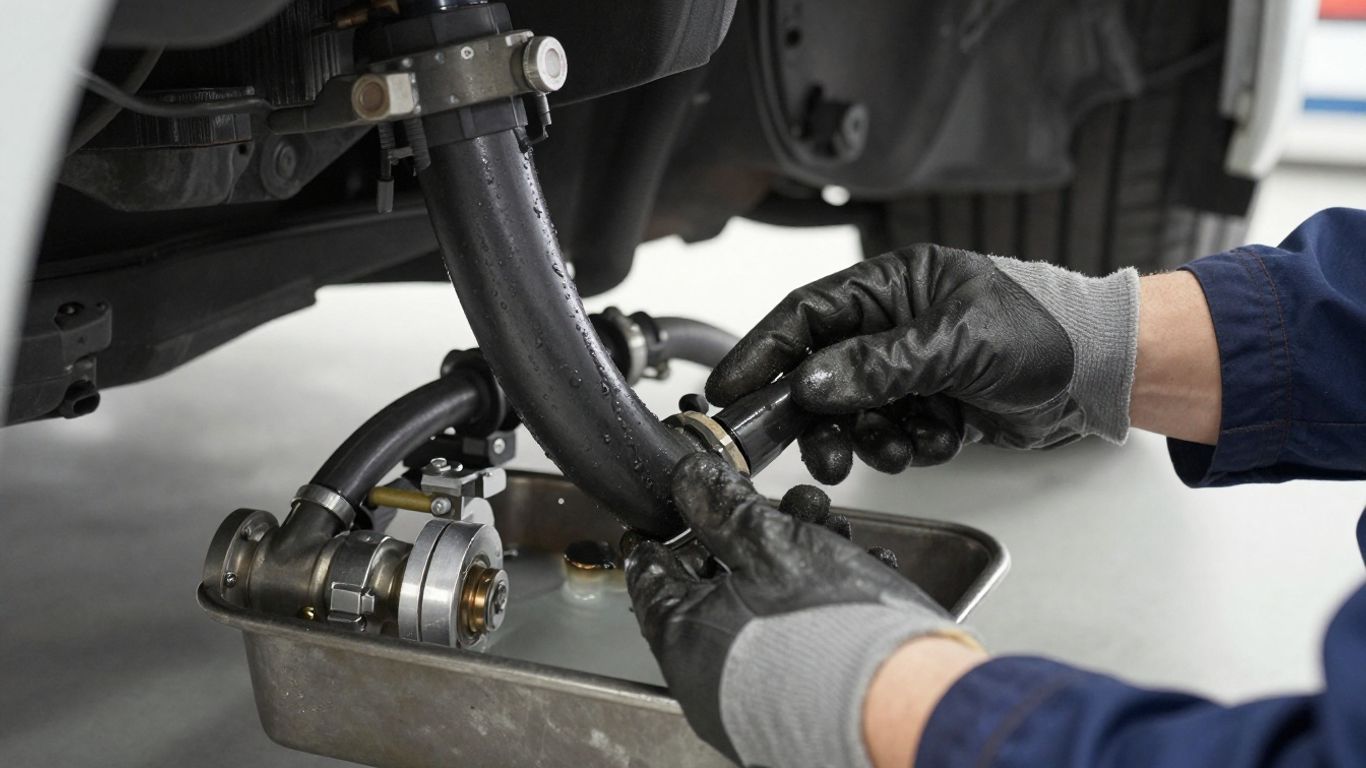
Leak location and severity
Fluid around a hose end may point to a connection problem, while fluid inside a rack boot can indicate an internal seal failure. A slow seep and a stream that empties the reservoir also create different levels of urgency. The technician needs to distinguish old residue from fresh fluid before deciding what failed.
A severe leak may require towing rather than a drive to the shop. Continuing to operate the vehicle can turn a contained leak into pump damage or a loss of steering assistance.
Replacement part quality and availability
Part pricing depends on whether the repair uses an original-equipment, aftermarket, or remanufactured component. Availability can affect both the price and the time the vehicle remains in the shop. For a critical steering component, ask what testing or warranty supports a remanufactured option.
The cheapest part is not always the cheapest repair if it fits poorly or fails soon afterward. The estimate should name the part category and include the applicable warranty.
Labor time and engine-bay access
Technicians charge for the time needed to reach, remove, install, and test the failed component. A hose visible at the front of the engine may be straightforward, whereas a rack tucked behind the subframe can require substantial disassembly. Rust, seized fasteners, and prior repairs can add uncertainty.
The shop should explain whether the labor figure is fixed or an estimate. If extra work is possible, ask for approval before the technician exceeds the quoted amount.
Fluid, flushing, and related service charges
The correct fluid matters because vehicles do not all use the same specification. A repair may also require flushing contaminated fluid, replacing a filter or seal, cleaning spilled fluid, or bleeding air from the system. These are legitimate charges when they are necessary, but they should not be hidden in a vague “shop supplies” line.
A well-written estimate lists parts, labor, fluid quantity, disposal fees, and any recommended alignment separately. That level of detail helps you decide which work is urgent and which can wait.
How mechanics diagnose a power steering leak
Diagnosis is a process of ruling out nearby sources, not simply replacing the first damp component a technician sees. Fluid can travel along a hose, bracket, or housing before dripping. The strongest diagnosis identifies the starting point and confirms that the proposed repair addresses it.
Identifying fluid color, smell, and location
Power steering fluid is often clear or lightly tinted, sometimes reddish, but color can change as fluid ages or mixes with grime. A mechanic considers the smell and texture along with where the drip lands. Engine oil, transmission fluid, coolant, and power steering fluid can look similar after collecting dirt.
The parking location can help reveal a pattern. A fresh spot near the front of the vehicle is useful evidence, but the spot alone does not prove which component is leaking.
Inspecting hoses, fittings, and the reservoir
The inspection usually starts with the reservoir level and condition, then follows supply and pressure hoses to their fittings. Cracks, swollen rubber, loose clamps, and wet crimps are common clues. The reservoir cap, return line, and seals also deserve attention because a small leak there can spread down the assembly.
Wiping away residue and watching for fresh fluid often provides more useful information than judging an old stain. A technician may ask you not to clean the area beforehand if the leak is still easy to trace.
Testing the pump, steering rack, and seals
If the external hoses look dry, the mechanic tests the pump and examines shaft seals and the rack housing. Steering input may make a leak more visible, but the wheels should be controlled safely during any test. A rack boot containing fluid is a different finding from fluid merely wetting the outside of the rack.
Noise and steering effort add context. A pump that has been starved of fluid may be noisy even after the original hose leak is repaired, so the component may need separate testing.
Confirming the source before replacing parts
A good repair plan is based on fresh evidence. The technician may clean the assembly, refill it with the specified fluid, run the system briefly, and inspect it again. This avoids paying for a pump or rack when the actual problem is a fitting above it.
For a broader overview of symptoms and checks, power steering leak signs can help an owner organize observations before visiting a shop. It should support—not replace—a hands-on diagnosis.
Common power steering leak repairs
Most repairs fall into a few familiar categories, but the right choice depends on what the inspection finds. Replacing a seal or hose can restore the system when the housing and pump remain sound. Internal wear, by contrast, may make replacement more practical than a temporary external fix.
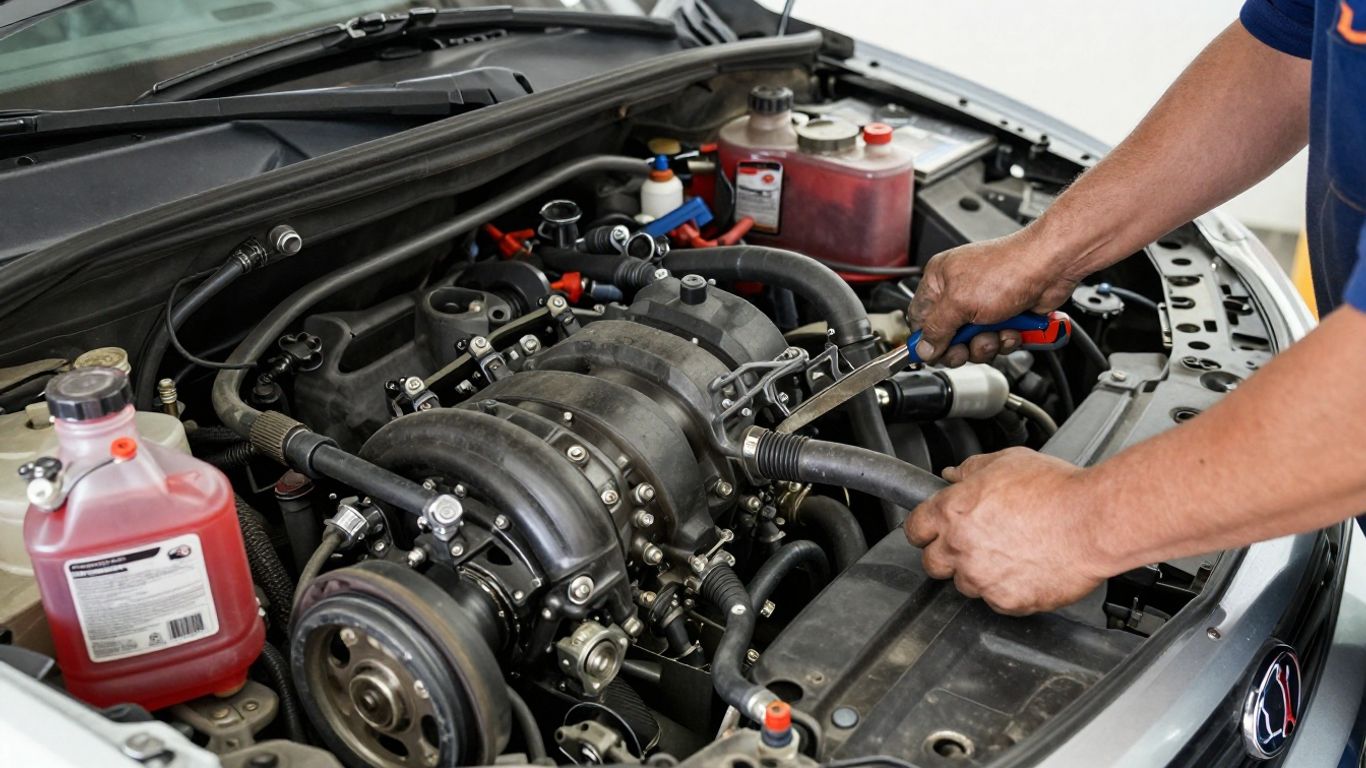
Replacing a cracked hose or loose connection
A cracked return or pressure hose is removed and replaced with the correct component, while a loose fitting or clamp may simply need tightening or renewal. Pressure-rated hoses must not be substituted with ordinary rubber line. The technician then checks for leaks under operating conditions.
This is often one of the more manageable repairs, but access and corrosion can still affect the labor. Fluid on belts or pulleys should also be cleaned because contamination can cause noise or slippage.
Repairing or replacing the power steering pump
A pump may leak at a shaft seal, housing joint, or connection, and it may also make noise when fluid is low. Some pumps can be rebuilt, while replacement is more practical when internal wear is extensive or a suitable rebuild is unavailable. The estimate should say which approach is proposed.
After installation, the system needs the correct fluid and careful air removal. A remaining whine does not necessarily mean the new pump is defective; trapped air or related damage may need investigation.
Fixing a leaking steering rack
A leaking rack can be among the costlier repairs because access may require suspension or subframe work. The technician may recommend rebuilding or replacing the rack depending on the vehicle and available parts. Alignment is commonly considered after steering or suspension components are disturbed.
This is where a low initial price deserves especially careful scrutiny. Ask whether removal, installation, fluid service, alignment, and the rack warranty are all included.
Replacing reservoir seals and return lines
The reservoir and low-pressure return circuit can develop leaks at grommets, seams, or hose ends. These repairs may be relatively simple when the components are accessible. Even so, the system should be checked afterward for seepage around every connection.
A reservoir that is cracked or distorted may need replacement rather than a new seal. The technician should explain whether the leak is at the container, its fitting, or the attached line.
Flushing contaminated or incorrect fluid
Using the wrong fluid or leaving debris in the system can affect seals and pump operation. A flush removes old fluid and gives the technician a cleaner baseline after the leak is repaired. It does not, however, fix a worn seal or cracked hose by itself.
For general context on why a plug or leak-stopping additive may not address the underlying failure, see this discussion of power steering leak costs. Treat additives cautiously and follow the vehicle manufacturer’s requirements.
DIY repair versus professional service
A careful owner may handle a visible, low-pressure return hose or a reservoir connection, provided the vehicle design and repair instructions are clear. High-pressure circuits, pumps, and steering racks are less forgiving. The decision should account for safe lifting, correct fluid, bleeding, and the consequences of a mistake.
Repairs that may be suitable for experienced owners
Replacing an accessible return hose, renewing a clamp, or topping up with the specified fluid may be reasonable for someone comfortable working on vehicles. The leak still needs to be located rather than guessed at. If the part carries high pressure or sits near hot exhaust components, professional service is the safer choice.
A short inspection can prevent an unnecessary parts purchase. Photographing the damp area before disassembly can also help if the source becomes less obvious once the component is moved.
Tools and safety precautions for home repairs
Home work requires stable lifting equipment, eye protection, gloves, absorbent material, and a way to catch used fluid. Never rely on a jack alone while working underneath a vehicle. Keep fluid away from belts, tires, painted surfaces, and children or pets.
Before beginning, an owner should have:
- The correct fluid specification and replacement part
- Vehicle-specific instructions or a reliable service manual
- Jack stands or a lift rated for the vehicle
- A drain pan, cleaning supplies, and suitable hand tools
These basics reduce preventable mistakes, but they do not make an inaccessible rack or high-pressure line a simple repair. Stop if a fitting is seized, the leak source is uncertain, or the vehicle cannot be supported securely.
When access or bleeding procedures require a shop
Some systems need a particular wheel position, repeated steering movement, or a prescribed bleeding sequence. Air left in the circuit can create noise and inconsistent assistance. A shop is also better equipped to inspect for secondary damage and confirm the repair under controlled conditions.
If the repair requires subframe removal, specialized tools, or an alignment afterward, professional service usually saves time and reduces risk. The same applies when the vehicle is needed for daily transportation and a failed repair would create a second period of downtime.
Risks of driving or repairing with low fluid
Low fluid increases friction and heat inside the pump and can make steering effort unpredictable. A short trip may worsen a small leak, especially if the reservoir is already near empty. If steering becomes heavy or fluid is rapidly disappearing, stop driving and arrange assistance.
For additional background on control and warning symptoms, power steering repair information describes common service categories such as hose, flush, pump, and rack work. The appropriate repair still depends on the diagnosis for your vehicle.
Warning signs that affect urgency
A leak deserves attention even when the vehicle still feels normal. The steering system can compensate for a while, then deteriorate quickly as the fluid level falls. Changes in sound, steering effort, or fluid loss should move the repair higher on your priority list.
Whining or groaning while turning
A whine that rises when the steering wheel is turned may indicate low fluid, air in the system, or pump strain. Groaning can also occur when the system is held against a steering stop, so the sound’s timing matters. Do not keep repeating the maneuver just to reproduce the noise.
Check the fluid level only as directed for the vehicle and inspect for a fresh leak. If the sound appeared alongside a falling level, limit driving until the system is assessed.
Heavy or inconsistent steering
Steering that suddenly feels heavy, notchy, or uneven can indicate reduced hydraulic assistance. It may be most noticeable during parking, but a change at road speed is also serious. Pull over safely if control feels compromised.
Do not assume adding fluid solves the problem. It may restore the level briefly while the leak continues, and the underlying failure can remain active.
Fluid spots under the vehicle
A reddish or clear oily spot near the front axle is a useful clue, especially when it appears after the vehicle has been parked. Place clean cardboard beneath the suspected area if doing so is safe, but avoid touching hot components. Note the spot’s size and whether it returns.
A large or rapidly growing spot suggests more than a minor seep. A shop can often learn more from the location and timing than from the color alone.
A burning smell or visible smoke
Fluid reaching a hot exhaust component may produce a sharp burning odor or light smoke. This calls for immediate caution because spilled fluid can damage nearby parts and create a fire concern. Turn off the engine and move away from traffic if conditions allow.
Do not crawl under a hot vehicle to search for the source. Let it cool and have the system inspected before driving again.
Damage caused by running the pump dry
A pump without enough fluid may overheat, score internal surfaces, and become noisy. In that situation, repairing the original hose may not restore quiet operation or normal pressure. The longer the pump runs dry, the greater the chance that the bill includes more than the original leak.
This is why topping up, when permitted by the owner’s manual, is only a temporary measure while arranging diagnosis. It should never be treated as a permanent repair.
How to reduce and compare repair costs
The best way to control the bill is to improve the quality of the decision, not to choose the first low number. Get the source confirmed, understand the repair options, and compare estimates on equal terms. A few minutes spent asking questions can prevent duplicated labor or an unsuitable part.
Getting an itemized estimate
Request separate lines for diagnosis, labor hours, parts, fluid, flushing, disposal, alignment, taxes, and shop fees. Ask which items are required now and which are recommendations based on age or condition. A written estimate also makes authorization limits clear.
When researching unrelated service estimates, pages such as EDB Builders, Design Concepts NZ, portable and room diffusers, and a teen communication guide are not useful comparisons for automotive work. Their presence in search results does not make their pricing relevant to a steering repair.
A vehicle-specific estimate should stand on its own. If a shop cannot explain what failed or why a service is included, ask for clarification before approving it.
Comparing independent shops with dealerships
Use the same description of the symptom and ask each facility to identify its diagnostic charge. Then compare labor rates, parts, warranty terms, estimated completion time, and included follow-up checks. A dealership may have model-specific experience, while an independent shop may offer a different labor structure.
The headline total matters, but the scope matters more. A quote that excludes fluid bleeding or alignment may look attractive until those services are added later.
Choosing OEM, aftermarket, or remanufactured parts
Original-equipment parts may offer predictable fit, while aftermarket choices can vary by manufacturer. Remanufactured pumps and racks can reduce the parts cost when supplied by a reputable source with clear testing and warranty coverage. Ask what happens if the part fails during the coverage period.
For a safety-related component, balance purchase price against fit, availability, expected service life, and labor to replace it again. Saving on the part is less helpful if the same labor must be paid twice.
Checking warranties and related repairs
Confirm whether the warranty covers parts only or both parts and labor. Ask whether hoses, seals, fluid, and alignment are excluded. A warranty may also have time and mileage limits that begin on the installation date.
Related repairs should be explained rather than bundled into a single total. For example, a rack replacement may reasonably lead to an alignment recommendation, but that service should still be visible on the estimate.
Preventing future power steering leaks
Regular fluid checks, prompt attention to damp fittings, and using only the specified fluid can help catch trouble early. Avoid holding the steering wheel hard against its stop for extended periods, since that can load the hydraulic system. At routine service, ask for a quick look at hoses, seals, and the reservoir.
A little maintenance cannot prevent every age-related failure, but it can reduce the chance of operating the pump with a dangerously low level. Keeping records of fluid type and prior repairs also helps the next technician diagnose changes faster.
Conclusion
A power steering leak is easier and usually less expensive to manage when the source is identified before the system runs low. Compare itemized estimates, consider access and part quality, and treat heavy steering, smoke, rapid fluid loss, or pump noise as reasons to stop driving and seek professional help.
Frequently Asked Questions
How much does it cost to repair a power steering fluid leak?
Costs range from a relatively small hose or connection repair to well over $1,000 for a steering rack, depending on the vehicle, parts, labor, and related services. Diagnosis is often a separate charge.
Can I drive with a power steering fluid leak?
A very short drive may be possible with a minor seep and a normal fluid level, but driving becomes unsafe when steering is heavy, fluid is disappearing quickly, or the pump is whining. Towing is the safer choice in those situations.
What color is power steering fluid?
It is commonly clear or lightly tinted, sometimes red, but age and contamination can change its appearance. Location, smell, and the component that is wet are more reliable than color alone.
Does power steering stop leaking on its own?
A mechanical leak generally does not repair itself. Seals, hoses, fittings, and housings usually need inspection and, when confirmed as the source, repair or replacement.
Is a power steering flush enough to fix a leak?
A flush removes old or incorrect fluid but does not repair a cracked hose, worn seal, or damaged pump. It may be appropriate after the failed component has been corrected.
How can I tell whether the pump or hose is leaking?
A hose leak often appears around a line, fitting, or clamp, while a pump leak may be wet around its housing or shaft seal and may accompany whining. A clean-and-retest inspection is the dependable way to confirm the source.
Should I use a leak-stopping additive?
Check the vehicle manufacturer’s guidance before using any additive. Such products may not address a damaged component, and using an unsuitable fluid or additive can complicate diagnosis or cause further problems.