

Key Takeaways
Heavy steering is a symptom, not a diagnosis. The pattern of the stiffness, along with fluid, tire, belt, and suspension checks, usually points toward the right repair.
- Check whether the steering is heavy only while parking or also at road speed.
- Inspect tire pressure and hydraulic fluid before assuming a major component has failed.
- Treat sudden loss of steering assistance, warning lights, or unusual noises as urgent.
- Do not ignore leaks, worn steering joints, or a binding rack.
- Get professional testing when basic checks do not identify the cause.
What heavy steering feels like and why it matters
A steering wheel that suddenly needs both hands to turn is telling you that something has changed in the steering system or at the front tires. Sometimes the cause is simple, such as low tire pressure. Other times, assistance has failed or a mechanical part is beginning to seize. These heavy steering causes and fixes are easier to sort out when you record exactly when the symptom appears.
Signs that steering effort is abnormal
Normal steering should feel reasonably consistent from left to right, with the wheel returning toward center after a turn. Heavy steering may feel notchy, slow to respond, or unusually resistant near full lock. A gradual increase in effort deserves attention even if the vehicle remains drivable, because wear and fluid loss often develop before complete failure.
A useful stiff steering guide can help you compare the most common symptoms, but it should not replace an inspection when control feels compromised. Sudden extra effort matters because it can reduce your ability to make a quick correction.
When the problem appears during parking or driving
Many hydraulic systems feel heaviest during parking because the tires are loaded while the vehicle is stationary. If the steering becomes light once the car moves, low fluid, a weak pump, or low tire pressure may be involved. If it stays heavy at normal speeds, look more closely at alignment, suspension, the rack, or an electric-assist fault.
Avoid repeatedly holding the wheel against full lock while testing. That places extra load on the steering system and can make a marginal pump noisier.
How pulling, vibration, and noise provide clues
Pulling to one side suggests tire pressure, alignment, or a worn front-end component rather than a simple loss of assistance. Vibration through the wheel can point toward a tire, wheel, or suspension problem. A groan or whine during turning is more suggestive of a hydraulic pump or low-fluid condition, while a clunk may indicate looseness in a joint.
Note whether the symptom changes with engine speed, road speed, temperature, or steering direction. Those details are often more useful to a technician than the general statement that the wheel feels hard to turn.
Why sudden heavy steering requires immediate attention
If steering assistance disappears while you are driving, the vehicle may still turn, but it will require much more force and may react differently in an emergency maneuver. Pull over in a safe place, switch on the hazard lights, and arrange assistance if the wheel is difficult to control. Do not continue simply because the engine is still running.
A heavy-duty vehicle needs the same caution; a commercial steering safety guide offers a useful reminder that stiffness, looseness, poor response, and pulling can all be warning signs.
Low power steering fluid and hydraulic problems
Hydraulic power steering depends on fluid moving under pressure between the pump and steering gear. A low reservoir level, contaminated fluid, or air in the circuit can reduce that assistance. The reservoir location and fluid type vary, so consult the owner’s manual before opening or filling anything.
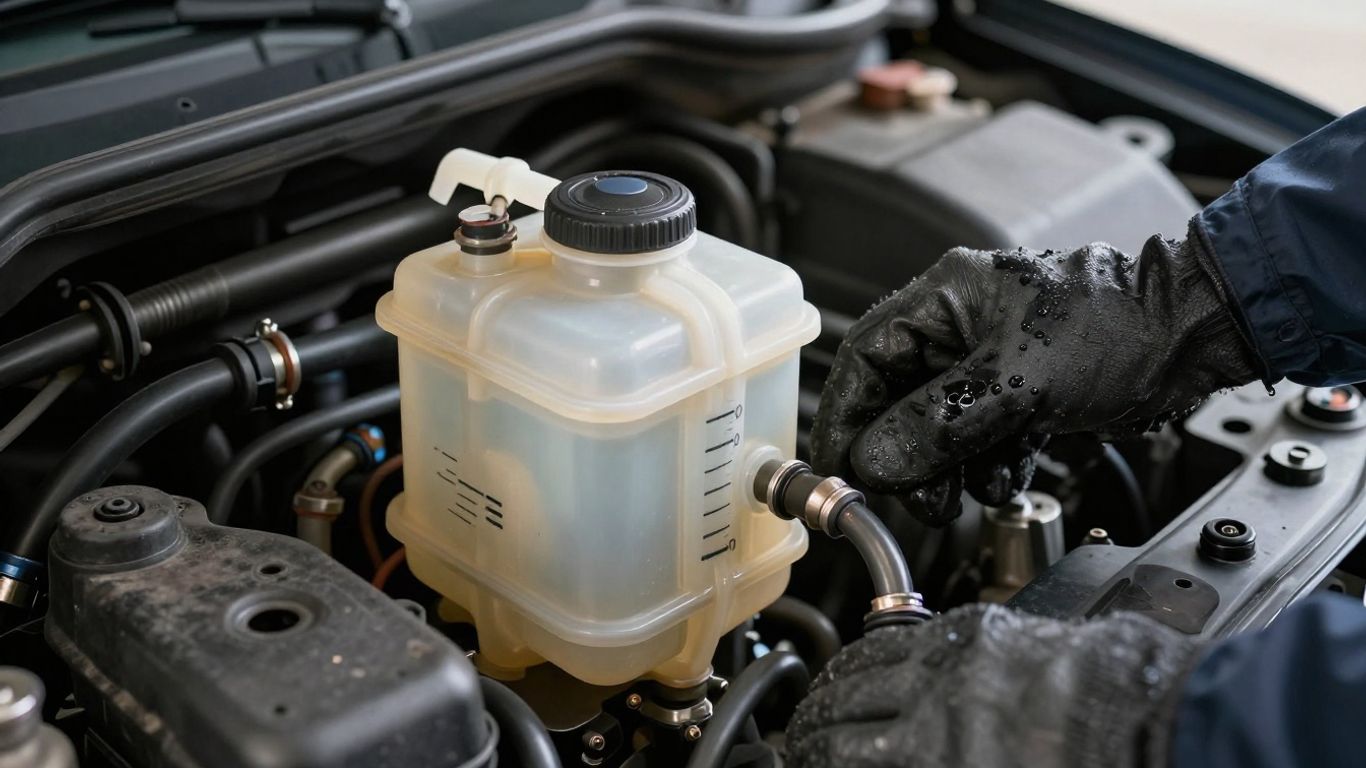
The level is only a starting point. A reservoir that is repeatedly low has a leak or another fault that needs to be found rather than endlessly topped off.
How fluid level and condition affect steering assist
Check the level with the vehicle parked on level ground and the system at the temperature specified by the manufacturer. Some reservoirs have separate hot and cold marks. Fluid that looks very dark, smells burnt, or contains visible debris may indicate age, overheating, or internal wear.
Do not assume that any red or clear fluid is suitable. Mixing incompatible fluids can damage seals and alter how the pump operates. A power steering fluid checklist is helpful for the basic connection between fluid level, leaks, pump condition, and tire pressure.
Finding leaks at hoses, seals, and the steering rack
Look for wetness around the reservoir, hose connections, pump shaft area, and the steering rack. A small puddle may appear below the vehicle, but some fluid collects inside a rack boot and remains hidden. Fresh fluid can spread along a hose or subframe, so the highest wet point is often closer to the source than the lowest drip.
Clean suspected areas only if it can be done safely, then recheck after a short period. Never place hands near belts, pulleys, or moving steering parts with the engine running.
Recognizing a failing power steering pump
A worn pump may whine, groan, or provide uneven assistance that changes with engine speed. The steering can feel lighter in one direction than the other, or become especially difficult at low speed. Continued operation with low fluid can accelerate pump damage because the fluid also helps lubricate and cool the unit.
Pump noise alone does not prove the pump is bad. Air in the system, a slipping belt, restricted hose, or a leak can produce similar symptoms, so pressure testing is preferable to guessing.
Choosing the correct replacement fluid and bleeding the system
Use only the fluid specification listed for the vehicle. After a repair, the system may need bleeding to remove trapped air; the procedure differs by model and may require turning the wheels through a controlled range with the front end supported. Keep the reservoir from running dry during the process.
If bubbles persist, the fluid foams, or the pump remains noisy, stop and find the source of the air. A refill can restore the level, but it cannot repair a leaking hose or worn seal.
Belt, electrical, and steering-assist failures
Not every vehicle uses a hydraulic pump. Some have electric power steering, some use an electro-hydraulic arrangement, and others combine different assistance systems. That distinction changes the inspection: a belt matters greatly to a hydraulic pump, while voltage, sensors, wiring, and control modules matter more to electric assist.
The symptom can look similar in the driver’s seat, which is why the vehicle’s design and warning lights should guide the next step.
How a loose or damaged belt reduces hydraulic assistance
A serpentine belt that is loose, glazed, cracked, or contaminated may slip when steering load rises. You may hear squealing, see belt dust, or notice that steering effort changes with engine speed. A failed belt can also disable other accessories, so an overheating warning or charging warning may appear at the same time.
Inspecting belt tension and routing is safer with the engine off. Replacement requires the correct belt path and tension, not simply a tighter adjustment.
Diagnosing electric power steering and sensor faults
Electric systems may lose assistance because of a motor, torque sensor, steering-angle sensor, wiring, fuse, or control-module problem. The steering may become heavy suddenly, sometimes accompanied by an amber or red steering symbol. Cycling the ignition can make the symptom disappear briefly without fixing the underlying fault.
A scan tool that can communicate with the steering module is usually more useful than a generic engine-code reader. The auto failover overview is unrelated to vehicle steering repair, but its general discussion of detecting failures and switching to backup components illustrates why a system’s recorded fault history matters more than a guess based on feel alone.
Understanding battery and alternator-related steering problems
Electric steering draws substantial current, particularly during slow maneuvers. A weak battery, poor ground, failing alternator, or loose connection can cause assistance to drop out or warnings to appear. If several electrical systems act strangely together, test the charging system before replacing steering parts.
Voltage testing should follow the vehicle maker’s procedure. A battery that starts the engine can still be unable to support steering assistance reliably under load.
When a warning light indicates an electronic fault
A steering warning light means the system has detected a condition that may limit or disable assistance. Read the owner’s manual for the light’s meaning and avoid driving if steering effort is severe, the warning is red, or other safety warnings appear. Even if the light clears, stored diagnostic data may identify an intermittent fault.
A professional can check live sensor values, wiring continuity, and module codes. Replacing a battery or clearing a code without finding why it appeared can leave the safety problem unresolved.
Tyres, alignment, and suspension causes
The tires are the steering system’s contact with the road, so their condition has a direct effect on effort. Low pressure increases the area of rubber being dragged during a slow turn, while unusual wheel or tire dimensions can alter steering geometry. Alignment and suspension wear can add friction, pull, or instability.
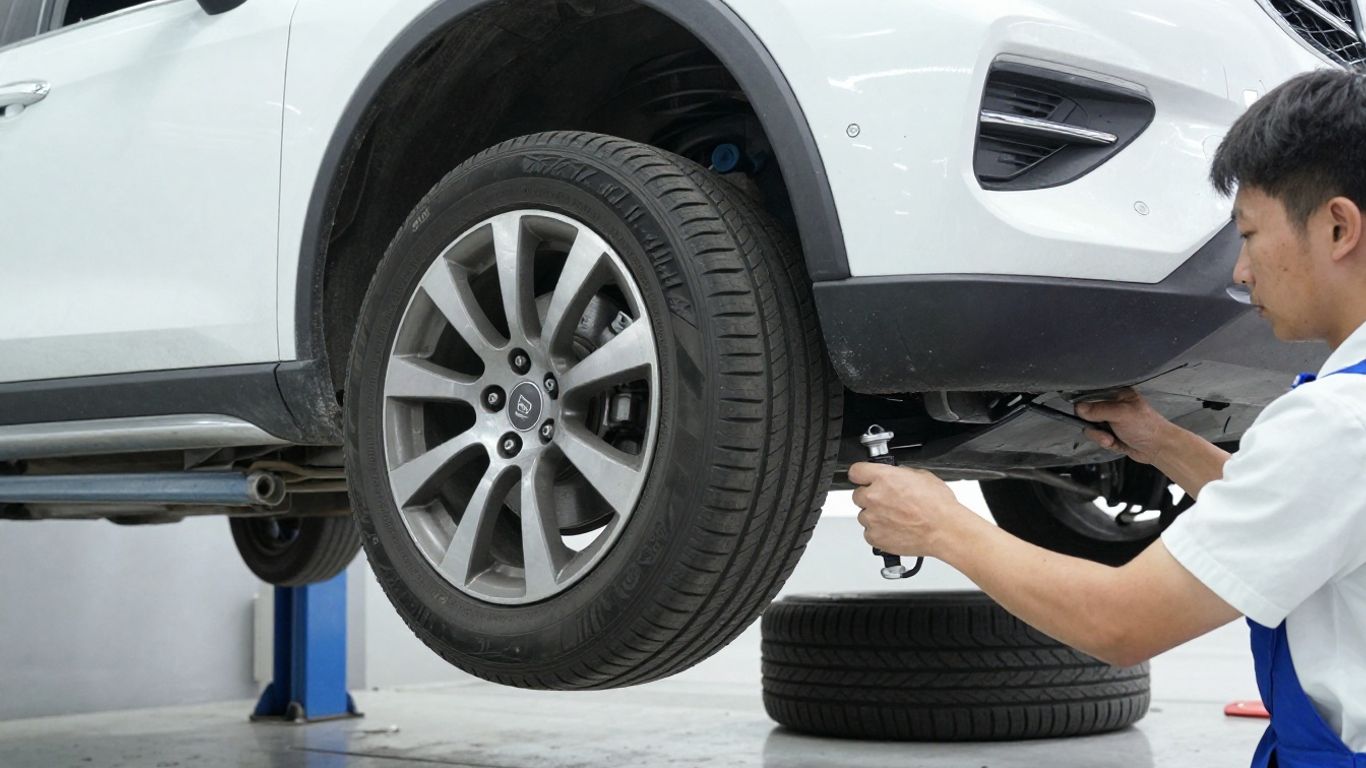
Start with simple external checks before assuming the fault is inside the rack or column.
How incorrect tyre pressure increases steering effort
Use a pressure gauge when the tires are cold, and compare each reading with the vehicle’s door-jamb label rather than the maximum pressure molded into the sidewall. A significantly underinflated front tire can make parking steering noticeably heavier. Uneven pressure can also make the car pull or feel different in left and right turns.
Inspect for punctures, bulges, exposed cords, and uneven wear. A tire that keeps losing pressure needs repair or replacement, not repeated inflation alone.
The effect of oversized tyres and wheel changes
A wider tire, larger wheel, or different offset can increase steering effort and may change clearance or scrub radius. The effect is especially obvious at low speed and with the vehicle stationary. Tire construction and sidewall stiffness also influence the feel.
If the symptom began immediately after a wheel change, return to the previous specification if possible or have the fitment checked. Do not assume the power steering system caused a change that began with new hardware.
Why poor wheel alignment can make steering feel heavy
Incorrect toe, camber, or caster can cause the tires to fight one another or resist returning to center. The vehicle may pull, wander, or wear the inner or outer shoulders of a tire. Alignment should be measured after tire pressures are corrected and obvious suspension damage is addressed.
An alignment adjustment cannot compensate for a bent component or a seized joint. If readings are outside the adjustable range, the underlying mechanical issue needs attention first.
Checking worn ball joints, tie rods, and suspension components
Worn tie rods and ball joints can create looseness, clunks, or imprecise steering, while a dry or seized joint can add resistance. A technician normally lifts the vehicle securely and checks movement at the wheel and each joint. Visual inspection alone may miss play that appears only under load.
These checks are safety-critical. A heavy steering diagnosis guide reinforces the value of checking pressure, alignment, and fluid together rather than treating one symptom in isolation.
Steering rack, column, and mechanical faults
Mechanical steering faults can remain even when fluid level and electrical supply are normal. Rust, impact damage, poor lubrication, or internal wear may restrict movement in the rack, column, or joints. The steering may feel tight in one part of its rotation or fail to self-center.
Because these parts connect directly to wheel control, avoid exploratory disassembly unless you have the correct service information and equipment.
Identifying a binding steering rack
A rack that binds may produce a tight spot as the wheel is turned, uneven resistance, or a reluctance to return toward center. Internal corrosion, damaged seals, bent components, or contaminated fluid can all be involved. The steering should be assessed with the front wheels unloaded and the linkage checked separately so the source of resistance can be isolated.
Replacing a rack without confirming the bind can waste money. A pressure test and component-by-component inspection provide stronger evidence.
How damaged steering column joints restrict movement
The column may use universal joints or intermediate shafts to transfer wheel movement to the rack. A joint that is rusty, bent, or partially seized can make the wheel feel notchy and may cause stiffness at particular angles. Water intrusion near the joint is a common reason for corrosion.
A technician can disconnect sections in a controlled way to determine whether the resistance is above or below the rack. This work requires care because incorrect reassembly can affect steering alignment or safety systems.
Recognizing worn or seized steering components
A worn bearing, damaged shaft, tight ball joint, or deformed linkage can create either looseness or excessive effort. Listen for clicks and feel for changes as the wheel moves slowly through its range. Do not confuse normal tire scrub at a standstill with a genuine bind, but do not dismiss a repeatable tight spot either.
The inspection should include mounting points and recent accident or curb-impact damage. A component can look intact while being bent enough to alter steering behavior.
Why cold weather can temporarily worsen mechanical stiffness
Cold temperatures thicken some fluids and reduce the flexibility of rubber seals. Ice, packed snow, or moisture that freezes around a joint can also restrict movement. If the steering becomes normal after warming, that is a clue, not proof that the system is healthy.
Persistent stiffness after the vehicle warms suggests a mechanical, fluid, or electrical problem that should still be investigated. Never pour hot water over steering or brake components to free them.
How to diagnose heavy steering safely
Diagnosis works best as a process of elimination. Begin with observations that do not require touching moving parts, then inspect simple service items, and only afterward consider pressure tests or component removal. If the vehicle cannot be steered predictably, skip the road test and arrange a professional inspection.
Checks you can perform with the vehicle parked
With the engine off, inspect tire pressure, tire condition, fluid level where applicable, visible leaks, and the belt’s general condition. Compare the left and right sides for obvious damage or wetness. Check whether warning lights remain illuminated after starting, but keep clear of the engine bay while belts and pulleys rotate.
Record the vehicle’s symptoms in a short sequence:
- Is the effort heavy only at low speed?
- Does it change when the engine starts?
- Is there whining, squealing, clunking, or grinding?
- Do the tires show uneven wear or different pressures?
This sequence gives a repair shop something concrete to verify instead of a vague complaint.
Road-test observations that help narrow the cause
Only road-test when the vehicle remains controllable and no serious warning is present. Notice whether the wheel returns to center, whether the car pulls, and whether effort changes with speed or engine rpm. Test on a quiet, level road and avoid sharp maneuvers.
Stop if steering worsens, a tire feels unstable, a warning appears, or a new noise develops. A road test is for gathering clues, not proving that a dangerous vehicle is safe.
Tests a mechanic uses to measure steering pressure
On hydraulic systems, a mechanic can fit a pressure gauge and compare pump output, relief behavior, and pressure under specified steering loads. The results help separate a weak pump from a restriction or rack problem. The test must follow the manufacturer’s limits because holding the wheel against full lock can generate excessive pressure.
Electric systems require a different approach, including voltage checks, module scans, sensor data, and inspection of power and ground circuits. The power steering failure warning guide is a useful general reference for distinguishing hydraulic and electric assistance symptoms.
When diagnostic equipment or a professional inspection is needed
Seek professional help when the cause is not obvious, the steering warning light is on, fluid keeps disappearing, or any joint or rack appears damaged. Diagnostic equipment is also appropriate for intermittent electric-assist failures and faults that clear after restarting.
A technician should explain the evidence before recommending a pump, rack, or steering column. The technical inspection foundation discusses a different type of system, but the broader principle applies: a systematic inspection is more dependable than changing parts at random.
Fixes, repair costs, and prevention
Repair cost depends on the failed part, vehicle design, labor access, and whether related damage is found. A pressure adjustment or tire repair may be inexpensive, while a rack, pump, electric motor, or steering shaft can require considerably more labor. Ask for a written diagnosis that separates the immediate safety repair from recommended follow-up work.
Prices also vary by region and parts quality, so a precise figure cannot be given without the vehicle and inspection results.
Which heavy steering repairs are simple and inexpensive
Correcting tire pressure, replacing a damaged tire, repairing a small hose, or replacing a worn belt may resolve the problem without major disassembly. Fluid service can help when the fluid is old or air has entered after a repair, provided the system itself is sound. These repairs are simple only when the underlying cause has been confirmed.
A top-off that makes the wheel lighter for a day is not a complete fix if the level falls again. Treat recurring symptoms as evidence of a leak or failing component.
When a pump, rack, belt, or joint needs replacement
Replacement becomes more likely when pressure testing confirms weak pump output, a rack binds internally, a belt is damaged beyond adjustment, or a joint has seized or developed unsafe play. A leaking rack may need a rebuild or replacement depending on its condition and the available parts. Steering components should be installed and torqued according to service specifications.
Do not drive after a repair until the system has been bled where required, leaks have been checked, and the steering feels consistent in both directions.
How to decide between repair and complete component replacement
Compare the part’s condition, the source of the failure, warranty coverage, labor time, and the risk of related wear. A minor hose or seal issue may justify repair, while internal rack damage or a severely worn pump may make replacement more sensible. Ask whether the proposed part is new, remanufactured, or used and what warranty accompanies it.
The cheapest estimate is not always the lowest final cost if it leaves contamination, misalignment, or another worn component unresolved. A clear explanation of alternatives helps you make a fair comparison.
Maintenance habits that help prevent recurring steering problems
Regular checks will not prevent every failure, but they can catch conditions that shorten component life. Keep tire pressures correct, respond to leaks promptly, and follow the vehicle’s fluid-service guidance. After suspension work, an impact, or a wheel change, have steering and alignment checked.
The same habit applies to other maintenance decisions: verify the specification, watch for changes, and keep records. For example, even an unrelated extension care guide shows how routine inspection and correct handling can protect a long-term investment; the vehicle-specific service schedule remains the authority here.
Conclusion
Heavy steering should be treated as a useful warning rather than an annoyance to work around. Check the tires and visible fluid condition, pay attention to the timing and sounds, and stop driving when assistance disappears or control becomes uncertain. A measured diagnosis can prevent unnecessary parts replacement and restore safe, predictable steering.
Frequently Asked Questions
Can low tire pressure make the steering wheel hard to turn?
Yes. Underinflated front tires create more drag during low-speed turns and can make the wheel feel heavy, especially while parking. Check pressures cold against the vehicle’s door-jamb specification.
Is it safe to drive with heavy steering?
It depends on the cause and severity, but sudden or severe stiffness is unsafe because emergency steering becomes harder. Pull over if control is difficult, a warning light appears, or a tire or steering component may be damaged.
How can I tell if power steering fluid is low?
With the vehicle parked as directed by the owner’s manual, check the reservoir against its marked range. A low level, whining noise, or repeated need to refill often indicates a leak or another hydraulic fault.
Do electric power steering systems use fluid?
Many electric systems do not use hydraulic fluid or a belt-driven pump. They use electrical power, sensors, a motor, and control electronics, so diagnosis usually involves voltage checks and a compatible scan tool.
Why is steering heavy only when parking?
Parking places high load on the tires and steering assistance while the vehicle is barely moving. Low tire pressure, a weak hydraulic pump, incorrect wheel fitment, or normal tire scrub made worse by a fault can all contribute.
Can a wheel alignment fix heavy steering?
An alignment can correct steering effort caused by incorrect geometry, pulling, or poor return-to-center behavior. It will not fix a leaking pump, binding rack, seized joint, damaged tire, or electrical-assist failure.
When should a mechanic inspect heavy steering?
Arrange an inspection when the symptom persists after basic tire checks, when fluid is leaking or disappearing, when a warning light is present, or when there is noise, vibration, looseness, or a repeatable tight spot.