

Key Takeaways
A steering rack replacement changes parts that help position the front wheels, so an alignment check is usually the sensible next step.
- A new rack can alter toe and steering-wheel centering even when installed carefully.
- Replacing inner or outer tie rods makes an alignment especially likely to be needed.
- A four-wheel check may be more useful than a front-only adjustment, depending on the vehicle.
- Skipping the check can lead to tire wear, pulling, and unsettled handling.
- A technician should inspect the steering system, measure the angles, and road-test the vehicle afterward.
Why replacing the steering rack can affect wheel alignment
The steering rack does more than transmit movement from the steering wheel. It connects to the tie rods, which determine how the front wheels point relative to one another. Because those connections are disturbed during removal and installation, the practical answer to “Does a new rack need a wheel alignment?” is usually yes, or at least that the alignment should be measured.
How rack-and-pinion components influence wheel angles
A rack-and-pinion assembly converts steering-wheel rotation into side-to-side movement. That movement passes through the inner and outer tie rods to the steering knuckles, changing the direction of the wheels. Even a small difference in the rack’s position or tie-rod adjustment can change toe, the relationship between the front edges of the tires.
The rack does not normally set every wheel angle by itself. Camber, caster, ride height, bushings, and suspension damage also matter. Still, because steering components sit directly in the adjustment chain, replacing the rack is a natural point at which to verify the complete geometry.
Why tie-rod position changes during installation
The tie rods are disconnected from the old rack and attached to the replacement unit. Their threads may be adjusted to remove play, match the old assembly, or fit a rack with slightly different dimensions. Unless the exact original position is preserved and later verified, the wheel toe can move away from its specification.
Counting exposed threads or measuring the old assembly can help a technician set a useful starting point, but neither method replaces an alignment measurement. The vehicle may look straight while the tires are pointed slightly inward or outward.
When alignment may be disturbed even with careful work
Careful installation reduces the risk of error, but it cannot guarantee that the original geometry has been restored. Mounting tolerances, worn tie-rod ends, shifted subframe components, different replacement-part dimensions, or a steering wheel that was not centered during assembly can all affect the result.
That is why a post-repair check is more reliable than judging the job by steering-wheel appearance alone. The car may drive acceptably around the block and still wear a tire over the next several hundred miles.
Why manufacturer specifications matter
Alignment is not simply a matter of making both front wheels look parallel. Each vehicle has target ranges for toe, camber, and caster, and some models use different settings on the front and rear axles. The technician should use the correct specifications for the vehicle’s year, trim, suspension, and wheel package.
A useful general guide to the relationship between rack replacement and four-wheel alignment is rack alignment advice, while a separate steering rack replacement guide explains why centering and final checks belong in the repair process. These references support planning, but the vehicle’s own service information remains the authority.
When a wheel alignment is usually necessary
A wheel alignment is usually recommended after work that changes the effective length or position of the steering linkage. A complete rack replacement falls into that category, even if the old and new parts appear similar. The safest routine is to finish the mechanical repair first, then measure the vehicle before deciding whether adjustment is needed.
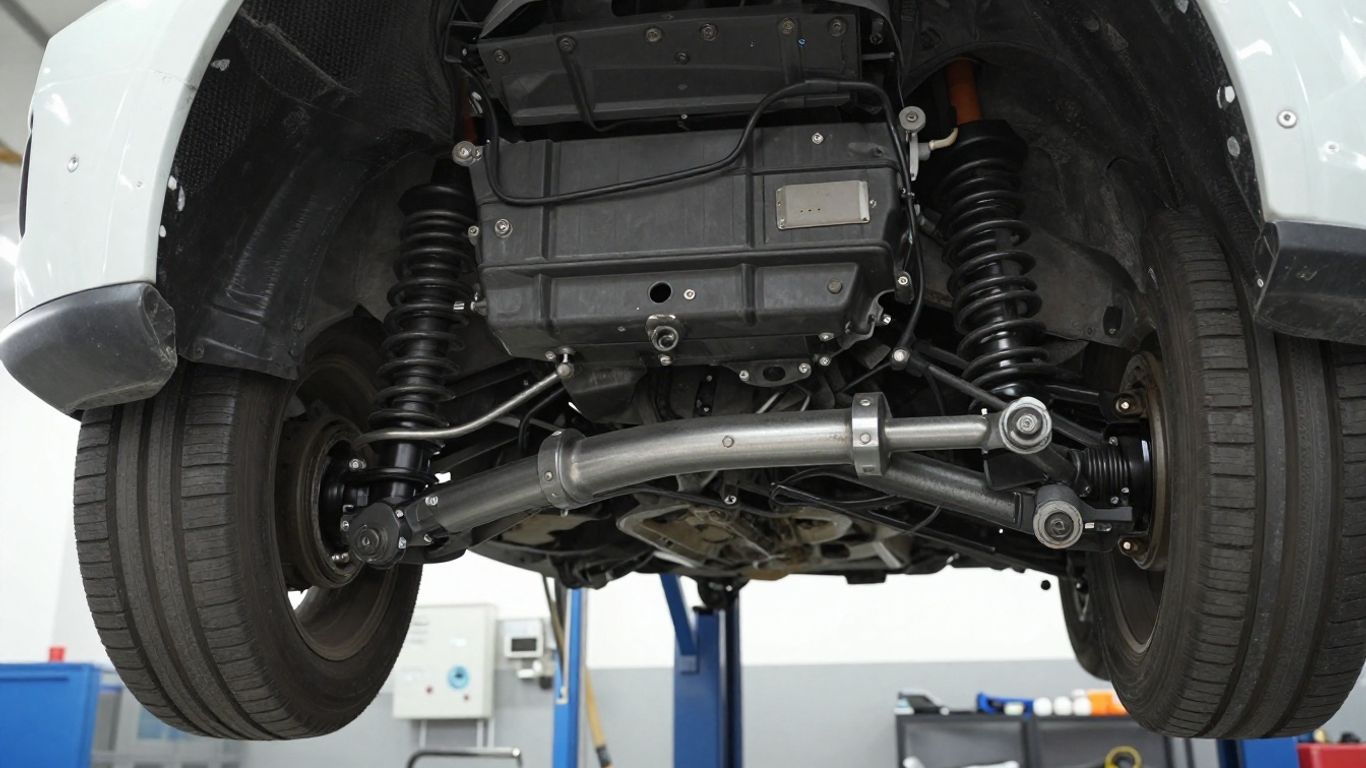
The alignment becomes even more important when other steering parts are replaced at the same time. A rack replacement decision guide can help separate internal rack problems from issues involving external components, but the final need for alignment depends on what was actually removed, adjusted, or damaged.
Replacing the rack-and-pinion assembly
Removing the rack usually means disconnecting both tie rods and the steering shaft, and sometimes hydraulic lines or electrical connections. Reinstallation must account for rack centering as well as the position of the wheels. Those steps make a measurement after the repair a normal part of the job rather than an optional cosmetic check.
The result does not always require a large adjustment. Sometimes the readings are close to specification. The point is to confirm that they are close before the vehicle returns to regular driving.
Changing inner or outer tie rods
Inner and outer tie rods directly influence toe. Replacing either one can change the effective length of the steering link, particularly if the replacement is threaded in more or less than the original. An alignment is therefore strongly advisable after tie-rod work, even if the rack itself remains in the vehicle.
This also applies when a worn joint has allowed the wheel to move under load. The new part may correct looseness while revealing an alignment issue that was already developing.
Installing a remanufactured or aftermarket rack
A remanufactured or aftermarket rack can be a suitable repair, but the installation still needs to be checked against the vehicle’s specifications. Small differences in rack centering, mount position, or tie-rod setup may affect the final steering geometry.
The replacement part should be verified for correct application before installation. If its dimensions or included tie rods differ from the original, relying on the old adjustment alone is particularly risky.
Symptoms that indicate altered alignment
Some symptoms appear immediately, while others develop gradually. Watch for these signs after the repair:
- The steering wheel sits noticeably off-center while the vehicle travels straight.
- The vehicle drifts or pulls on a reasonably level road.
- The front tires begin to wear more heavily on one edge.
- The steering feels unsettled when braking or changing lanes.
These symptoms do not prove that alignment is the only problem. Tire pressure, road crown, worn suspension parts, and brake issues can produce similar sensations. They do, however, justify a prompt inspection rather than continued guesswork.
What happens if you skip the alignment
Skipping the alignment does not guarantee immediate trouble, but it leaves a known variable unchecked. A rack can be mechanically secure while the wheel angles remain outside their intended ranges. The longer the vehicle is driven that way, the more difficult it can become to distinguish a setup issue from normal tire or suspension wear.
Uneven or accelerated tire wear
Incorrect toe is especially hard on tires because the tread is constantly being scrubbed across the road surface. The wear may show as feathering, a saw-tooth feel across the tread blocks, or faster wear on one side. By the time it is obvious, the tire may already need replacement.
Checking pressures and rotating tires will not correct an incorrect wheel angle. Those maintenance steps help preserve tires, but they cannot substitute for measuring and adjusting alignment.
Vehicle pulling or an off-center steering wheel
A vehicle that pulls consistently may have unequal alignment settings, a rear thrust-angle issue, a tire problem, or a suspension fault. An off-center steering wheel after rack work can also indicate that the rack and steering wheel were not centered together before the tie rods were set.
The driver may compensate without realizing it. That makes the car feel normal on a familiar route while adding fatigue and making emergency maneuvers less predictable.
Poor handling and reduced straight-line stability
Alignment affects how the vehicle tracks through turns and returns toward center afterward. When the settings are wrong, the car may wander, require constant correction, or feel nervous over uneven pavement. These effects can be subtle at first, particularly if the old rack was already worn.
A road test on several surfaces can help reveal the pattern, but it should follow a proper inspection and measurement rather than replace them.
Added stress on steering and suspension components
A poor alignment can place additional side load on tires, joints, bushings, and other steering components. It may not break a sound part immediately, yet persistent abnormal loading can magnify existing wear and make the vehicle harder to diagnose later.
A short inspection after installation is generally less costly than chasing multiple symptoms after months of driving. It also provides an opportunity to find loose fasteners, leaks, or damaged boots.
What type of alignment does your vehicle need
The correct service depends on the vehicle’s suspension design and on what the measurements show. “Four-wheel alignment” does not necessarily mean every angle can be adjusted; it often means all four wheels are measured so the front settings can be related to the rear axle. That broader view can prevent a front adjustment from masking a rear-steering issue.
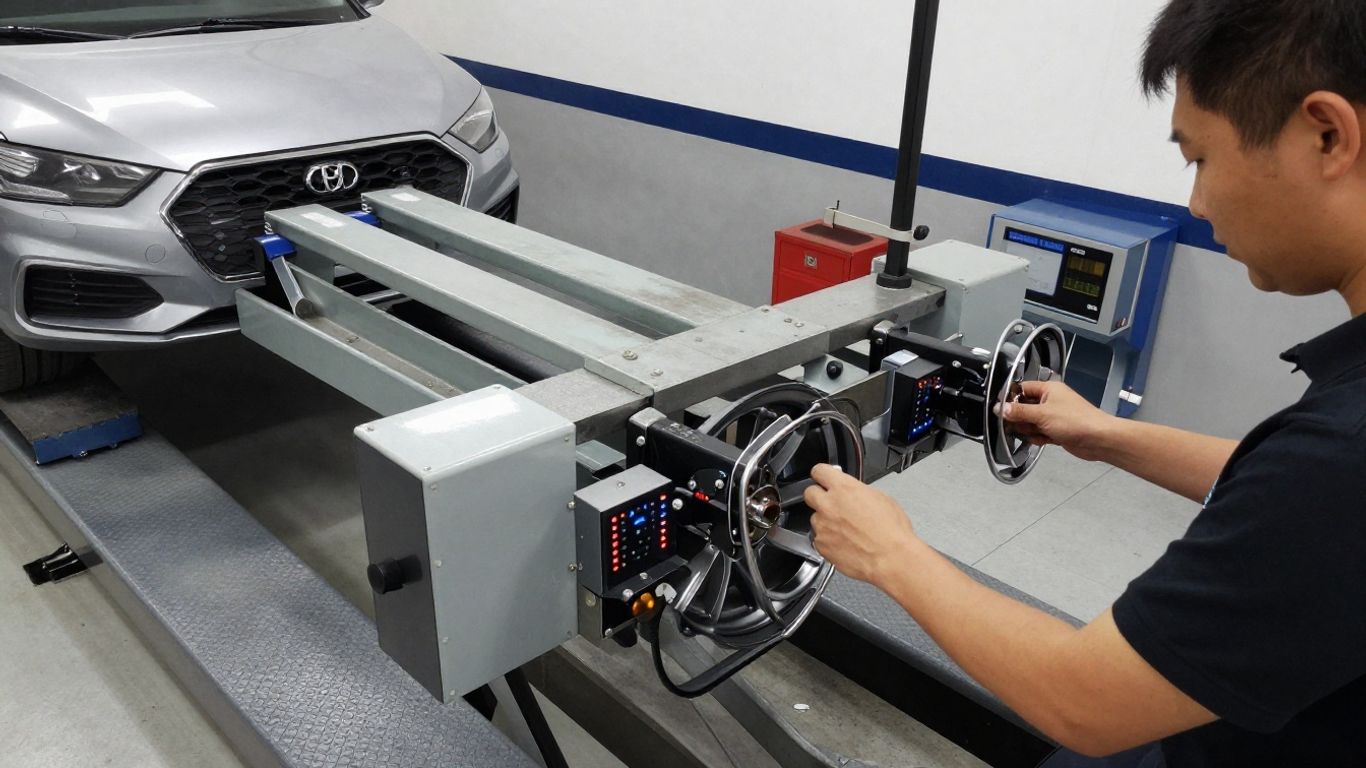
Before booking the service, ask whether the shop will measure the rear axle as well as the front. That question is more useful than choosing a service name based only on price.
Comparing two-wheel and four-wheel alignment
A two-wheel alignment concentrates on the front wheels, while a four-wheel alignment measures the rear as well and considers how the vehicle’s axles relate to one another. On some vehicles, a front-only service may be appropriate; on others, it can miss a rear angle that influences the steering direction.
The choice should follow the vehicle design and the technician’s measurements. A four-wheel check is often sensible after rack replacement when the rear suspension contributes to the vehicle’s thrust direction.
Why rear suspension angles affect front steering
The rear wheels establish the path the body tends to follow. If the rear axle points slightly away from the vehicle centerline, the driver may need to steer the front wheels against that direction. The steering wheel can then be off-center even when the front toe readings look acceptable in isolation.
Measuring the rear angles helps the technician understand whether the front adjustment is correcting the whole vehicle or merely hiding the direction created by the rear axle.
When a thrust-angle check is important
A thrust-angle check is useful when the steering wheel remains crooked, the vehicle seems to crab, or the rear suspension has recently been repaired. It is also relevant after a collision, curb impact, or work involving rear suspension mounts.
The check does not automatically mean that expensive rear repairs are needed. It identifies the relationship between the rear axle and the vehicle centerline, giving the technician a better basis for the front adjustment.
How all-wheel-drive vehicles may differ
All-wheel-drive vehicles can have different suspension layouts, alignment specifications, and calibration requirements. Some have adjustable rear settings; others rely on inspection for bent or displaced components. Tire size, rolling circumference, and drivetrain requirements may also make correct fitment especially important.
The alignment procedure should follow the manufacturer’s information for that exact model. If warning lights or steering-angle calibration issues remain after the mechanical repair, the vehicle may need a separate diagnostic step in addition to wheel alignment.
How technicians check and correct the alignment
A proper alignment starts with condition checks, not with turning an adjustment nut immediately. The technician needs to know that the tires are inflated correctly and that the steering and suspension can hold a measurement. Otherwise, the machine may produce numbers that change as soon as the vehicle moves.
Inspecting steering and suspension components first
The technician should inspect tie-rod ends, rack mounts, ball joints, control-arm bushings, wheel bearings, tires, and visible boots. Loose or damaged parts must be addressed before alignment because an adjustment cannot compensate for movement in a worn joint.
The rack itself should also be checked for secure mounting, leaks where applicable, and correct steering-shaft connection. This initial inspection protects the accuracy of the later readings.
Measuring toe, camber, and caster
Toe describes whether the front edges of the wheels point inward or outward. Camber describes the wheel’s vertical tilt, while caster describes the steering-axis angle viewed from the side. The machine compares measured values with the vehicle’s specified range.
The readings help separate a simple toe adjustment from a deeper issue such as a bent component or shifted subframe. The measurement is the evidence that tells the technician which problem is actually present.
Centering the steering wheel and rack
The rack should be centered before the tie rods are adjusted so that steering travel is balanced in both directions. The steering wheel also needs to be held in its correct central position during the procedure. If one is centered without the other, the vehicle may travel straight but have unequal steering lock or a crooked wheel.
This is one reason a quick visual adjustment at home is unreliable. The relationship among the rack, steering wheel, and front wheels has to be set together.
Road-testing the vehicle after adjustment
A road test confirms how the vehicle behaves away from the alignment rack. The technician can check steering-wheel position, straight-line tracking, return-to-center feel, noises, warning lights, and any signs of fluid leakage or looseness.
The road test should be followed by a final look over the work. If the vehicle still pulls, the cause may be tire conicity, road crown, a brake issue, worn suspension, or a remaining alignment problem rather than the rack alone.
When an alignment may not be required
There are limited situations in which a full adjustment may not be necessary. For example, a repair that leaves the steering linkage untouched may have little effect on alignment. Even then, a check is usually the more dependable choice when the vehicle has been lifted, parts have been loosened, or the driver reports a change.
Minor repairs that do not change tie-rod length
Replacing a sensor, protective boot, or another component without loosening the tie-rod adjustment may not alter toe. The same is true for some repairs made away from the steering linkage. The technician should still confirm that no joint, mount, or subframe was disturbed.
A visual inspection may be enough for a clearly unrelated repair, but that is different from assuming the alignment is correct after steering work.
Matching the original tie-rod measurements
A technician may record the old tie-rod length, count threads, or mark the adjustment before removing a part. Reproducing that position can reduce the size of the final correction, especially when replacing a single component with an identical part.
It remains a starting point rather than proof. Existing wear, previous alignment errors, manufacturing tolerances, and inaccurate old settings can all carry over into the new installation.
Situations where a preliminary check is enough
A preliminary check may be reasonable when the repair did not affect alignment, the steering wheel remains centered, the tires show no abnormal wear, and the vehicle tracks normally. Some owners may choose to monitor the car and arrange a full alignment only if measurements or symptoms justify it.
That decision should be made with a technician who understands what was repaired. A written before-and-after measurement is more useful than a casual drive around the block.
Why a measurement is safer than an assumption
Alignment equipment can identify a small error before it becomes visible in the tread. It can also show that the vehicle is already within specification, saving an unnecessary adjustment. In both cases, the check replaces uncertainty with information.
If the repair involved the rack, inner tie rods, or outer tie rods, the modest cost of verification is usually easier to justify than the cost of prematurely replacing tires or investigating repeated pulling.
Alignment costs, timing, and maintenance after installation
The total cost depends on vehicle design, local labor rates, whether the shop adjusts two or four wheels, and whether additional worn parts are found. A rack replacement and an alignment are separate operations, although some repair estimates include both. Ask for the alignment measurement and any required corrections to be listed clearly.
Typical alignment price ranges
A basic alignment commonly costs less than a complex service involving adjustable front and rear suspension, seized adjusters, or replacement hardware. Prices vary widely by location and vehicle, so a local quote is more useful than relying on a single national figure.
The estimate should clarify whether it includes a pre-alignment inspection, four-wheel measurements, adjustments, a printout, and a road test. If the vehicle needs steering or suspension repairs first, those costs are separate from the alignment itself.
How soon to schedule the service
Schedule the check as soon as practical after the rack replacement, ideally before normal daily driving. A short drive to the alignment shop may be reasonable if the steering is secure and the vehicle is behaving normally, but pulling, loose steering, severe noise, fluid leakage, or a warning light calls for immediate attention.
Do not postpone the service simply because the steering wheel looks straight. The most damaging alignment errors can be difficult to feel at first.
What to inspect after the first few drives
After the initial drives, look for new fluid spots, damp steering boots, unusual noises, loose-feeling steering, and changes in the steering-wheel position. Check tire pressures when the tires are cold and examine the tread for fresh feathering or one-sided wear.
A simple post-repair routine is useful:
- Confirm that the steering wheel remains centered on a level road.
- Check for leaks, loose fasteners, and damaged boots.
- Listen for knocks or clicks while turning slowly.
- Recheck tire pressure and inspect the tread surface.
These observations do not replace professional inspection, but they can help identify a problem before it becomes a safety concern.
When to return for a follow-up check
Return to the shop if the vehicle pulls, the steering wheel shifts off-center, a warning light appears, or a tire begins wearing unevenly. A follow-up may also be appropriate after another steering or suspension repair, a significant pothole impact, or a wheel change that reveals a previously hidden issue.
If the car remains stable and the measurements were within specification, routine maintenance is usually enough. Keep the alignment report with the repair records so future technicians can compare readings rather than start from memory.
Conclusion
A new steering rack does not automatically mean every wheel needs adjustment, but it does mean the steering geometry should be checked. Because the rack and tie rods work directly with the front wheels, a post-replacement alignment is usually the prudent way to protect tire life, steering feel, and straight-line stability.
Frequently Asked Questions
Does a new rack need a wheel alignment?
Usually, yes—or at least an alignment measurement. Replacing the rack can change tie-rod position and steering-wheel centering, even when the installation is careful.
Is a four-wheel alignment always required after rack replacement?
Not always. The appropriate service depends on the vehicle’s suspension design, rear-axle geometry, and the technician’s measurements. A four-wheel check is useful when rear angles may affect the vehicle’s path.
Can I drive after replacing a steering rack without an alignment?
A short drive to a repair shop may be acceptable if the steering is secure and the vehicle behaves normally. Avoid regular driving if it pulls, feels loose, leaks fluid, or has warning lights.
What alignment angle is most likely to change after rack replacement?
Toe is commonly affected because the tie rods connect directly to the rack. Camber and caster can also be outside specification because of separate suspension or mounting issues.
Can counting tie-rod threads avoid an alignment?
No. Counting threads or matching the old measurement can provide a useful starting point, but it cannot confirm that the old setting was correct or that the replacement is positioned identically.
How long does an alignment take after rack replacement?
The alignment itself may be completed in roughly an hour on a straightforward vehicle, but inspection, seized adjusters, worn components, or required repairs can extend the appointment.
What if the steering wheel is still off-center after alignment?
Have the shop recheck rack centering, front and rear thrust angles, tire condition, suspension components, and steering-wheel calibration. An off-center wheel after the service means the diagnosis should continue rather than be ignored.