

Key Takeaways
Power steering problems can have hydraulic, electrical, or mechanical causes, and similar symptoms can also come from suspension or alignment issues. Notice changes early and have the system checked if steering becomes difficult or unpredictable.
- Heavy steering, unusual noises, fluid leaks, and warning lights are reasons to investigate.
- Hydraulic and electric systems use different components, so diagnosis depends on the vehicle.
- A mechanic may inspect fluid, leaks, belts, hoses, steering parts, and electronic fault codes.
- Ask what the inspection found, which repairs are necessary, and what parts and warranty are included.
- Follow the vehicle maker’s maintenance advice and keep a record of steering-related work.
How power steering works
Power steering helps reduce the effort needed to turn the wheel, especially at low speeds. The details depend on whether a vehicle uses a hydraulic system or electric assistance. Knowing the broad differences can help you describe a problem, though inspection is needed to identify its cause.
Hydraulic and electric power steering systems
Hydraulic power steering uses fluid pressure to assist steering, while electric power steering uses an electric motor to provide assistance. Some vehicles use a combination of electrical controls and hydraulic components, so the exact setup varies by model. This distinction matters: hydraulic systems can have fluid-related problems, while electric systems may need electrical diagnosis.
How steering assistance affects handling
Assistance changes how much effort the driver needs to turn the wheel; it does not replace the driver’s control of the vehicle. A sudden change in steering feel can make ordinary maneuvers more tiring and may affect how confidently the vehicle responds. If the wheel feels different from usual, pay attention to when the change happens, such as while parking, driving slowly, or turning at speed.
What the main system components do
Depending on the vehicle, the system may include a pump, belt, hoses, seals, steering gear, fluid, an electric motor, or electronic sensors. These parts work together to make steering easier, but not every vehicle uses every component. The owner’s manual or a mechanic can help identify which arrangement your vehicle has.
Signs your power steering needs attention
Steering problems may appear gradually or arrive suddenly. A new noise, a change in the force needed to turn, or a warning light can all be useful clues. Note what you observe and when it occurs; early symptom details can help a mechanic narrow down the inspection.

A steering wheel that feels heavy or stiff
If turning the wheel takes more effort than usual, assistance may not be working as expected. The change can be more noticeable during low-speed turns or parking, but it may also point to another steering, tire, or suspension issue. Avoid assuming that a heavy wheel automatically means a failed power steering component.
Whining, grinding, or other unusual noises
A whine that occurs while turning can accompany a problem in a hydraulic system, while grinding or clunking may come from other steering or suspension parts. Note whether the noise is continuous, happens only at low speeds, or changes when you turn the wheel. A sound alone is not enough to identify the faulty part, but it gives the mechanic a useful starting point.
Fluid leaks, warning lights, or inconsistent assistance
A puddle or damp area under the vehicle may warrant attention, especially if the fluid level is dropping. A warning light or assistance that comes and goes may also signal a problem, including an electrical issue in vehicles with electric steering. Check the owner’s manual for the meaning of dashboard warnings rather than relying on the light’s appearance alone.
When a steering problem needs urgent attention
If steering suddenly becomes very difficult, feels unpredictable, or is accompanied by a serious warning, pull over somewhere safe when possible and arrange professional advice. Do not continue driving if you cannot control the vehicle confidently. If the symptoms are mild but persistent, book an inspection soon instead of waiting for them to worsen.
Common causes of power steering problems
Power steering symptoms can arise from several parts of the system, and more than one issue may be present. The likely causes also differ between hydraulic and electric setups. A mechanic should confirm the fault rather than replace parts based on a symptom alone.
Low or contaminated hydraulic fluid
Hydraulic systems need the correct fluid at the specified level. A low level may result from a leak, while fluid that appears dirty or degraded may need further assessment. Use only the fluid type specified by the vehicle maker; the wrong fluid can cause additional problems.
A quick comparison of symptoms can help explain why a proper inspection is more useful than guessing at the cause:
| Possible clue | What it may lead a mechanic to check | Why confirmation matters |
|---|---|---|
| Low fluid level | Leaks, hoses, seals, or connections | Topping up alone may not address a leak |
| Whining while turning | Fluid condition or hydraulic components | Noise can have more than one cause |
| Heavy steering | Assistance components or other steering parts | Tires and suspension may also affect feel |
| Warning light | Electronic system and stored fault codes | The warning may relate to a broader system |
These are inspection prompts, not a diagnosis. In particular, low fluid should prompt a search for why the level dropped, rather than repeated top-ups without checking for a leak.
Worn pumps, belts, hoses, or seals
In hydraulic systems, a worn pump may reduce assistance, while a loose or worn belt can affect pump operation. Hoses and seals can deteriorate or leak over time. A mechanic can inspect the relevant parts and explain whether repair or replacement is appropriate for the vehicle.
Electrical faults in modern steering systems
Electric power steering can be affected by electrical connections, sensors, a motor, or related control systems. Fault codes may help identify where to investigate, but they need to be interpreted alongside the symptoms and physical checks. Not every steering concern will produce a useful code.
How suspension and alignment issues can feel similar
Uneven tire wear, a pull to one side, or a vague steering feel may come from suspension, tire, or alignment issues rather than power steering itself. If inspection points toward those areas, a suspension checks overview can help explain why checking related components matters. The source of the symptom should be established before work is approved.
What to expect during a power steering inspection
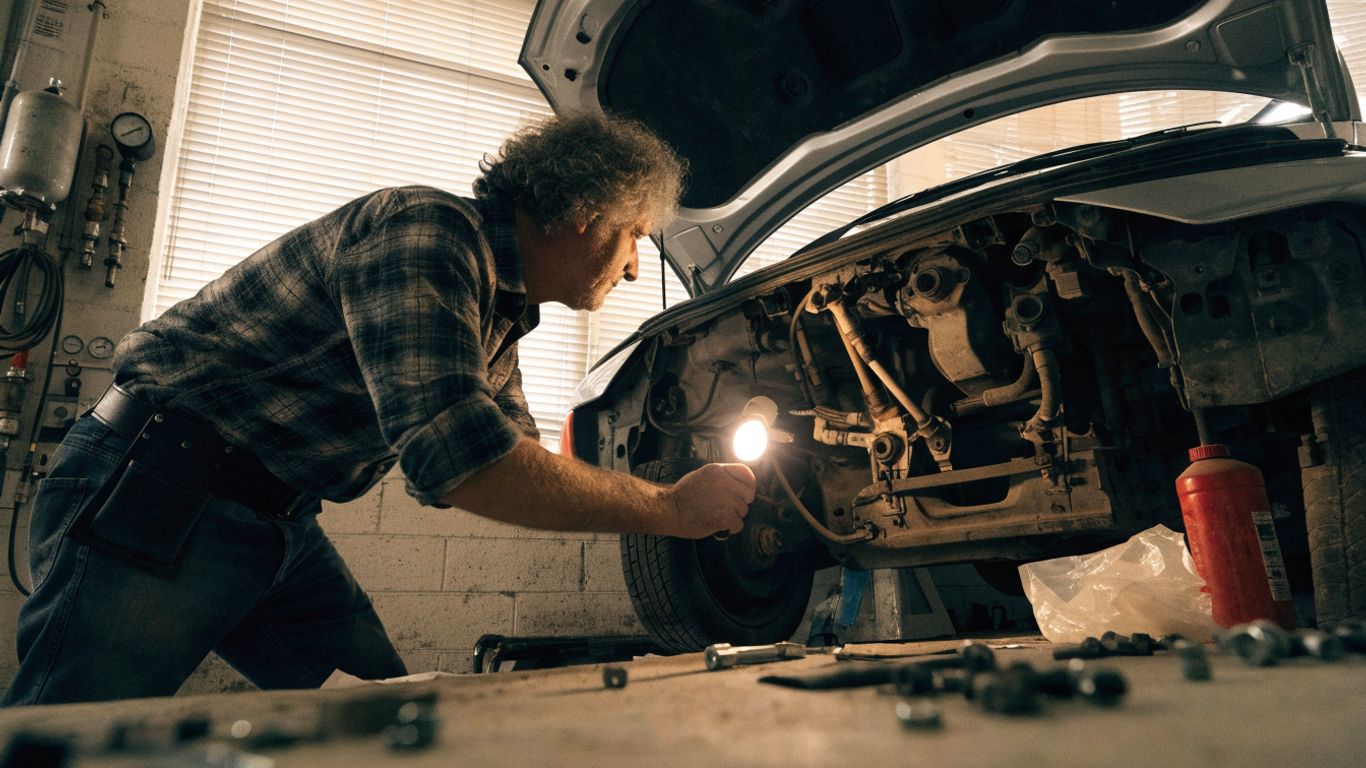
An inspection usually starts with the driver’s description of the problem and the vehicle’s details. The mechanic may then check the system visually, assess how steering behaves, and use diagnostic equipment when relevant. The steps vary with the vehicle and symptoms, so ask what each proposed test is intended to establish.
How a mechanic diagnoses the symptoms
A mechanic may ask when the issue began, whether it occurs at certain speeds, and whether it changes during turns. They may reproduce the symptom during a road test if it is safe to do so. Clear details help distinguish an intermittent fault from one that is present all the time.
Checks for leaks, fluid condition, and worn parts
For a hydraulic system, checks may include the fluid level and condition, visible leaks, hoses, belts, seals, and other components. For any system, the mechanic may inspect related steering parts and consider whether tires or suspension could explain the feel. A power steering fluid guide can help you understand the topic, but the correct checking procedure depends on the vehicle.
When electronic fault codes may be relevant
If the vehicle has electric steering or a related warning light, diagnostic scanning may help identify stored fault codes. Those codes are clues rather than a complete diagnosis; they need to be considered alongside inspection results. Ask the mechanic to explain what the code indicates and how it relates to the symptoms.
Questions to ask before approving repairs
Before authorizing work, ask for a clear explanation of the finding and the repair options. These questions can keep the conversation focused:
- What tests or checks identified the problem?
- Which repair is necessary now, and what can wait?
- Are the quoted parts new, used, genuine, or aftermarket?
- What does the estimate include, and what warranty applies?
A useful estimate should make the proposed work understandable, not just list parts and labor. If something is unclear, ask for clarification before deciding.
Choosing a power steering mechanic in Canberra
When looking for help with power steering Canberra drivers can start by describing the symptom and confirming that the workshop services their vehicle type. A good conversation should cover the inspection process, likely timing, and how findings will be explained. These questions are useful wherever you arrange a repair, though the right workshop depends on your vehicle and needs.
Finding a workshop that services your vehicle type
Confirm that the workshop works on your make, model, and steering system, especially if the vehicle is older, modified, or uses an uncommon setup. Ask whether an inspection can include related steering and suspension checks if the symptoms are not clearly isolated. For a general example of comparing qualifications and approach across a different kind of service, see this guide to an ABA therapy provider; the subject is unrelated, but the comparison factors are familiar.
Comparing repair estimates and parts options
Estimates are easier to compare when each one describes the diagnosis, parts, labor, and any additional work. Ask whether a proposed component is new, used, genuine, or aftermarket, and whether the choice affects the warranty. A Poly Shield Coatings coating estimate concerns a different kind of repair, but its scope is likewise worth reading carefully before agreeing to work.
Checking warranties, reviews, and service credentials
Look for information relevant to the work being proposed, and ask the workshop what warranty applies to both parts and labor. Reviews can offer context, but they do not replace a direct explanation of the inspection or quote. Other service guides also discuss communication and credentials, including this overview of a Tampines chiropractor, though its advice concerns a different field.
What to confirm when booking an inspection
When booking, explain the symptoms, when they occur, and whether any warning lights are showing. Confirm whether the workshop needs the vehicle for a road test, how long the initial inspection may take, and whether you will be contacted before extra work begins. For readers arranging unrelated services, a courier booking checklist is another example of how clear booking details can prevent avoidable confusion.
Maintaining your power steering system
Routine care starts with the vehicle maker’s recommendations, since service needs vary between models. Pay attention to new noises, leaks, warning lights, or changes in steering effort rather than waiting for a scheduled visit if something feels wrong. Small observations can help you explain what changed and when.
Following the vehicle maker’s service recommendations
Use the owner’s manual or service information for maintenance intervals and fluid specifications. Some vehicles have hydraulic systems that require fluid checks, while others use electric assistance and do not have power steering fluid to check. If you are unsure which applies, ask a mechanic rather than relying on a general rule.
Checking hydraulic fluid when applicable
If your vehicle has a hydraulic system and the maker’s instructions permit owner checks, follow the stated procedure and use the specified fluid. Look for a falling level or visible signs of leakage, but do not reach near moving or hot components. If the level is low, arrange an assessment to find out why.
Responding promptly to new noises or steering changes
A new whine, heavier steering, or inconsistent assistance is worth recording and reporting. Describe whether it happens while stationary, during turns, or at a particular speed. Guidance on teaching and feedback offers a useful general reminder that explaining observations clearly can improve understanding; see this resource on teaching and feedback, which is about learning rather than vehicle repair.
Keeping a record of repairs and maintenance
Save service invoices and note any steering symptoms, fluid checks, or component replacements. A simple record can help you see whether an issue is recurring and give the next mechanic a clearer history. Keep details such as dates, mileage, parts used, and any warranty information together.
Conclusion
Power steering concerns are easier to address when you notice changes early, describe them clearly, and have the vehicle inspected before assuming which part has failed. A careful diagnosis, understandable estimate, and maintenance that follows the vehicle maker’s guidance can help you make a more informed repair decision.
Frequently Asked Questions
Can I drive with heavy power steering?
If the steering is suddenly difficult or unpredictable, stop somewhere safe when possible and seek professional advice. Continuing may be unsafe if you cannot control the vehicle confidently.
What does a whining noise when turning mean?
A whine can occur with a hydraulic steering problem, but noises can have several causes. Note when it happens and have the system checked rather than relying on sound alone.
Does every car have power steering fluid?
No. Hydraulic systems use fluid, while many electric power steering systems do not. Check the owner’s manual or ask a mechanic which type your vehicle uses.
Is it safe to top up power steering fluid myself?
Only follow the vehicle maker’s instructions and use the specified fluid. If the level is low, a leak or another problem may need attention, so topping up may not resolve the cause.
Can wheel alignment cause a heavy steering feel?
Alignment, tire, or suspension issues can affect how steering feels. An inspection can help distinguish those issues from a fault in the power steering system.
What happens during a power steering inspection?
A mechanic will usually discuss the symptoms, inspect relevant parts, and may use diagnostic equipment depending on the vehicle. The exact checks depend on the system and the reported problem.
When should I get a power steering problem checked?
Arrange an inspection if you notice persistent heavy steering, unusual noises, fluid leaks, warning lights, or inconsistent assistance. Sudden loss of control or very difficult steering calls for stopping safely and seeking prompt help.