

Key Takeaways
Choosing a steering rack supplier means checking fitment, part condition, delivery, and support together. A little verification before ordering can prevent costly delays later.
- Match the rack to the vehicle’s exact make, model, year, and variant.
- Confirm whether the replacement is new, remanufactured, or reconditioned.
- Compare delivery, warranty terms, included components, and the full landed cost.
- Ask how the supplier handles fitment questions, returns, and uncommon parts.
- Coordinate the order with the mechanic or workshop doing the installation.
Match the supplier to your vehicle and steering system
A steering rack can look right in a listing and still be wrong for a particular vehicle. Before comparing suppliers, gather the vehicle details and identify the steering setup so you can ask precise questions. A supplier that connects customers with quality used parts can be useful when you are exploring availability, but fitment still needs to be confirmed against your vehicle. The same careful approach applies to genuine parts and aftermarket parts: the category alone does not establish compatibility.
Identify your vehicle’s make, model, year, and variant
Start with the full vehicle description, including the model year and variant; engine or trim details may also matter. Registration details can help, but verify them against the vehicle identification number or the information on the existing part where possible. A table can help you organize what to provide when you request a quote.
| Detail to provide | Where to check | Why it helps |
|---|---|---|
| Make and model | Registration or vehicle documents | Narrows the vehicle application |
| Year and variant | Build plate or service records | Helps distinguish similar versions |
| VIN or chassis number | Vehicle identification plate | Gives the supplier a specific reference |
| Existing rack details | Part label or workshop inspection | Adds another fitment check |
Keep the details together rather than relying on a model name alone. Small differences between variants can affect which rack is suitable, so send the same information to each supplier you compare.
Confirm the steering rack type and power-steering setup
Find out whether the vehicle has a hydraulic or electric power-steering system, and confirm the rack type before ordering. If the setup is unclear, ask your mechanic to identify it from the vehicle rather than guessing from a product photo. Steering-system terminology can be unfamiliar, so a reference on steering system development may offer useful background, but it does not replace vehicle-specific fitment confirmation.
Check whether the rack is new, remanufactured, or reconditioned
Ask the supplier to state the part’s condition in plain terms. New, remanufactured, and reconditioned describe different supply routes, and the label should be accompanied by information about what has been done to the rack. Do not assume that similar wording means identical work or the same warranty; request the written terms for the exact part being quoted.
Verify compatibility before placing an order
Before paying, give the supplier the vehicle details and ask for written confirmation that the quoted rack matches. Keep a copy of the listing, quote, and any fitment advice, especially if a workshop is coordinating the purchase. That small paper trail makes it easier to resolve a mismatch before installation rather than after the vehicle is apart.
Assess product quality and available parts
Price and fitment are only part of the decision; you also need to understand what arrives and what checks have been performed. Ask specific questions about inspection and included components, and compare answers rather than relying on broad claims about quality. If customer reviews are part of your research, reputation management offers context on how businesses generate reviews and respond to feedback, though individual reviews are not a substitute for product details.
Ask about testing and quality-control processes
Ask what checks are performed on the rack before dispatch and whether the supplier can explain the process for the specific part. The answer should be clear enough to distinguish an inspected component from one that has undergone additional testing or work. Avoid treating a general statement as a guarantee; confirm what it means for the item in your quote.
Check what seals, boots, and other components are included
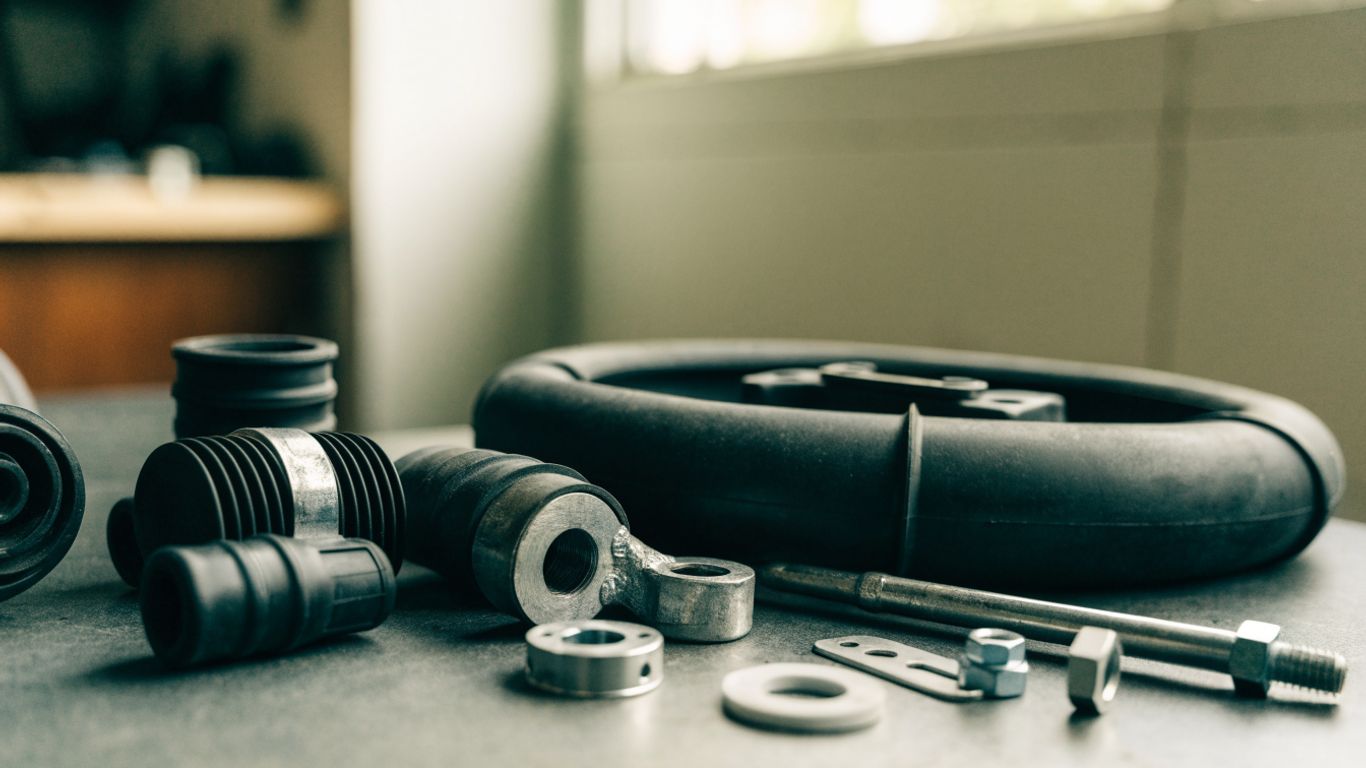
The word “rack” may refer to the main assembly without every associated part. Confirm whether seals, boots, tie-rod ends, or other components are included, and ask whether any parts shown in product photos are illustrative only. When looking at steering components, keep in mind that a broad category can include different products; confirm the exact contents of the item you are buying.
Find out whether mounting hardware or fittings are supplied
Mounting hardware and fittings can affect the time and cost of a repair, so ask what comes in the package and what must be reused or sourced separately. This is particularly worth checking if the original parts are worn, damaged, or difficult to remove. A workshop can often identify likely needs during inspection, which gives you a more complete list to confirm with the supplier.
Look for clear product specifications and fitment details
A useful listing should identify the part condition and provide enough fitment information to support a compatibility check. If it is vague, ask for the missing details before comparing prices. For an older vehicle, a discussion of Jaguar rack rebuilds illustrates why wear and repair considerations may vary by rack; a page about another vehicle cannot establish what your own rack needs.
Compare delivery coverage across Australia
A supplier advertising nationwide service should be able to explain how delivery works for your actual destination. Check the method, estimated timing, and any extra freight charges before placing an order, especially if the vehicle is already booked into a workshop. Australia-wide coverage is most useful when the delivery estimate is clear enough to plan around.
Confirm delivery options for your state or territory
Ask whether the supplier delivers to your state or territory and whether the order goes to a home, business, or workshop address. Confirm if someone needs to be present to receive the parcel and whether the carrier can deliver to the location you have in mind. For regional addresses, make sure the quote reflects the final destination rather than a metro-area estimate.
Ask about shipping times to regional and remote locations
Request an estimated delivery window for your postcode, not just a general dispatch timeframe. Regional and remote routes may take longer, and the supplier may need to confirm availability with the carrier. If the repair is scheduled, leave room for delays instead of treating an estimate as a guaranteed arrival date.
Check freight costs and delivery tracking
Ask whether freight is included in the quote and when tracking details will be available. To compare delivery arrangements, get answers to these practical questions before committing:
- What is the freight charge to the delivery postcode?
- Which address types can the carrier deliver to?
- When should tracking information be issued?
- What should you do if the parcel is delayed or damaged?
The answers make it easier to compare the actual service, not just the advertised dispatch speed. Keep the tracking details and delivery confirmation until the part has been checked against the order.
Find out how oversized or urgent orders are handled
Steering parts can require careful packing, so ask how the supplier handles bulky parcels and whether urgent dispatch is available. Confirm what “urgent” means in practice: same-day handling, an express carrier, or simply priority processing may each produce a different delivery date. Match the option to the workshop schedule and get any additional cost in writing.
Review warranties, returns, and support
Warranty and return terms matter most when the part does not fit or arrives with a problem. Read the conditions before ordering, and make sure you know who to contact and what evidence may be needed. When purchasing online, it is sensible to understand how a site handles personal information; a privacy and cookie policy is one example of the kind of document that explains collection and use, though the policy you need to review is the supplier’s own.
Read the warranty terms and exclusions
Check how long the warranty lasts, what it covers, and whether there are conditions tied to installation or use. Look for exclusions and any requirement to have the work completed by a qualified mechanic. Ask for the terms that apply to the exact part in your quote, rather than relying on a general warranty statement elsewhere on a website.
Check the process for incorrect or faulty parts
Ask how the supplier handles a part that is incorrect, damaged, or suspected to be faulty. Confirm whether you should stop installation, take photographs, or contact support before arranging a return. Clear instructions can prevent avoidable freight costs and help preserve the information needed to assess the issue.
Ask what documentation is needed for a return
Before purchase, find out whether the supplier needs the invoice, packaging, photographs, or a mechanic’s report to assess a return. Keep the packaging until the rack has been checked and the workshop is satisfied it is the right part. A record of the original order and the supplier’s fitment confirmation can also help explain what happened.
Confirm access to fitment advice before and after purchase
Ask whether you can speak with someone about fitment before ordering and who to contact if a question comes up during installation. Make a note of the name or reference number for any advice given. This is a practical detail, not a substitute for a mechanic’s assessment, but it can make the purchase process less uncertain.
Compare total value, not just the listed price
A low listed price does not necessarily mean a lower repair cost once freight, required extras, and return conditions are considered. Request a complete quote for the specific rack and compare it with another quote on the same basis. For a general sense of the factors affecting replacement costs, rack replacement costs can be a starting point, but your vehicle and repair circumstances determine the actual quote.
Request a complete quote including freight and any core charge
Ask the supplier to itemize the part, freight, any core charge, and any other applicable fees. If a core charge applies, confirm what must be returned, the deadline, and the condition required for a refund. A complete written figure makes it easier to compare offers without discovering extra costs after the order is placed.
Compare like-for-like parts and included components
Two quotes are only comparable if the parts have similar condition, fitment, and included components. Use a simple comparison rather than judging by the headline price alone. That way, a lower quote does not appear better simply because it excludes an item you would otherwise need to buy.
| Quote detail | Supplier A | Supplier B |
|---|---|---|
| Rack condition and fitment | Confirm in writing | Confirm in writing |
| Included parts and hardware | List each item | List each item |
| Freight and core charge | Include all charges | Include all charges |
| Warranty and return terms | Review the written terms | Review the written terms |
Once the details are lined up, the differences are easier to interpret. If one quote leaves important fields unanswered, ask for clarification before treating it as a genuine saving.
Factor in warranty coverage and expected service life
Consider the warranty alongside the part’s stated condition and the work involved in installation. Avoid assuming a particular service life unless the supplier can support that expectation for the part in question. If two options differ, weigh the written coverage and the cost of a possible repeat repair rather than relying on price alone.
Check for trade pricing or fleet options if relevant
If you are buying for a workshop or fleet, ask whether trade pricing or a fleet arrangement is available and what conditions apply. Confirm whether the quoted price depends on order volume, account approval, or other requirements. For a one-off repair, a straightforward retail quote may be easier to compare.
Confirm the supplier can support your repair needs
The right part has to arrive in time and with enough information for the repair to proceed. A useful supplier conversation should leave you with clear fitment details, an agreed delivery plan, and a contact route if something changes. Resources on other topics, such as Rocket League strategies, have no bearing on a steering repair; keep your decision focused on the vehicle and the supplier’s answers.
Ask whether technical guidance is available
Ask what technical guidance the supplier can provide about identifying the rack and checking the order. Be clear about whether you need help with part identification or installation; those are different requests, and installation decisions should be handled by a qualified mechanic. A short, specific question is often more useful than asking generally whether support is available.
Check if the supplier can source uncommon or older racks
For older or less common vehicles, ask whether the supplier can search for the part and what information is needed to do so. Provide the VIN, existing part details, and any workshop findings available. A clear answer about search time and likely availability helps you decide whether to wait or discuss another repair option with your mechanic.
Confirm availability of related steering components
Ask whether any associated parts needed for the repair are available and whether they are included in the quote or sold separately. Do not assume that a rack listing covers every component a mechanic may recommend replacing. A workshop inspection can clarify what is required before you place a separate order.
Coordinate delivery timing with your mechanic or workshop
Check the workshop’s schedule before choosing a delivery date, and confirm who will receive and inspect the part. If the appointment changes, contact the supplier promptly to ask whether dispatch can be adjusted. This coordination can reduce the chance of a rack arriving too early, too late, or at an address where no one can check it.
One useful reminder from outside the parts-buying process is that specialized collections can depend on careful preservation and restoration, as described in the Evel Knievel Experience. The practical parallel is modest: understand what you are receiving and how it has been handled. For a steering rack, however, the relevant evidence remains the fitment information, condition, and written terms for the part itself.
Conclusion
Choosing a steering rack supplier Australia wide comes down to careful fitment checks and a clear understanding of the part, delivery, and support. Gather the vehicle details, compare complete quotes, and get important answers in writing before ordering. With your mechanic involved in timing and inspection, you can make a more confident decision and reduce avoidable delays.
Frequently Asked Questions
What information do I need to identify the correct steering rack?
Provide the vehicle’s make, model, year, and variant, along with the VIN or chassis number if available. Details from the existing rack or a mechanic’s inspection can provide another useful check.
Should I choose a new, remanufactured, or reconditioned rack?
There is no single choice that suits every repair. Ask what work has been performed, what the supplier’s condition description means, and which warranty applies to the specific part.
How can I check that a steering rack will fit my vehicle?
Give the supplier complete vehicle details and request written fitment confirmation before paying. If there is any uncertainty, ask your mechanic to verify the steering setup and part information.
What should a steering rack quote include?
Request the part price, freight, any core charge, included components, and applicable fees. Compare warranty and return terms as well as the final total.
How long does delivery take across Australia?
Delivery timing depends on the destination, carrier, and order. Ask for an estimate for your postcode and confirm whether it refers to dispatch or arrival.
What should I do if the part arrives damaged or does not fit?
Contact the supplier promptly and follow its return or fault-reporting process. Keep the packaging and order records, and ask whether photographs or other documentation are required.
Should I order the rack before booking a mechanic?
It is usually helpful to discuss the repair schedule with the workshop first. Coordinate delivery and inspection so the correct part is available when the vehicle is ready for the work.